Impact of Humidity on Wood Furniture in Singapore
Singapore’s tropical climate can change solid wood more quickly than many homeowners expect. Humidity rises near the coast, remains high through monsoon periods, and settles inside compact HDB flats and air-conditioned condominiums whenever doors are opened to humid corridors. In Tampines, Bedok, and Punggol, the practical concern is not simply whether a dining table looks good on the day of delivery. It is whether its drawers, joints, and finish remain stable after 8, 12, or 24 months of seasonal change.
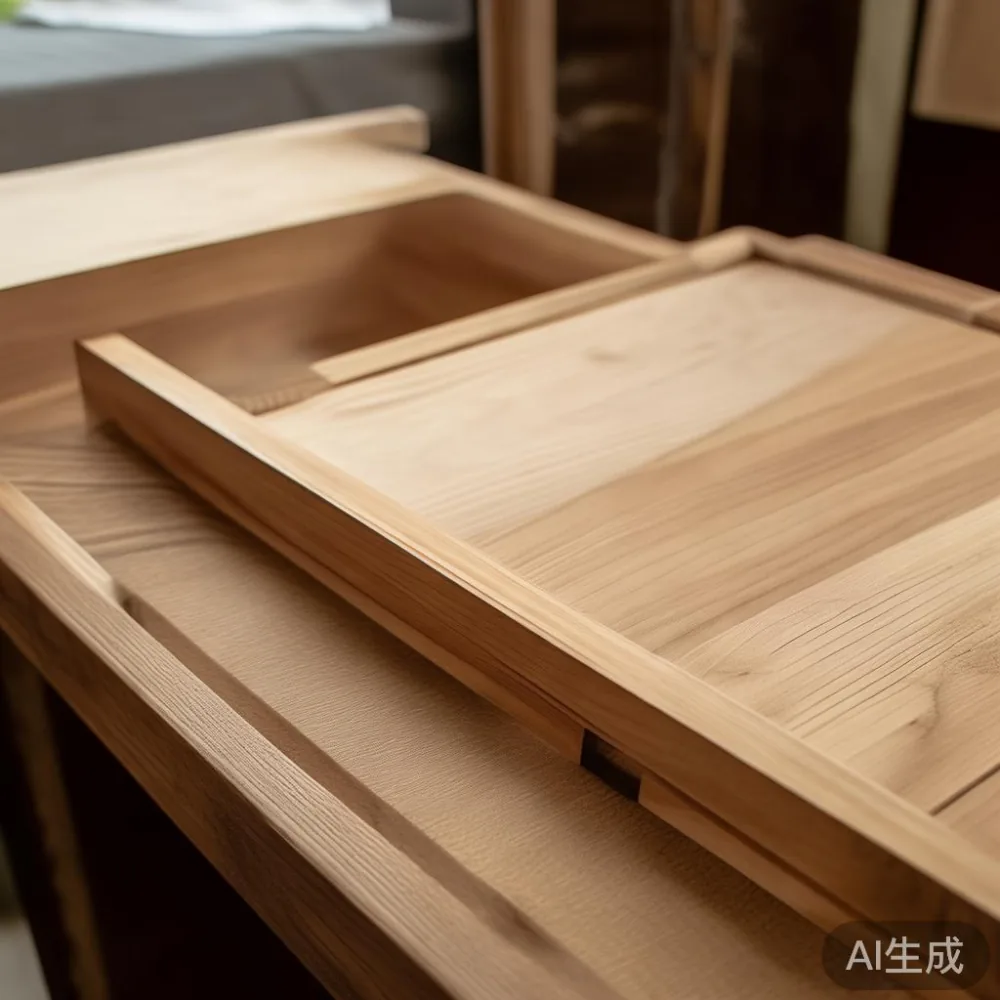
This guide explains how moisture affects solid wood, what that means for a drawer organizer, and how Singapore households can protect furniture without sacrificing its character. It also covers the narrow corridors, compact lifts, delivery timing, and air-conditioning conditions that make local planning important.
Why does tropical humidity make wood move?
Wood is hygroscopic: it absorbs atmospheric moisture when the surrounding air is humid and releases it when the air becomes drier. Movement occurs along the grain rather than evenly in every direction. A 120 cm wide solid wood dining table might expand by several millimetres across its width while showing little visible change along its length.

Singapore’s outdoor relative humidity commonly ranges around 70–90%, while air-conditioned interiors may fall to 45–60%. A drawer organizer moving between these environments can repeatedly swell, contract, and lose alignment. Flat-packed components may also react more noticeably than solid timber, because thin panels and machine-cut edges have less dimensional stability than a 25–35 mm solid wood drawer front.
The damage is cumulative. A drawer may begin with a 1–2 mm gap, rub against its runner, or sit slightly proud of its face. If the finish has aged or been exposed to salt-laden air, swelling can also expose vulnerable edges. The goal is controlled moisture, not furniture kept in permanent darkness.
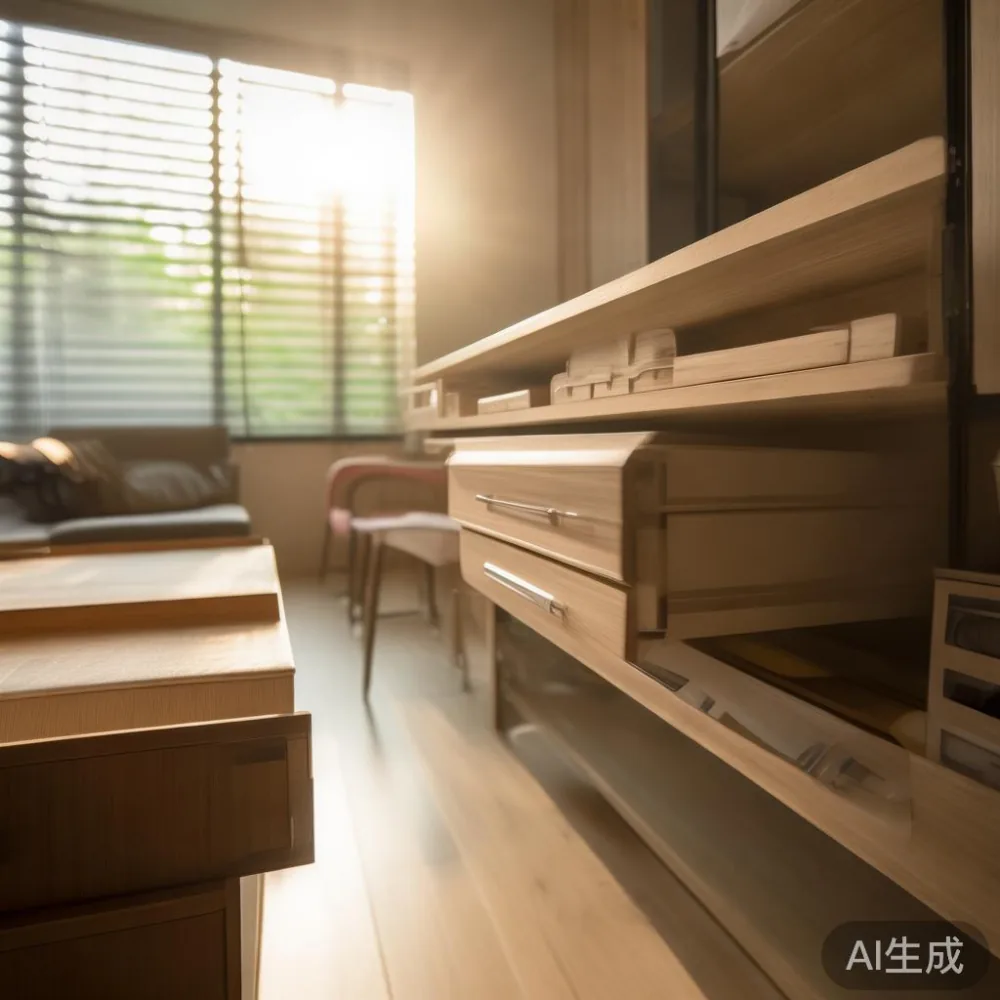
Which timber behaves best in a Singapore home?
No timber is completely immune to humidity. Stable hardwoods such as teak, ash, oak, and rubberwood are commonly selected for well-engineered furniture because they respond more predictably than highly movement-prone species. Nevertheless, the construction details matter as much as the wood species.
A well-made drawer organizer should use solid timber drawer boxes, smooth runners, and joinery designed to accommodate dimensional movement. Veneered or engineered components can still perform well if their panels are properly sealed on all edges. The highest-risk arrangement is a thick drawer made from several narrow strips that are badly glued, poorly finished, or fitted with oversized screws.
For upholstered pieces, including a solid wood sofa or a bed frame, the timber frame should remain stable while the foam, fabric, and suspension respond independently. A marble table introduces another consideration: its surface does not expand like timber, so a nearby wooden base should not be fitted so tightly that seasonal movement creates stress.
French light luxury is particularly popular in Singapore interiors, with pale oak, cream upholstery, and restrained profiles. American light luxury also works well in air-conditioned condominiums, where its slightly straighter lines suit contemporary rooms. Post-modern light luxury can use warmer walnut tones and curved drawer fronts, but those shapes still need movement allowances and stable joinery.
How should I measure humidity at home before choosing furniture?
A small digital hygrometer is more useful than a weather app because it measures the cabinet or room where the furniture will actually stand. Place it near the drawer organizer for 24 hours, then record readings at several times of day. A useful target is approximately 40–65% relative humidity, with gradual changes rather than repeated swings between 40% and 85%.
Measure in at least 3 locations: beside a window, near an air-conditioning vent, and away from both. Readings within a 4–6% spread suggest a reasonably even environment. A gap of 10–15% points to a risk of joint movement, drawer binding, and finish checking.
Do not place a drawer organizer directly against an exterior wall in a ground-floor Tampines or Bedok flat if the wall is noticeably cool or damp. For a high-rise Punggol home, direct afternoon sun can create a different problem: heat and ultraviolet exposure darken wood and degrade an upholstered headboard or curtain nearby.
Will a Singapore lift and corridor make delivery difficult?
Yes, even when the furniture itself is suitable for the climate. Many older HDB blocks have a lift measuring about 100–120 cm wide and 210–230 cm deep, with door openings of around 90 cm. Condominiums may have larger lifts, but the actual route from the service entrance to the unit can include a 140–180 cm corridor, a 90 cm door, and several right-angle turns.
A flat-packed drawer organizer is easier to carry through these routes than a rigidly assembled cabinet. However, flat-packing is not automatically safer for the wood: factory joints can be stronger than joints reconstructed in a corridor, and moisture exposure during transport may still affect panels.
Ask the supplier for the largest assembled dimension and weight of each package. A drawer organizer should normally be divided into components no heavier than 20–25 kg for one person. A solid wood dining table may weigh 65–120 kg, while a solid wood sofa can weigh 70–150 kg and a marble table can exceed 180 kg. These figures determine whether a 2-person or 4-person delivery crew is appropriate.
Singapore GST is normally 9%, and it should appear clearly on a local quotation. Delivery commonly takes 5–10 working days after the order is confirmed, with larger made-to-order pieces taking 20–45 days. MIDHILL can quote the packed dimensions, estimated delivery days, and floor-access requirements before dispatch, which helps prevent a furniture purchase from becoming a corridor problem.
What does humidity do to a drawer organizer?
A drawer organizer experiences humidity through its wood, finish, fittings, and contents. Solid drawer fronts can swell, bottom panels can bow, and runners can judder if their alignment is too tight. Small brass or steel screws may corrode in salt-rich coastal conditions, while rubber and felt liners may absorb moisture, transfer it to the timber, or develop mildew.
Leave approximately 2–3 mm of clearance around a drawer front where the design permits. Do not force a swollen drawer with a metal pry tool. Pull gently with both hands, identify the rubbing point, and check whether the runner is level. Persistent pressure can strip screw threads and turn a 2-minute adjustment into a 30-minute repair.
For daily use, group similar items rather than overfilling a drawer. A 60 cm wide organizer intended for cutlery may hold roughly 30–40 pieces comfortably; pushing in 70 or more increases resistance and strains the runner. For papers, stationery, and cables, use removable dividers with smooth edges and keep damp cloths, used tea bags, and freshly washed fabric in a separate ventilated container.
MIDHILL’s 10-year structural warranty gives buyers a defined point of reference for construction issues. Lifetime refinishing is also relevant in Singapore because it allows a piece to be maintained as its finish ages or the household changes. Refinishing should not be treated as a cure for uncontrolled moisture: a drawer that regularly sits at 80% humidity will continue moving even after a new coat of lacquer.
Can air conditioning prevent humidity damage?
Air conditioning controls temperature and reduces moisture, but effectiveness depends on the room, insulation, and compressor performance. A 20–24°C setting may still leave relative humidity near 60% in a compact flat. Running the system for 8–10 hours each day can create a stable indoor environment, while switching it off for an entire humid evening may allow moisture to accumulate.
Position furniture at least 30 cm from a cold air-conditioning vent where possible. Direct airflow can dry the leading edge of a drawer organizer, while the opposite surface remains more humid, creating uneven movement. In a bedroom, leave 15–30 cm below a wall-mounted cabinet so air can circulate behind it. For a wardrobe, avoid packing every interior shelf with tightly compressed bedding.
A wardrobe with hinged doors benefits from ventilation, whereas a drawer organizer should stay closed. The difference sounds obvious, but frequent long-term storage can trap humidity inside an unventilated compartment. A nightstand near the bed should be checked after nights when the window is open and the air conditioner operates intermittently.
Which room finishes work well with solid wood in humid conditions?
Matte or low-sheen finishes tend to disguise minor surface changes better than high-gloss coatings. Water-based polyurethane can provide good protection when properly applied, while oil and wax finishes offer repairability but require more regular maintenance. Whatever the finish, inspect the underside and drawer edges every 6 months for pale patches, lifting, or roughness.
French provincial styling remains popular in Singapore family homes, but a humid climate calls for careful material pairing. If you are learning how to style French provincial wardrobe in apartment layouts, use pale timber, cream walls, linen-look curtains, and limited decorative hardware. Avoid placing a large wardrobe against a sun-facing external wall, particularly on the western side of a HDB flat.
For the bedroom, the Japanese bed vs Japandi bed decision is partly about storage and humidity management. A platform-style bed gives closed storage that protects linens from dust, while a lighter frame improves airflow. Neither removes the need to leave space around timber components and avoid damp corners.
A related design brief, French for guest room, often includes a nightstand, a compact chair, and a drawer organizer for linens. In a condominium spare room, use measured furniture: a 45 cm wide nightstand, a 90–120 cm drawer unit, and a full-length mirror mounted securely rather than leaning against the wall.
How do delivery day and assembly affect moisture exposure?
Furniture should not be delivered during an open thunderstorm or carried through a wet corridor without protection. Pack solid timber in moisture-resistant wrapping, but avoid sealing damp wood inside plastic for 12–24 hours. The packaging should reduce rain exposure while still allowing trapped moisture to escape after the pieces reach the home.
Acclimatisation is useful. Unpack a new drawer organizer for 24–48 hours in the room where it will be used, with protective wrapping opened or loosened. Let the wood adjust gradually to the indoor humidity before making final alignment adjustments. For a dining table or bed frame, complete assembly only after the components have acclimatised.
Use the right fixings. Stainless steel or plated hardware is generally preferable in humid interiors, and screws should be driven without splitting the timber. If a joint loosens, tighten it gently rather than over-torquing it. Adhesive should be selected for the actual timber and finish, following cure times carefully.
Planning also affects post-modern light luxury interiors, where sculptural curves and darker finishes create strong visual impact. A rounded drawer front still needs 2–3 mm of working clearance, and darker wood can show dust and moisture-related haze more clearly than pale oak. A clean microfibre cloth and a suitable wood-care product are more useful than an abrasive household cleaner.
What should Singapore buyers ask before ordering?
Ask for the timber species, panel thickness, finish type, packed dimensions, package weight, and expected moisture-related tolerances. A supplier should be able to explain whether a drawer organizer is solid wood, veneer-backed timber, or a combination, and should not treat all three as interchangeable.
For a full apartment project, request samples where possible. Check the finish under the room’s normal lighting, not only in a bright warehouse. If the project includes designer European light luxury furniture, confirm that drawer movement, door gaps, and wood tone have been reviewed as one coordinated scheme rather than as isolated products.
Local quotations should show the furniture price, 9% GST, delivery charge, and any lift or corridor surcharge separately. Any free-shipping threshold should also be stated clearly. For buyers comparing designer European light luxury furniture for a dining zone, a light luxury for dining room scheme should include a stable dining table, a fitted drawer organizer, and furniture spacing that allows doors and drawers to open fully.
Projects for a hotel or serviced residence require a different rhythm. A light luxury for hotel brief may involve 40–80 drawer organizers across a floor, each checked for consistent timber tone and moisture response. Record approved samples, photograph hardware details, and schedule replacement stock before installation begins.
Can a drawer organizer last through a tropical year?
Yes, with stable indoor conditions and sensible maintenance. Keep relative humidity near 40–65%, inspect moving parts twice a year, wipe surfaces with a lightly damp cloth, and dry them immediately. Keep the unit 5–10 cm from external walls where practical, open bedroom windows only when outdoor humidity is lower, and check the edges after monsoon nights.
For immediate advice, contact MIDHILL at +86 188 2788 2512 with the room dimensions, intended product type, and photographs of the delivery route. A solid wood sofa, bed frame, dining table, wardrobe, nightstand, or marble table may have different packaging needs, and the correct answer begins with the actual Singapore home rather than a generic climate chart.