Factors Influencing Wood Furniture Costs
Solid wood furniture is often priced as though the material itself explains the cost. In reality, the final figure usually comes from a chain of decisions: timber species, board dimensions, joinery, hardware, finish, design, production scale, packaging, and delivery. Understanding that chain helps Singapore buyers compare quotations without assuming that a heavier piece is automatically better or that a lower price means poor construction.
Local conditions make those decisions especially visible. A dining table must fit through a lift, a corridor, and the front door of an HDB flat in Tampines, Bedok, or Punggol. A tall wardrobe must be manoeuvred around corners without damaging its corners or the common corridor. GST at 9% should also be identified clearly. Prices below are shown in SGD and include GST unless stated otherwise.
MIDHILL was established in 2008 and exports to more than 15 countries. Its approach is practical rather than purely decorative: 10-year structural coverage, lifetime refinishing, free shipping for orders over US$350, and 14-day returns for qualifying products. Those service commitments form part of the total ownership proposition, even though they do not determine the workshop cost of making one drawer organizer or one dining table.

Is timber species the biggest factor in solid wood furniture prices?
Timber species matters, but it is only one factor. Solid wood furniture may use oak, ash, beech, walnut, rubberwood, or other species. Each has different availability, grain, workability, hardness, and market pricing. A 40 cm-wide oak board can cost materially more than a 40 cm-wide board of another legal timber because of supply and processing.
The buyer should ask whether the product is solid timber, hardwood plywood, MDF, or a combination. Particleboard and MDF can make functional panels at a lower cost, while solid wood may appear in visible frames, legs, drawer fronts, or table tops. That is not automatically inferior. The important point is that the construction should be described accurately rather than disguised behind a broad “wood furniture” label.
Dimensions also affect cost. A 220 cm dining table uses more board than a 140 cm dining table. A 12 cm-thick top uses more material than a 4 cm top. Turning a 2 cm board into a 5 cm edge may require lamination, which adds work. The species, thickness, usable length, and amount of waste all influence one finished component.
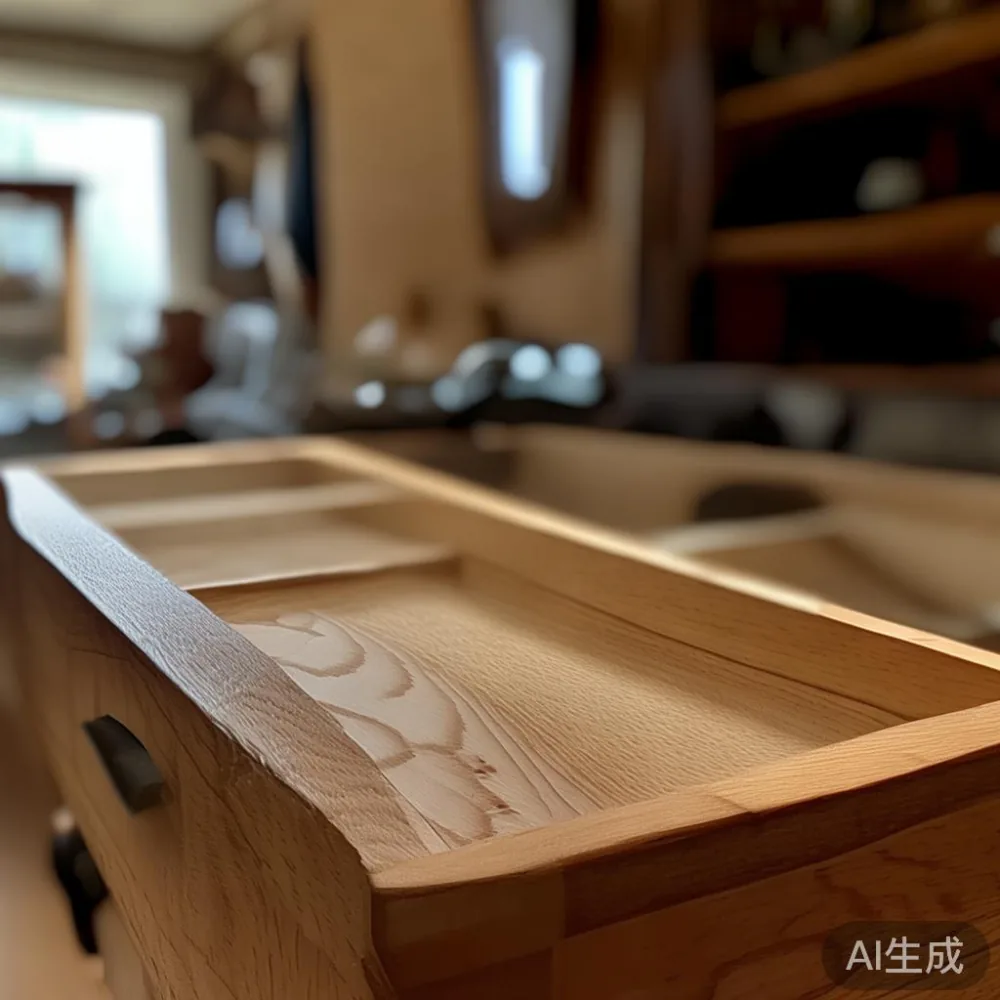
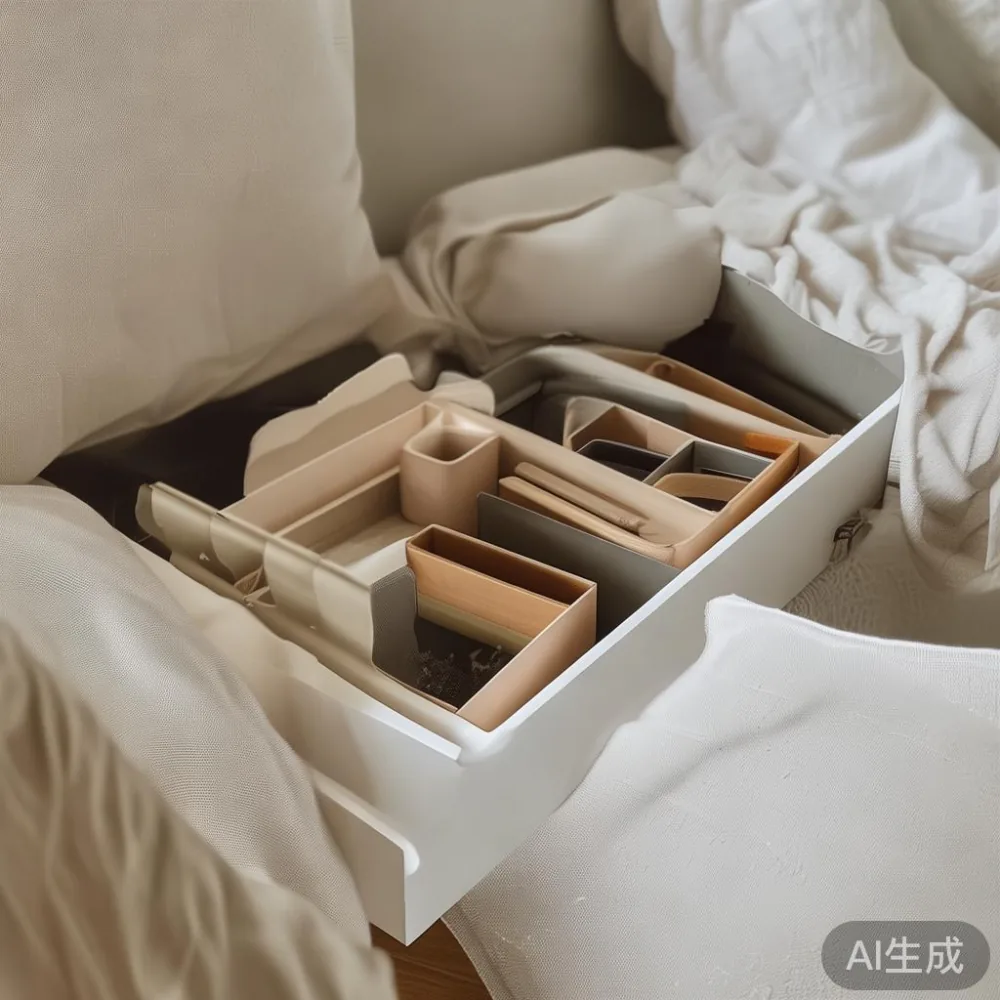
For a drawer organizer, the timber cost depends on yield. Narrow internal compartments can create offcuts, and irregular grain can reduce the usable area from each board. Finger-jointed or laminated components may be entirely appropriate for hidden panels, provided the maker explains how they are made and whether moisture movement has been controlled.
How much do joinery and construction affect the price?
Joinery is where labour becomes part of the price. A drawer organizer may use dovetails, dowels, screws, mortise-and-tenon joints, or machine-assisted construction. Hand-cut dovetails in every drawer take more time than repetitive machine cuts, but they are not automatically the only durable method. Fit, load capacity, screw placement, and maintenance access matter more than a technique used for appearance alone.
Last month I visited a furniture workshop where a supervisor showed me two drawer boxes made from the same 18 mm wood. The difference was not the timber: the heavier drawer had hardwood corner blocks, recessed screw pockets, a wider base, and a 45 kg load test arrangement. It weighed about 6.8 kg compared with 5.2 kg for the lighter version. The heavier version cost SGD 42 more because of the extra material, machining, reinforcement, and assembly time.
This illustrates a frequent pricing mistake. Buyers often compare weight, but construction details provide better evidence. A 10-year structural warranty can be valuable, yet warranty language should state what is covered. Scratches, finish wear, and movement caused by unstable humidity can behave differently from a joint that separates.
Back panels, drawer runners, shelves, and bases should be inspected as an assembly. A full-length solid wood bed frame may use a plywood or slatted support system to manage weight and moisture. The visible frame can still be solid wood, while the support system improves performance. Ask for the board thickness, runner type, centre support arrangement, and expected load rather than relying on a single material description.
Do French light luxury and post-modern styles cost more to produce?
Style can affect price through labour and component count, not through the words on a style label. French light luxury often uses restrained profiles, softened edges, slender legs, pale finishes, and carefully proportioned details. Post-modern light luxury may introduce asymmetry, curved contours, mixed materials, and more complex cabinetry.
A Modern light luxury sideboard, for example, may require curved doors, aligned shadow gaps, multiple drawers, adjustable shelves, cable-management openings, and a stable plinth. If its carcass is 180 cm wide and 48 cm deep, the physical size alone creates material and shipping costs. Precise gaps around doors add setup time; they must remain consistent after transport.
European light luxury for guest room requires the same discipline at a smaller scale. A guest-room nightstand with 2 drawers, a 42 cm top, and brass-coloured pulls should not cost the same as a large wardrobe simply because both share a French-inspired vocabulary. The narrower drawer organizer inside that nightstand may use solid timber for the drawer sides and front, while a concealed plywood panel can form the carcass.
For sale French provincial furniture searches, visual accuracy matters. Curved fronts, shaped aprons, and decorative hardware require templates, jigs, and careful finishing. A piece that merely looks French while using blunt corners and excessive filler may cost less, but its appearance may date faster. Conversely, ornate construction is not a guarantee of quality.
What do hardware, finish, and quality control add to a furniture price?
Hardware includes hinges, runners, locks, connectors, castors, and suspension components. A soft-close runner may cost several times more than a standard steel runner. Hinges rated for a heavy door require better anchoring than small cabinet hinges. For a wardrobe, the number of hinges, drawer runners, hanging rails, and shelves can add more than the timber visible from outside.
Finish can also be a substantial cost. Sealing the pores, sanding through several grit levels, applying stain, drying it, then adding 2 or 3 protective coats takes time and controlled space. Some low-sheen finishes conceal more of the wood’s natural variation than high-gloss coatings. A matte finish is not automatically premium, but consistency across large panels is difficult to achieve.
One practical comparison is between a 200 cm dining table finished with 2 coats and a similar table finished with 5 coats. The five-coat example may add about SGD 180 in labour and materials. The exact amount depends on the species, workshop rates, and drying conditions. In humid Singapore conditions, a competent finish also needs a sensible production schedule rather than being rushed between coats.
Quality control should happen before dispatch, not only after a complaint. Useful checks include opening every drawer, testing runners, aligning doors, inspecting joints, checking leg fixation, and examining surfaces under consistent light. For a marble table, packaging becomes even more significant because stone is brittle at edges. A 3 cm marble top may weigh 95 kg, while a 4 cm top may weigh 125 kg. Those figures affect handling, reinforcement, and delivery.
How do Singapore homes, lifts, and GST change the delivered price?
Access is a real cost driver. Many HDB lift openings are around 90 cm wide and 140 cm deep, although building-specific measurements vary. Lift doors may be only 80–90 cm across. Internal corridors can turn sharply at landings, and a flat’s front door may be less accommodating than the common entrance.
A 220 cm solid wood dining table cannot necessarily be carried in one piece. It may need to enter separately as a 110 cm top and detachable base, with assembly inside the home. This can add SGD 80–220 in Singapore delivery and assembly charges, depending on access and complexity. A wardrobe with a 210 cm height may need to be tilted, but tilting can damage walls or panels if it is not protected.
Before ordering, measure the narrowest lift door, lift car, corridor turns, stair width if relevant, and front-door opening. Provide photographs where the route is tight. The supplier should explain whether delivery includes carrying, unpacking, assembly, and packaging removal. A narrow corridor does not make a well-designed item poor; it does mean planning and sometimes knock-down construction become necessary.
GST at 9% must be shown separately or clearly included. Singapore’s GST is calculated on the taxable sale value, with import and transport arrangements handled according to the importer’s status and shipping terms. Comparing two quotations is fairest when both include GST, delivery, assembly, and any applicable import charges. An online catalogue price alone is not the delivered total.
How should you compare a wardrobe, bed frame, and other large pieces fairly?
A sound comparison uses identical assumptions. Compare timber species and board thickness, dimensions, internal components, hardware, finish, warranty, delivery terms, and return conditions. A solid wood sofa can have a timber frame, foam density, upholstery, and cushion count. Its price cannot be judged by the frame alone. A solid wood bed frame can use different support systems, while a dining table depends on top construction and base geometry.
For a marble table, request the stone type, thickness, edge profile, support design, and total shipping weight. For a wardrobe, request usable internal widths, hanging space, shelf load expectations, runner travel, and whether doors can be removed during delivery. These numbers expose differences that polished product descriptions conceal.
Design references are useful starting points, not pricing formulas. European light luxury for guest room might suit a 300 cm guest room with a 120 cm nightstand and a slim 90 cm wardrobe. French provincial for bedroom can work in a 330 cm master bedroom if visual weight is controlled. Mid-century modern for office may call for compact dimensions and restrained storage rather than oversized pieces.
If a wardrobe is central to the purchase, the question of how to choose Italian light luxury wardrobe involves more than an Italian-sounding label. Examine veneer continuity, carcass construction, internal fittings, hardware finishes, and the service behind replacement parts. In Singapore, humidity, sunlight, and frequent use make those service details important.
How much should a solid wood furniture quote include?
There is no single universal price because furniture specifications differ widely. A simple 3-drawer nightstand may be around SGD 420–760 including GST before delivery. A 180 cm French-style dining table may be around SGD 1,680–3,200 including GST. A 2-door wardrobe may be around SGD 1,250–2,900 including GST, depending on internal fittings and construction. These are broad reference ranges, not promises.
The largest gaps usually come from material and labour choices. Solid hardwood throughout, engineered structural panels, premium hardware, multi-stage finishing, and complex installation can move a quotation upward. A simpler design with stable proportions and sound joinery can remain cost-conscious without appearing disposable.
For drawer organizers, compare the actual usable space. A 45 × 32 × 12 cm organizer with 5 compartments and solid timber drawer fronts may be priced around SGD 68–145 including GST. Adjustable inserts, dovetailed corners, soft-close slides, and matching wardrobe installation can raise that figure. Width, depth, and component count should drive the comparison.
Ask whether the supplier is the manufacturer, what checks occur, and what happens if a component arrives damaged. MIDHILL’s 10-year structural warranty, lifetime refinishing, and 14-day return framework provide useful benchmarks, although eligibility and exclusions should be read in full. Free shipping over US$350 may apply under the stated threshold and terms; Singapore delivery and installation should still be confirmed because a freight offer does not always include local handling.
The most informative quote is therefore not simply the smallest number. It is the quote that states what you are receiving: 18 mm solid timber where promised, 3 mm plywood where used, 45 kg drawer runners, a 4 cm top, 2 protective finish coats, delivery within a stated number of days, and clear coverage after arrival. Good pricing follows from clear specification. It allows a buyer to compare a 120 cm bed frame with another 120 cm bed frame on equal terms and to know whether the difference reflects material, labour, logistics, or service.