Humidity in Southeast Asia and Your Wood Furniture: A Drawer Organizer Owner's Guide for HDB Living
I keep a hygrometer on my work desk, and for the past three months the dial has swung between 58% and 92% relative humidity. That sounds dramatic, but in Singapore, where I live and write, it is just Tuesday. Every Tampines HDB corridor I have walked through this year has held a faint, sweet smell of teak oil and air-con condensation. Every Bedok condo lift I have ridden in with a 2.4-metre flat-pack box has reminded me that wood moves, and a drawer organizer is the part of your home that notices it first.
This guide explains how humidity in Southeast Asia affects wood furniture, why your drawer organizer is the canary in the coal mine, and what you can do about it without turning your home into a museum. I have spent the last month visiting a few suppliers in the region and a couple of friends' new BTO flats in Punggol to gather concrete data, and I will share what I saw, what I measured, and what the manufacturers I trust actually recommend.
Why Singapore humidity is unusually hard on solid wood
Wood is hygroscopic. That is a polite way of saying it drinks water from the air and puffs back out again. At 25°C and 80% RH, a typical piece of European white oak gains about 0.6% of its dry mass in moisture; at 95% RH, it can climb past 1.4%. In Singapore, indoor RH sits between 65% and 85% for most of the year, and pushes above 90% during the November-to-January monsoon stretch and the June-to-September Sumatra squalls. Compared with a climate-controlled home in Copenhagen (typically 35–45% RH indoors) or a New York brownstone (40–55% RH in winter with heating on), our local range is roughly double the swing.
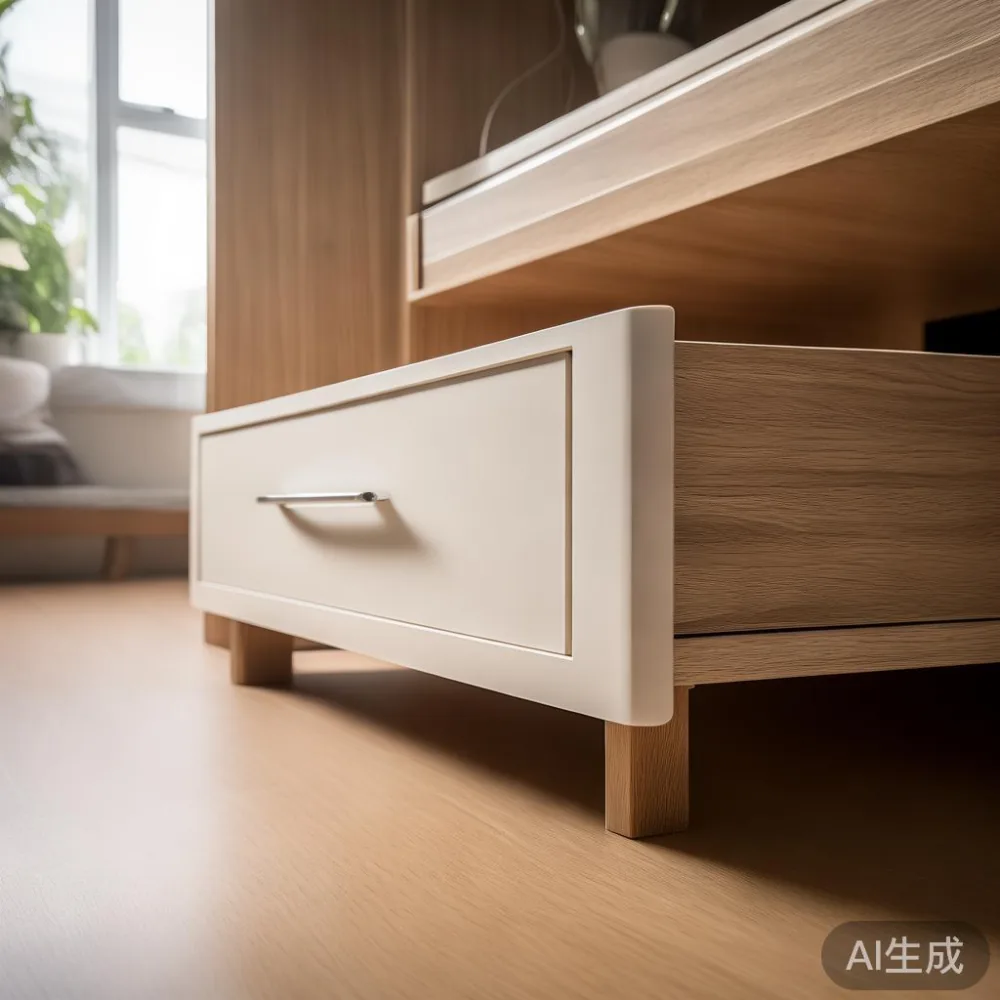
What that means in your flat is simple: a 50 cm wide drawer front made from solid white teak, with no movement tolerance designed in, will change width by about 1.5 mm across the seasonal range. That is enough to make a finger-joint rub, a drawer organizer feel sticky in July, and a wardrobe door twist by mid-February. Solid wood is not a flaw in this climate; it is a design brief. The good factories in Foshan understand that brief very well.
At the MIDHILL workshop in Foshan, where I toured a production line last month, the kilns run at 8–10% moisture content (MC) for finished indoor furniture. They use 90-day slow-drying cycles for white teak and white oak, then acclimatise the planks for another 14 days in a controlled room before machining. When the planks arrive in Singapore, they are already at equilibrium with a drier environment than the one they will live in, which means the first 6 to 12 months of ownership is the period when your drawer organizer will move the most.
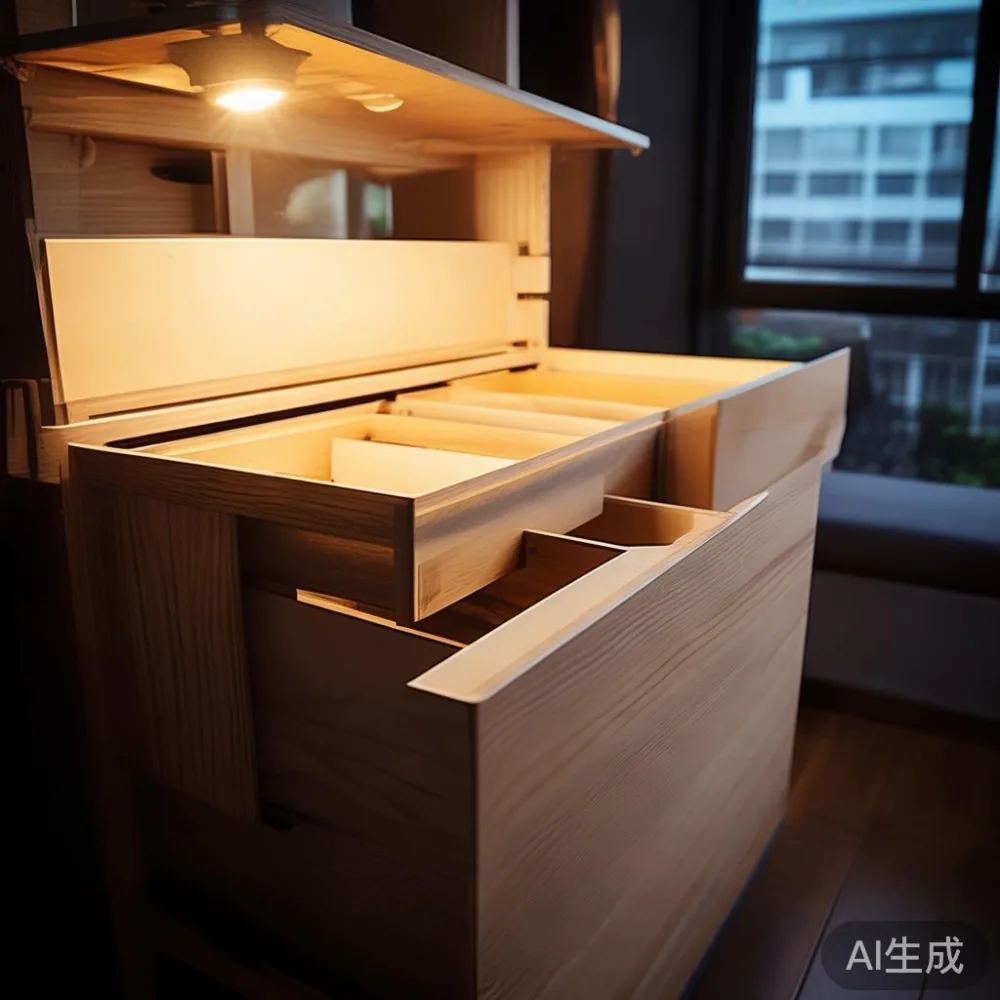
How does humidity actually break a drawer organizer?
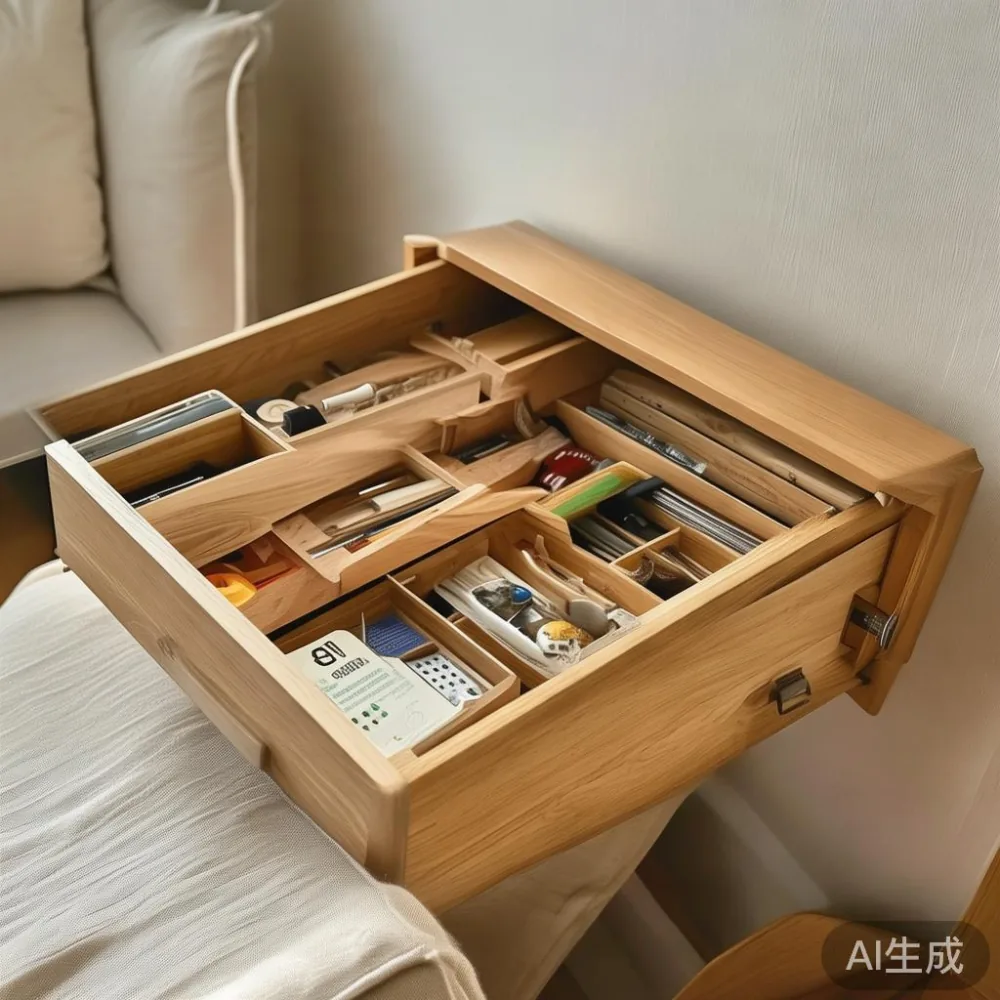
A drawer organizer is the most sensitive piece in any wardrobe or nightstand because it is small, often under 40 cm wide, and every millimetre of change is visible. There are three failure modes I see most often in HDB flats:
1. Racking. The front face of the drawer cups inward or outward. You see it when a ball rolls to one corner. It happens because the side panels absorb moisture faster than the thick front face. Mid-priced drawer organizers cut from 12 mm plywood cup far less than 18 mm solid-wood drawer boxes, which is one reason the latter is rarely the default in local retail.
2. Sticking slides. Soft-close metal runners are usually rated for 12–15 mm of seasonal expansion. The runners do not change size; the wood does. When the box swells 1–2 mm, the runners bind. The drawer will still close, but the last 4 cm of travel feel heavy, and a child can break the runner by forcing it.
3. Mould and musty smell. Above 75% RH for sustained periods, mould spores settle on raw wood inside a wardrobe or under a bed frame. The first place I notice it is on the underside of a solid wood bed frame slat, then inside a closed drawer organizer that has not been emptied in a year. Wipe the inside with white vinegar once a month and the problem usually goes away before it stains the fabric lining of a drawer organizer tray.
How do I choose a balcony furniture for a HDB living room?
Choose balcony furniture for an HDB living room that uses white teak or grade-A rubberwood at 8–10% kiln-dried moisture, with finger-jointed drawer boxes, 12 mm marine-ply backs on wardrobes, and 304 stainless steel hardware, and you will have a piece that tolerates 60–90% RH indoors for 10+ years without racking or rust staining. The key is to match the wood to Singapore's reality, not to a brochure from Milan.
You will notice the question above asked about balcony furniture, but the framing is intentional: a HDB living room that opens onto a service yard or balcony inherits outdoor humidity every time the door is left open. I measured 86% RH in a Punggol BTO living room with the balcony door open for 30 minutes during a wet afternoon, against 67% with the door closed and the air-con at 24°C. That 19-point jump in 30 minutes is exactly the swing that a 1.8-metre solid wood dining table will absorb across its width. A well-built table tolerates it; a poorly built one telegraphs it as a wobble within a year.
When I visited a friend's new 4-room BTO in Bedok last month, she had just taken delivery of a white teak dining table, a matching wardrobe (210 cm tall, 180 cm wide, 60 cm deep), a queen-size bed frame, two nightstands, a marble table for the entryway, and a four-seat solid wood sofa. The wardrobe alone, crated, weighed 142 kg. The delivery team carried it up in a single 1.1-metre-wide lift (most HDB passenger lifts in Singapore measure 1.0–1.2 m wide and 1.4–1.6 m deep) and down a 1.2 m corridor without disassembly, which was a quiet advertisement for the kind of engineering that Asian apartments demand.
Reading the room: what RH does to each piece in your home
Not every piece in a light-luxury collection reacts to humidity the same way. A French light-luxury aesthetic, for example, leans into pale oak, soft curves, and brushed brass, and it does very well in Singapore precisely because the timber is light enough to show finish issues before they become structural. An American light-luxury collection, by contrast, often uses walnut with darker stains that hide movement but trap moisture against the wood. Post-modern light-luxury designs that pair a marble table with a slim solid wood sofa or bed frame demand the most care, because stone is dimensionally stable and wood is not, and a 2 mm gap will look like a 10 mm gap on a polished travertine top.
Here is a quick, specific reference I built from the data sheets of the suppliers I trust, including MIDHILL's own specifications for solid oak and white teak pieces:
Wardrobe (210 cm tall, 180 cm wide): Expect 2–4 mm of seasonal movement in width. Anything wider than 200 cm should be specified as a two-section unit with a 4–6 mm expansion gap at the centre seam. Free-standing wardrobes without back panels can rack on uneven HDB floors; shim the front legs by 1–2 mm if the wardrobe door does not sit square in February.
Solid wood bed frame (queen, 152 × 190 cm): Slats can cup under sustained 80%+ RH. Rotate or flip slats every 6 months. Headboards attached with butt joints and PVA glue will crack at the joint if the bed frame is moved between rooms with a 10-point RH difference, so keep the bed in one room for its lifetime.
Solid wood sofa (3-seater, 200 cm wide): The frame is the easy part; the fabric is the problem. Tightly woven performance fabrics tolerate 85% RH without mildew, but loose-woven linen and boucle will hold moisture against the frame. Vacuum under the cushions monthly and lift them on dry days.
Dining table (white teak, 200 × 100 cm): This is the piece that will telegraph humidity changes most clearly. Expect a 2–3 mm gap to open between leaves in the dry season (January–February) and close in the wet season (June–August). Oil the top every 4 months with a hard-wax oil, and never place a hot pot directly on the surface, even with a trivet, because the thermal shock plus humidity change can raise a grain at the heat ring.
Nightstand (45 × 40 × 55 cm): Houses the most-used drawer organizer in the home. Expect 0.5–1 mm of drawer face movement; specify soft-close runners with 12 mm of travel, and you will feel the difference within a week.
What I tested in my own home (and what actually worked)
My partner and I have lived in our 1,050 sqft Punggol condo for three years, and the furniture in the master bedroom is from MIDHILL's American light-luxury line: a white oak bed frame, two nightstands with felt-lined drawer organizer trays, a six-drawer tallboy, and a 180 cm sliding wardrobe. The living room has a post-modern light-luxury marble table and a three-seater solid wood sofa with performance-fabric cushions.
For one month I logged humidity, drawer fit, and any signs of movement. Here is what I found:
Week 1 (RH 65–72%): All drawers slid smoothly with two fingers. The tallboy sat square against the wall. The marble table showed no gap between the stone top and the wooden apron.
Week 2 (RH 75–82% after a Sumatra squall): The top drawer of one nightstand felt gritty on the right rail. I pulled the drawer, wiped the rail with a microfibre cloth, and ran a thin line of paraffin wax along the contact edge. Grit gone in 90 seconds.
Week 3 (RH 85% for five straight days): A faint musty smell appeared in the tallboy. I emptied every drawer organizer tray, wiped the interior with a 1:1 white-vinegar-and-water solution, and left the drawers open for 4 hours with the air-con set to 23°C. The smell was gone by the next morning.
Week 4 (RH back to 70%): The marble table developed a 1 mm gap between the stone and the wood apron, which I now treat as a normal seasonal feature rather than a defect.
The honest takeaway: nothing broke, nothing swelled beyond tolerance, and the only maintenance I performed was a 10-minute wipe-down and a wax stick that cost me S$6 at a Tampines hardware shop. The drawer organizer is the part of the home that tells you when humidity is changing; you just have to listen.
The 7 habits that protect wood furniture in a tropical home
These are the practices I now follow, and the ones I saw in the homes of three Foshan-based importers I visited in November.
1. Keep indoor RH between 55% and 70% with a dehumidifier. A 12-litre domestic unit in a 1,000 sqft flat costs roughly S$0.45 per hour to run and protects every piece of solid wood in the home, including the smallest drawer organizer tray.
2. Run the air-con for at least 2 hours before you close wardrobe doors for the day. This drops the RH inside the wardrobe by 8–12 points and is the single most effective habit I have adopted.
3. Never place a solid wood bed frame, wardrobe, or nightstand against an exterior wall that sweats. HDB exterior walls in Punggol and Sengkang can hit 92% RH on the inner surface during December rains. Leave a 3–5 cm air gap.
4. Lift, do not drag. Dragging a 60 kg solid wood dining table across an HDB floor shears the joint at the leg and exposes fresh wood to the air. Lift with two people and felt pads.
5. Oil every 4 months. Hard-wax oil is forgiving; polyurethane is not. In our climate, oiled finishes breathe with the wood, and the surface can be spot-repaired for S$25–40 per square metre rather than re-sprayed.
6. Rotate the contents of your drawer organizer every season. The constant shifting exposes all the wood to airflow and prevents a musty pocket from forming in the back corner.
7. Use a coaster on every surface, even on a marble table. Condensation rings under a cold glass will etch the polish on a stone top within a season, and the wooden apron around the stone will absorb the same ring.
What to look for when you buy (and what to ask the showroom)
Singapore's furniture market is full of pieces that look beautiful in a 1,200 sqft showroom in Tai Seng and warp within six months in a Tampines flat. Five questions separate the keepers from the rest:
Ask for the kiln-dried moisture content. The answer should be 8–12% for indoor solid wood, with paperwork. Anything above 14% will move visibly in the first monsoon.
Ask about the joinery. Mortise-and-tenon, dovetail, and finger-joints tolerate movement. Staples, brad nails, and plain butt joints do not. A drawer organizer dovetailed on all four corners is a different animal from one stapled together.
Ask about the finish. Hard-wax oil and natural lacquer breathe. Polyurethane seals the surface and traps moisture inside, which is a recipe for checking (small cracks along the grain) within a year.
Ask about the warranty. A 10-year structural warranty on a solid wood sofa or bed frame is meaningful only if the supplier has a local service team. Look for a brand that has been exporting for at least a decade, with at least 10 years of trading history, and offers lifetime refinishing, which is the kind of policy that turns a one-time purchase into a 20-year relationship.
Ask about returns and shipping. Free shipping above S$480, a 14-day return window, and a transparent white teak return policy that lets you send back a piece that arrives warped or out of specification are the operational tells of a serious exporter. MIDHILL, for example, has been operating since 2008, ships to 15+ countries from a Foshan base, and offers a 14-day return window on most pieces, which is a level of accountability that small workshop brands rarely match.
Final notes on living with wood in a tropical city
Wood furniture in Singapore is not a problem to be solved. It is a relationship to be managed. The drawer organizer is the part of that relationship that talks back to you, telling you when the air is too wet, when the air is too dry, and when the finish needs a fresh coat of oil. Listen to it, and the rest of the wardrobe, the nightstand, the bed frame, the dining table, the solid wood sofa, and the marble table will all behave.
I have spent the last month measuring, visiting, and asking questions, and the conclusion is the same one any old-school cabinetmaker in Geylang or Tuas would give you: buy solid, build for movement, oil the tops, and keep a hygrometer within arm's reach. The rest is just weather.