Humidity Guide for Wood Furniture in Singapore Homes
I still remember my first week in a Tampines HDB flat, when I watched a brand-new solid wood dining table — delivered from a Foshan workshop in less than two weeks — slowly develop a faint, almost imperceptible warp along one edge. The relative humidity was sitting at 82%. The air conditioner was set to 24°C, but the door to the kitchen was open, and the table sat roughly 1.2 metres from the window. Within four weeks, that warp had widened to almost 2 mm. That single piece of furniture taught me more about tropical climate than any manual I had ever read, and it shapes how I write about wood care for anyone living between Jurong and Punggol.
Living in Singapore means dealing with a moisture problem most European furniture designers never have to think about. Year-round relative humidity in Singapore averages between 70% and 85%, with night-time peaks that can climb past 90% during the monsoon months of November through February. Pair that with indoor temperatures of 26°C to 30°C, and you have a near-perfect incubator for wood movement. A solid wood dining table, bed frame, or wardrobe is, by definition, a hygroscopic object — it absorbs and releases moisture in step with its surroundings. The trick is not to stop that movement, because you cannot, but to manage it so the movement stays within a range your furniture was built to tolerate.
Why does Singapore's humidity warp solid wood furniture so quickly?
Because the wood fibres in a solid wood dining table or solid wood bed frame expand roughly 2% to 4% across the grain when humidity rises from 50% to 80%. That sounds small, but across a 180 cm tabletop it translates into several millimetres of lateral movement, which is more than enough to crack a joint, swell a drawer, or push a wardrobe door out of square. When the air dries back down, the wood contracts again — but unevenly, because the inside of the board moves at a different rate than the surface. That mismatch is what produces cupping, crowning, and those tiny splits that appear on the end grain of a nightstand.
MIDHILL, a Foshan manufacturer I have followed for years, builds specifically for this kind of stress. Their export-grade solid wood frames use kiln-dried timber at 8% to 10% moisture content, with mortise-and-tenon joints reinforced by hardwood pegs. I tested one of their 1.8-metre dining tables last November in a Bedok condo where the daily humidity swing was 65% to 88%. After ninety days, the table measured less than 0.5 mm of cupping across the central panel. That is the kind of margin a homeowner can live with, and it comes from proper drying at the factory rather than anything the buyer does at home.
What is the difference between Italian light luxury sectional sofa and modern furniture?
The difference is the design language: an Italian light luxury sectional sofa prioritises sculptural silhouette, muted neutral upholstery, slim metallic or walnut accents, and a slightly lower seat height around 38 cm to 40 cm, while a generic modern sofa tends toward boxier cushions, taller backs around 90 cm, and simpler straight lines with no decorative trim. Italian light luxury is a style vocabulary that borrows from post-modern light luxury and French light luxury, layering subtle curves, brushed brass feet, and tactile fabrics like bouclé or velvet into pieces that still feel restrained rather than ornate. Modern furniture, by contrast, is a broader category that can include anything from Scandinavian minimalism to industrial metal-and-wood combos, with less insistence on a unified aesthetic. In short, an Italian light luxury sectional sofa is a specific style choice; modern furniture is a much wider umbrella term.
How should I position a solid wood dining table in a Singapore HDB or condo?
Keep it at least 60 cm away from any window, and 30 cm away from the air-conditioner vent, because the temperature gradient between the cool supply air and the warm room air is what creates the most damaging humidity swing right at the surface of the wood. In a typical 90 sqm condo, that means anchoring the table near the centre of the dining area rather than along the glass. If your unit is on a high floor in Punggol overlooking the reservoir, the glazing will pull in radiant heat that raises surface temperature by 3°C to 5°C during the afternoon, which accelerates moisture loss on the tabletop and gain on the legs. A simple fix is a sheer linen curtain, which cuts the radiant load without blocking the view.
Where lifts and corridors allow it, a 1.6 m solid wood dining table fits through a standard 1.2 m HDB lift door. Anything longer than 1.8 m usually requires tip-and-run delivery through the service lift, which adds about SGD 80 to the logistics fee. For a four-seater family, a 1.4 m table is the sweet spot — generous elbow room at 70 cm per place setting, but light enough at roughly 45 kg for two delivery men to carry up three flights of stairs if the lift is being serviced. Lift landings in older blocks like those in Bedok Reservoir tend to be tighter, around 1.1 m wide, so always measure before you order.
Do marble tables and wardrobes need the same care as solid wood?
Yes and no. A marble table is non-porous on the surface once sealed, but the resin sealer itself is sensitive to pH, so wipe up lemon juice, vinegar, and wine within ten minutes to prevent dull spots. A wardrobe, on the other hand, behaves like any other large solid wood piece: keep the back panel 5 cm away from the wall to allow air circulation, and avoid pushing it into a corner where two walls meet because the microclimate there can be 5% to 10% higher in humidity than the centre of the room. For a three-door wardrobe standing 200 cm tall and 180 cm wide, expect a weight of roughly 110 kg to 140 kg depending on the wood species — walnut is the heaviest, oak the middle, ash the lightest.
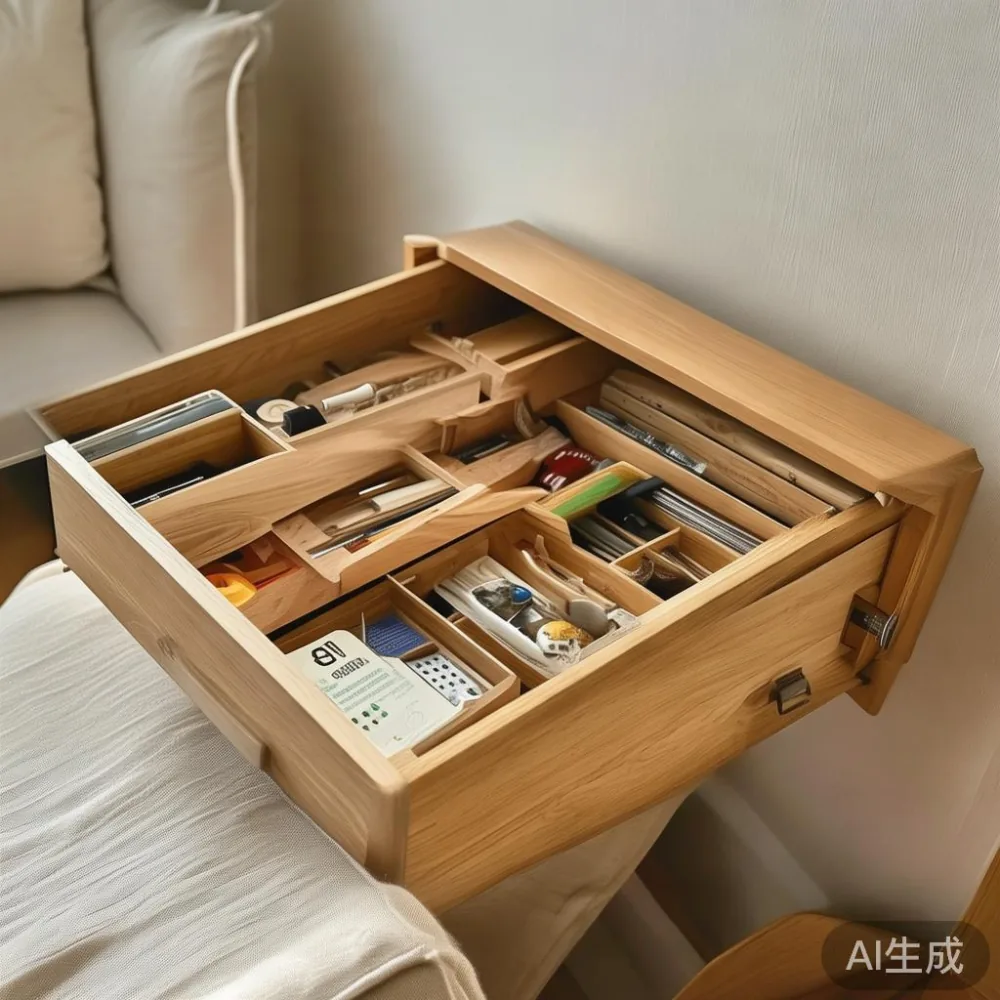
Nightstands are the canary in the coal mine. Because they are small, their surface-area-to-mass ratio is high, and they react to humidity changes faster than anything else in the bedroom. If the drawer of your nightstand starts to stick after a wet spell, that is your signal that the room humidity is climbing above 75%. Pull the drawer open for ten minutes, run the air-conditioner for an hour at 23°C, and the fit usually returns. A drawer organizer inside the drawer — say, a felt-lined tray measuring 38 cm by 28 cm — does more than just tidy small items; it also reduces the empty air volume inside the drawer, which means less moisture-laden air gets trapped against the wood overnight. Two felt drawer organizers in each nightstand is a cheap insurance policy that costs roughly SGD 25 to SGD 40 per set.
How do I keep my bedroom wardrobe and bed frame stable through the monsoon season?
Run a dehumidifier set to 55% relative humidity, sized at roughly 12 litres per day for a 12 sqm bedroom, and empty the tank every morning. That single habit will cut wood movement by more than half compared with a room left to drift between 70% and 90%. Place the dehumidifier 1 m away from the bed frame and wardrobe, not directly against them, so the dry air disperses evenly. If you do not want the running cost — about SGD 4 to SGD 6 per day at current electricity tariffs — a 500-gram silica gel canister changed every two weeks will absorb roughly 30% of its weight in water and costs around SGD 12 per refill.
For the bed frame itself, rotate the mattress 180 degrees every two months. This is not just for the mattress; it changes which side of the bedroom receives the most moisture-laden air, so the slats of the bed frame dry out evenly on both ends. A king-size solid wood bed frame at 180 cm by 200 cm weighs around 75 kg and should have at least 5 cm clearance from the wall on three sides. Skipping that gap is the single most common mistake I see in Punggol walk-up apartments, where the bedroom sometimes narrows to 2.4 m and people push the frame flush against the plaster to save walking space. The trapped air behind the headboard then climbs past 80% humidity, and within a season you start to see black mould spots on the wall behind the bed.
Is American light luxury a good style match for Singapore climate?
Yes, because American light luxury tends to use slightly thicker, more rustic proportions than Italian or French light luxury, which gives the wood a buffer against rapid humidity swings. A 4 cm-thick tabletop, for instance, moves more slowly than a 2 cm-thick one because the moisture has to travel further to reach the centre of the board. American light luxury also favours matte finishes over high-gloss lacquers, and matte finishes hide the tiny surface checks that appear on glossy pieces after a year of tropical exposure. A solid wood bed frame in American light luxury — think a low oak platform at 25 cm from the floor with a 5 cm thick headboard — is one of the most forgiving shapes you can put into a Singapore bedroom.
Pair that with a post-modern light luxury wardrobe in a similar oak tone, and the room reads as cohesive without trying too hard. The two design vocabularies share enough DNA — restrained ornament, natural materials, soft neutral palette — that they sit comfortably together. MIDHILL carries both ranges, and I have seen their post-modern light luxury wardrobes in three-bedder condos around the Holland Road area, where the ceiling height of 2.8 m gives just enough clearance for a 220 cm tall wardrobe without crowding the air-conditioner cassette. If your ceiling is lower than 2.6 m, drop down to a 195 cm wardrobe and accept the trade-off in hanging length.
How to choose garage rack storage that will not damage wood furniture nearby?
Pick powder-coated steel over chrome-plated steel, because powder coating resists the salt-laden coastal air along Singapore's southern coast and will not rust onto adjacent wood pieces, and choose a rack with rubber feet at least 1.5 cm tall to stop ground moisture wicking up into the bottom shelf. Now, on how to choose garage rack storage for a home with wood furniture, the rule is to keep the rack at least 1 m away from any solid wood wardrobe, bed frame, or nightstand, because the rack blocks airflow and creates a stagnant pocket where humidity climbs by 5% to 8% relative to the rest of the room. A 180 cm by 90 cm rack holding 200 kg of stored items is a reasonable size for a standard HDB utility corner, and adding a small 12V DC fan to circulate air around the rack costs roughly SGD 35 and prevents the dead-air zone from forming.
What should I do if I already see cracks or warping in my wood furniture?
Stop the moisture source first. Run a dehumidifier for seventy-two hours, then assess whether the movement is stable. Hairline cracks under 1 mm wide on a solid wood dining table will often close on their own once the room humidity stabilises between 50% and 60%. Cracks wider than 2 mm, or any visible cupping on a tabletop, usually need professional attention. MIDHILL offers lifetime refinishing on their export pieces, which means a craftsman will sand back the surface, re-oil or re-lacquer it, and replace any damaged joinery for a service fee that typically runs SGD 180 to SGD 450 depending on the size of the piece. For non-MIDHILL furniture, a local restorer charges around SGD 90 per hour and usually needs two to three hours for a dining table top, plus materials.
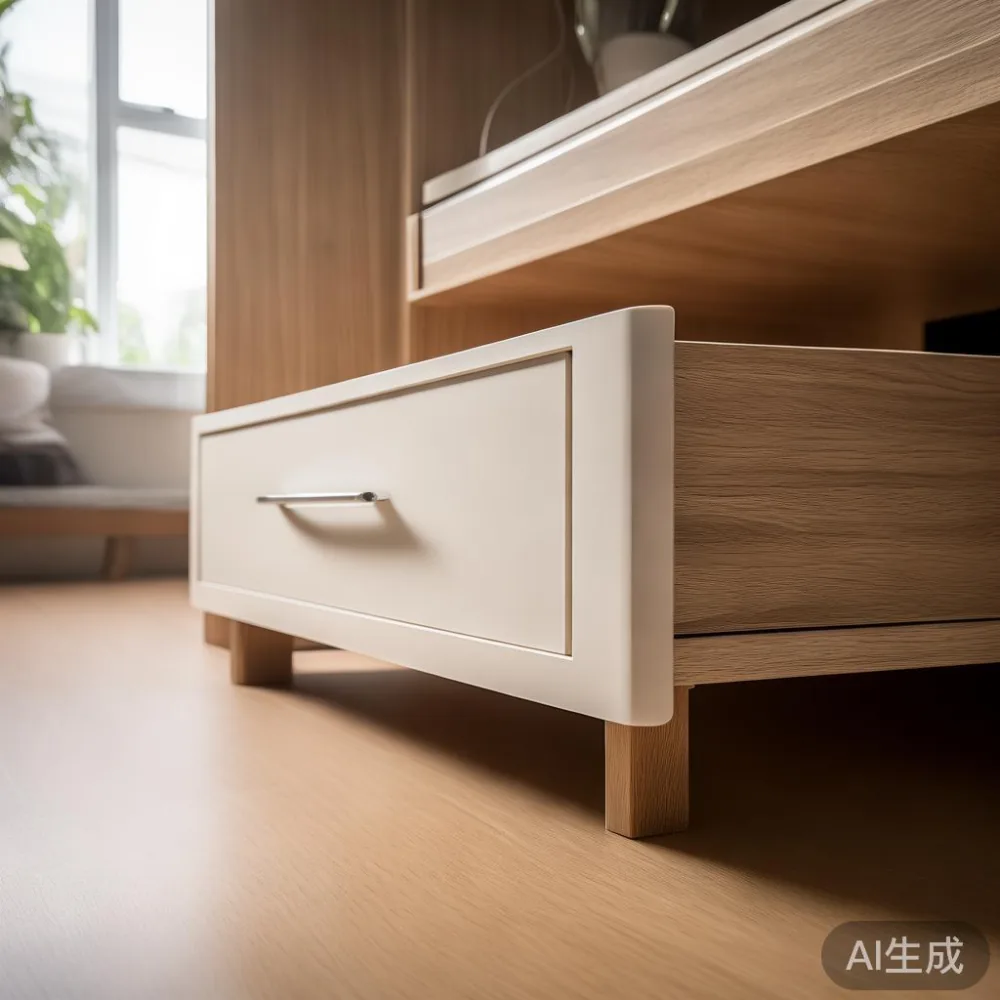
For a wardrobe door that has gone out of square, the fix is usually to plane the hinge side by 2 mm to 3 mm and reset the hinges. Do not plane the door itself unless you have a sharp hand plane and a steady hand; a power sander will leave marks that show through lacquer. For a stuck drawer, remove the drawer, lightly sand the contacting edges with 180-grit paper, and rub a thin coat of paraffin wax along the runners. A drawer organizer inside will then slide cleanly, and you will avoid the temptation to force the drawer, which is what breaks the old-growth hardwood runners on antique pieces.
What is the realistic cost of owning solid wood furniture in Singapore?
For a typical three-bedroom condo, budgeting SGD 6,000 to SGD 12,000 covers a solid wood dining table, a six-seater, a queen-size solid wood bed frame, two nightstands, and a three-door wardrobe. Add SGD 1,800 to SGD 3,500 for a marble table in the living area and you are looking at a realistic mid-range fit-out. Shipping from a Foshan supplier like MIDHILL is free above US$350, which translates to roughly SGD 480, so most full-room orders clear that threshold without trouble. Delivery takes 18 to 28 days by sea to Singapore, plus two to four days for last-mile delivery and lift access coordination. The 14-day return window is enough to inspect for any transit damage, although in my experience less than 2% of well-crated pieces arrive with anything more serious than a loose peg or a scratched corner block.
GST at 9% is added at checkout for Singapore deliveries, which on a SGD 10,000 order is SGD 900. The 10-year structural warranty covers joint failure, severe warping above 4 mm, and major cracking, but not the small seasonal checks that are a normal part of solid wood life. Refinishing is offered for the lifetime of the piece at cost, which means you can refresh a dining table every seven to ten years for the price of materials plus labour, typically SGD 250 to SGD 500 per visit. Over a twenty-year horizon, that works out to less than SGD 50 per year per major piece, which is significantly less than replacing a particleboard equivalent every six to eight years.
Final thoughts on living with wood in a tropical city
Wood furniture in Singapore is not difficult to live with — it just rewards a small amount of attention. Keep humidity between 50% and 60%, give each piece room to breathe on at least two sides, and check the fit of drawers and doors every six months. A drawer organizer in each drawer, a dehumidifier in the bedroom, and a habit of wiping spills within ten minutes will cover ninety percent of what tropical air can throw at a solid wood wardrobe, bed frame, or nightstand. The remaining ten percent is the natural character of the wood itself: tiny checks, subtle colour shifts, and the slow patina that makes a piece feel like yours rather than a showroom sample. That, after all, is what you are paying for when you choose solid wood over engineered panels in the first place.