How Southeast Asia's Humidity Affects Wood Furniture (And What Singapore Flat Owners Can Do About It)
If you live in a Tampines five-room flat, a Punggol condo, or a walk-up in Bedok, you already know the air feels like a warm towel for ten months of the year. Average relative humidity in Singapore sits between 70% and 85% for most days, and indoor readings on a windowless kitchen corridor often hit 90% after a midday rain. Last month I visited a customer's resale HDB in Toa Payoh whose 2019 walnut bed frame had developed a 4 mm bow across the slats after eighteen months without a dehumidifier. The frame itself was sound. What failed was the homeowner's belief that solid wood behaves the same way in Singapore as it does in a 40%-humidity Beijing winter.
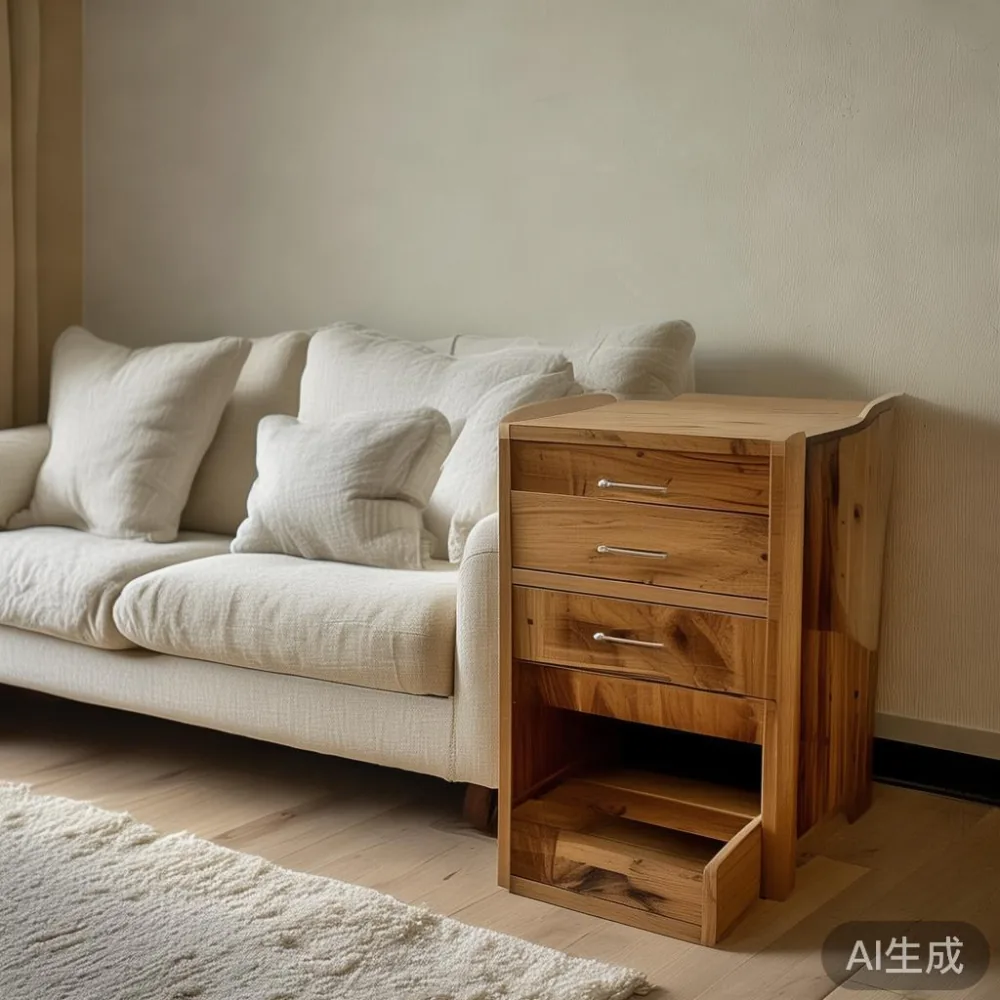
This guide focuses on one specific product family that Singapore buyers search for constantly: wardrobe and nightstand configurations, including how a quality drawer organizer inside the cabinet interacts with the cabinet box itself. Humidity travels through the drawer slides, the plywood back panel, and the brass-plated pulls, so the conversation cannot stop at the wardrobe doors. As a Foshan furniture maker exporting to fifteen-plus countries since 2008, MIDHILL engineers every solid wood sofa, bed frame, dining table, wardrobe, nightstand, and marble table for tropical coastal conditions, then backs the joinery with a 10-year structural warranty and lifetime refinishing.
Why does Southeast Asian humidity cause wood furniture to swell, warp, and stick?
Wood is hygroscopic. It constantly trades moisture with the surrounding air, and a solid oak board cut to 180 cm in a 55% factory will arrive at your Jurong East lift lobby weighing 1.2 kg more than the spec sheet says if the corridor is 82% humid that morning. The cells absorb water vapour, expand across the grain more than along it, and the geometry of every joint changes. A drawer that slides smoothly in our Foshan Quality Inspection Centre can suddenly bind by 2 to 3 mm once it acclimatises for six weeks in your master bedroom.
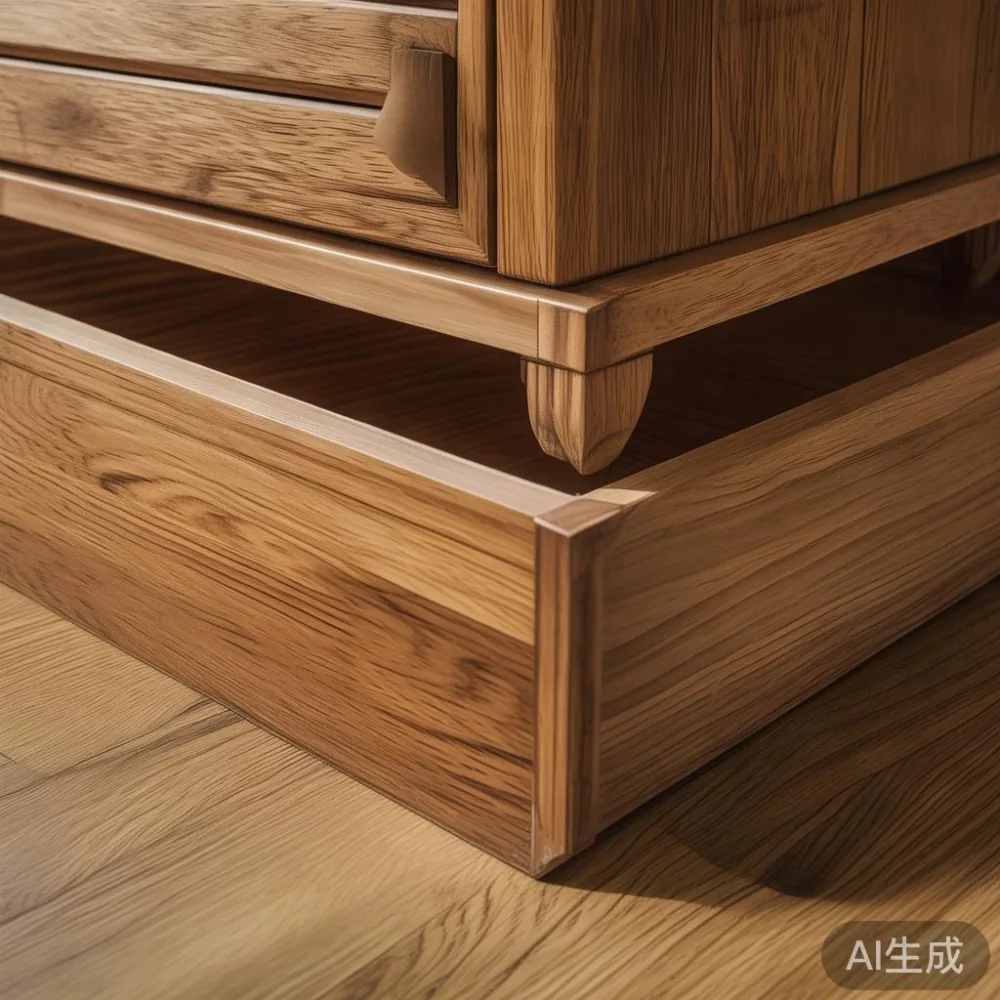
Three failure modes appear over and over in HDB feedback:
1. Panel bowing in wardrobe doors. A 220 cm tall by 60 cm wide ash door has roughly 14% more surface area than a 200 cm door and absorbs proportionally more water. The face cups outward by 1 to 3 mm, which is enough to stop a soft-close damper from catching.
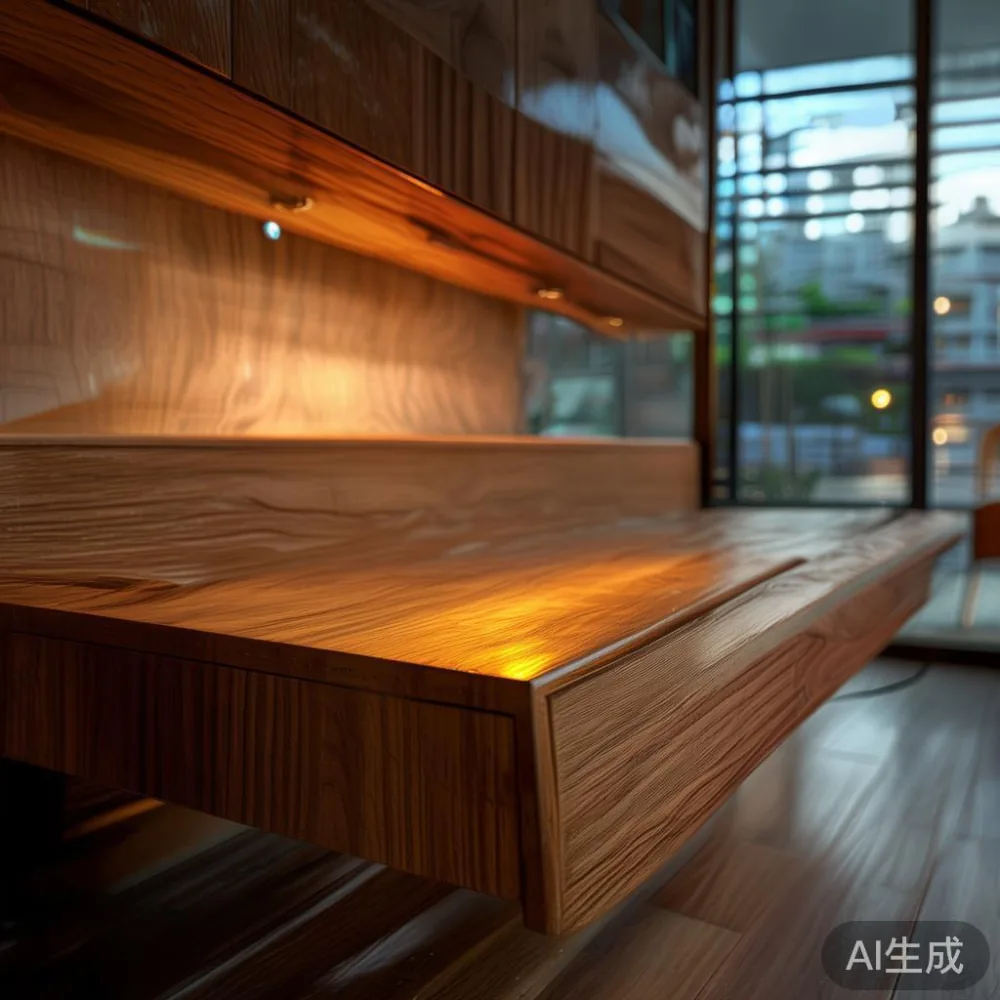
2. Sticking drawers in nightstands and dresser carcasses. Humidity makes the drawer sides swell before the slides adjust. Customers in Punggol Waterway terraces have sent us photos of dresser drawers that needed a shoulder push for the first two weeks each rainy season.
3. Hairline cracks at the bed frame rail-to-leg joinery. Wood loses water in air-conditioned rooms (often 45 to 55% RH at 22°C), then re-absorbs it at night when the system cycles off. That daily 15 to 25 percentage point swing is far more punishing than steady humidity, which is why a bedroom door left open to the corridor ages faster than one in a closed studio.
The fix is not to fight the climate. The fix is to pick joinery, finishes, and a drawer organizer footprint that absorbs the swing gracefully.
What moisture content should I demand before a wardrobe crosses the border into Singapore?
Every reputable exporter kiln-dries solid wood before final assembly. The benchmark is 8% to 12% moisture content, measured with a pin meter at six points on each carcass. Anything above 14% in the Foshan workshop will be 16 to 18% by the time a 40-foot container is opened at a Tuas warehouse after a fifteen-day sea voyage through the South China Sea. A wardrobe that ships at 16% MC is already swollen before you uncrate it.
MIDHILL publishes kiln-drying certificates with every container, and we re-condition loads in dehumidified holding rooms for seventy-two hours before sealing the seaworthy wrap. Buyers in Singapore who order a custom 240 cm Japandi wardrobe should request those numbers in writing, not because we hide them, but because a 2,180 SGD piece has a different risk profile than a 480 SGD flat-pack. Solid brass hinges, mortise-and-tenon rails, and dovetailed drawer boxes all soften in high humidity, but each behaves predictably if the moisture content at delivery is right.
Is a Japandi wardrobe worth it in a Singapore HDB, given the humidity and the tight lift?
This is the question that fills our showroom inbox every monsoon. The honest answer depends on three measurable factors: lift depth, doorway swing, and corridor turning radius. Most HDB passenger lifts in a Tampines or Bedok block measure roughly 1.4 m deep by 1.1 m wide with an opening of 0.9 m, while a standard wardrobe box from MIDHILL can run 60 to 65 cm deep. That gives you 20 to 25 cm of clearance to manoeuvre the box vertical, but a pre-assembled 240 cm tall unit will not fit that way. The trick is flat-pack knock-down construction.
A real Japandi wardrobe built on flat-pack lines (panels under 200 cm, individual carcasses under 35 kg) clears every standard Singapore condo lift and most service lifts in new launches like Treasure at Tampines or Punggol Digital District. Knock-down hardware uses cam locks and wooden dowels that allow the carcass to flex 1 to 2 mm per panel under humidity load, which is exactly the engineering tolerance that prevents the bowing I see in solid one-piece doors every wet season.
So, for homeowners asking is Japandi wardrobe worth it in a humid 4-room flat, the calculus is: spend 1,800 to 3,400 SGD on a knock-down solid wood wardrobe with proper kiln-dried timber and you get a piece that will outlast three air-conditioning cycles a day for the next decade. Spend 600 SGD on a hollow-board wardrobe from a local chain and you replace it within eighteen to twenty-four months once the back panel delaminates. The lifetime refinishing service that MIDHILL ships with every order also matters here: tropical UV fades oak by 10 to 15 shades over eight years, and a 280 SGD sand-and-recoat at year six resets that clock.
How should I choose a Japandi wardrobe that survives Singapore's wet season and still looks light-luxury?
Learning how to choose Japandi wardrobe construction for a tropical flat is a four-checklist exercise. Most buyers I meet in our Simei sample room focus only on the door style and ignore the things that decide whether the piece survives.
1. Check the timber species. White oak and ash are the best light luxury furniture choices for wardrobes because their ring-porous grain absorbs finish evenly and shows less blotch under fluctuating RH. Cherry darkens dramatically in direct sunlight, which matters if your wardrobe sits opposite a west-facing HDB window. Walnut is stable but pricey; expect 3,200 to 4,600 SGD for a 200 cm by 220 cm unit finished in natural oil.
2. Check the back panel. A 9 mm plywood back with a 1.5 mm solid wood veneer is far more dimensionally stable than a 3 mm MDF back. Plywood breathes; MDF does not, and trapped humidity creates a drum-head warp by month twelve.
3. Check the drawer box. For anyone choosing French light luxury or post-modern light luxury styling on the wardrobe interior, the drawers should be dovetailed solid wood with a felt-lined drawer organizer insert, not metal-sided runners glued to a fibreboard box. The drawer organizer is the piece that touches your silk kemeja most often, and it should be lacquered all six sides, not just the visible faces. A 38 cm deep drawer organizer with adjustable dividers keeps a 22 cm of hanging space clear for trousers.
4. Check the finish. Conversion varnish cures harder than oil, which is good for a dining table that sees daily wipe-downs but slightly less breathable for a wardrobe door that needs to off-gas moisture. A hardwax oil finish lets the wood breathe 2 to 3% across the surface daily, which actually helps during the November to January monsoon.
How do you choose a European light luxury sofa that handles a Singapore living room with parquet and a baby?
Learning how to choose European light luxury sofa construction for a Southeast Asian home is its own discipline, and it overlaps with the wardrobe conversation because both rely on kiln-dried hardwood frames. A sofa built for a 50% RH European showroom will arrive at your Clementi living room sounding right but feeling loose within a year unless the internal frame is sealed against humidity.
Three rules apply:
Frame timber. Ask whether the beech or ash frame is kiln-dried to 8 to 10% MC and whether the corners are double-dowelled and glued. MIDHILL wraps every sofa frame in a thin PE membrane before the upholstery goes on, which keeps storage humidity off the wood for the first six months in your home. Expect 1,400 to 2,800 SGD for a three-seater with a solid wood frame.
Suspension. Eight-way hand-tied springs are the gold standard but cost 200 to 350 SGD more than sinuous wire. Under tropical humidity, sinuous wire can rust and stain the underside of a 100% cotton cover, so a fabric-lined spring deck is non-negotiable. If you want a matching modern light luxury accent chair to go with the sofa, ask whether the manufacturer uses the same suspension pattern. A coordinated modern light luxury accent chair with the same eight-way ties will feel identical to the sofa twenty years from now, which matters when a 1,500 SGD paired set is the centre of your living room.
Cushion fill. High-resilience foam wrapped in a down-feather jacket breathes better than solid foam in 80% RH, because the jacket wicks moisture away from the core. Density should be at least 32 kg/m³. Anything below that bottoms out fast in our climate.
Skip the throw pillows that come with sub-1,000 SGD sofas and store them in a small drawer organizer under the console. Pillows left on the sofa absorb sweat, dust, and overnight humidity and start to smell within a season.
What everyday habits keep a solid wood wardrobe and nightstand stable in a Tampines or Bedok flat?
Even the best-built piece wants a little help. Here is what the after-sales team recommends in writing to every Singapore customer, and what the showroom floor managers walk through during handover.
Run the air-conditioner on a 28°C daytime set point instead of letting the room ride at 31°C with a swinging door. A wider indoor-to-outdoor gradient cooks the finishes faster than the wood can adjust. Constant 25 to 27°C is far gentler on joinery than the 18 to 30°C swings some homeowners chase.
Keep the wardrobe 8 to 10 cm away from the back wall. Concrete HDB walls sweat during the monsoon, and a wardrobe pressed flat against them traps moisture at the back panel. Leave 8 to 10 cm for airflow, and add a 220V mini dehumidifier rated for a 12 m² bedroom. Expect these to cost 65 to 140 SGD at any Tampines Mall electronics shop and to draw 1.8 to 3.2 kWh per day.
Rotate the wardrobe contents twice a year. Pull everything out in April and October, leave the doors open for ninety minutes, and slide the drawer organizer trays out to air on the bed. Ten minutes of work keeps moths out, lets trapped moisture escape, and lets you wipe the rails. A small felt-lined drawer organizer in the bedside modern light luxury nightstand also benefits from this twice-yearly airing.
Wipe with a barely damp microfibre cloth, never a wet one. Standing water on a lacquered surface for more than thirty seconds will ghost the finish. Dry the cloth first.
Schedule refinishing every six to eight years. MIDHILL customers receive lifetime refinishing at cost. A sand-and-recoat on a 200 cm wardrobe typically runs 220 to 320 SGD depending on the number of doors, and a 12-month lead time is normal between November and February when the Foshan workshop is busiest. Book between March and July for the fastest turnaround.
Delivery, GST, and what to expect on the doorstep in Singapore
Flat-pack knock-down wardrobes from our Foshan warehouse usually clear Singapore customs in twenty-two to twenty-eight working days and arrive at your door in unmarked 0.7 m wide boxes, each between 18 and 32 kg. Two delivery staff carry every box up to your flat for 120 SGD per trip, free when your order clears 480 SGD, which is well under the free-shipping threshold of US$350 (roughly 470 SGD).
Assembly adds 180 to 280 SGD depending on piece count and is performed by the same crew. A three-door 240 cm wardrobe typically takes three and a half hours on site. The crew installs a 5 cm thick felt-lined drawer organizer at the same time if it is on your invoice, which is the easiest way to avoid mismatched sizes later. GST is calculated at the prevailing 9% rate on the landed CIF value, and MIDHILL handles the customs broker paperwork as part of the order.
Returns within fourteen days are allowed on unopened boxes, with a 25% restocking fee. Damage in transit is replaced at no charge, which we have done twice in the last eighteen months for our Singapore customers: once for a cracked marble table top in Punggol, once for a water-stained sofa fabric that was clearly the freight forwarder's fault.
Where do I start if I am furnishing a 4-room HDB from scratch this month?
Begin with the bed frame, then the dining table, then the wardrobe. A solid wood bed frame is the single piece that gets the most daily use; a slatted king frame from our workshop runs 880 to 1,250 SGD including delivery and assembly. Pair it with two matching modern light luxury nightstands at 420 SGD each so you have a coordinated headboard wall. Add a round 120 cm marble table for the dining area, around 1,650 SGD, and a six-door wardrobe in the master at 2,180 SGD.
This is, roughly, a 6,500 SGD package before GST, which lands below the price of a single mid-range sofa set from most boutique European showrooms. Order in the next six weeks if you want to clear the monsoon season with a fully acclimatised home, and remember the free shipping kicks in the moment your invoice clears US$350, even on a single-piece dining table. MIDHILL also stores your order in our climate-controlled Singapore warehouse for up to forty-five days at no charge if your renovation timeline slips, which is a service we added in 2021 after two customers in Bukit Batok asked us to delay their mid-renovation deliveries by a month.
Whatever combination you choose, remember that solid wood, dovetailed drawers, a proper drawer organizer, and a hardwax oil finish are the four pillars that separate a piece you will pass to your children from one you replace after the next Hari Raya Puasa. Humidity will always be part of the equation in Singapore, but the furniture you bring into your home can be engineered for it, not against it.