How Humidity in Southeast Asia Affects Wood Furniture: A Singapore Owner's Guide to Protecting Your Solid Wood Sofa, Dining Table, Wardrobe, and Drawer Organizer
Last month I visited a friend in a 12-year-old HDB flat in Bedok, and she pointed at a hairline crack running along the side panel of her teak dining table. The crack had appeared, she said, within three months of moving in. Her four-room unit sits on the 9th floor, catches morning sun on the balcony, and runs a dehumidifier only when her son has asthma flare-ups. The dining table was S$1,890 new, and she has watched it slowly open up like a parched riverbed ever since. I left her flat thinking about the question every Singapore buyer eventually asks: how do we keep solid wood furniture looking composed when the air around it refuses to sit still?
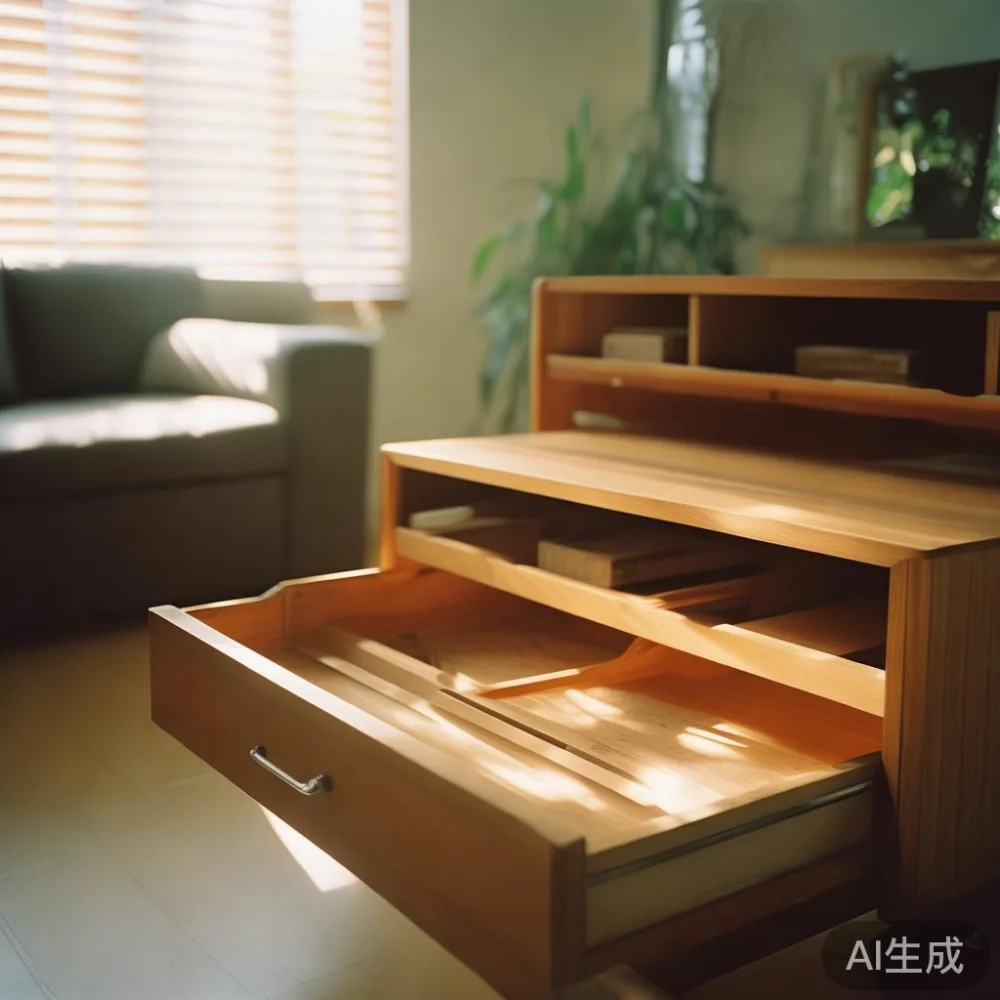
Relative humidity across Singapore averages 80–85% for most of the year, dipping to 70–75% during the brief dry window between late January and early March, and climbing above 90% during the November–January monsoon. Multiply that by an HDB flat with cross-ventilation that some corridor layouts never quite deliver, by a wardrobe pushed against a non-breathing party wall, and by a drawer organizer slotted inside a closed cabinet for months on end, and you have a quiet but persistent set of forces working on every board, dowel, and finishing coat in your home.
This guide is written for owners of solid wood sofas, bed frames, dining tables, wardrobes, nightstands, and marble tables who want to understand what humidity actually does, what realistic Singapore numbers look like, and which habits protect a piece for the next decade. I will reference our own experience as much as anyone else's, because a furniture maker only earns trust when they admit the limits of their craft — and humidity is a limit no factory can engineer away entirely.
What Exactly Does Humidity Do to a Solid Wood Dining Table or Wardrobe?
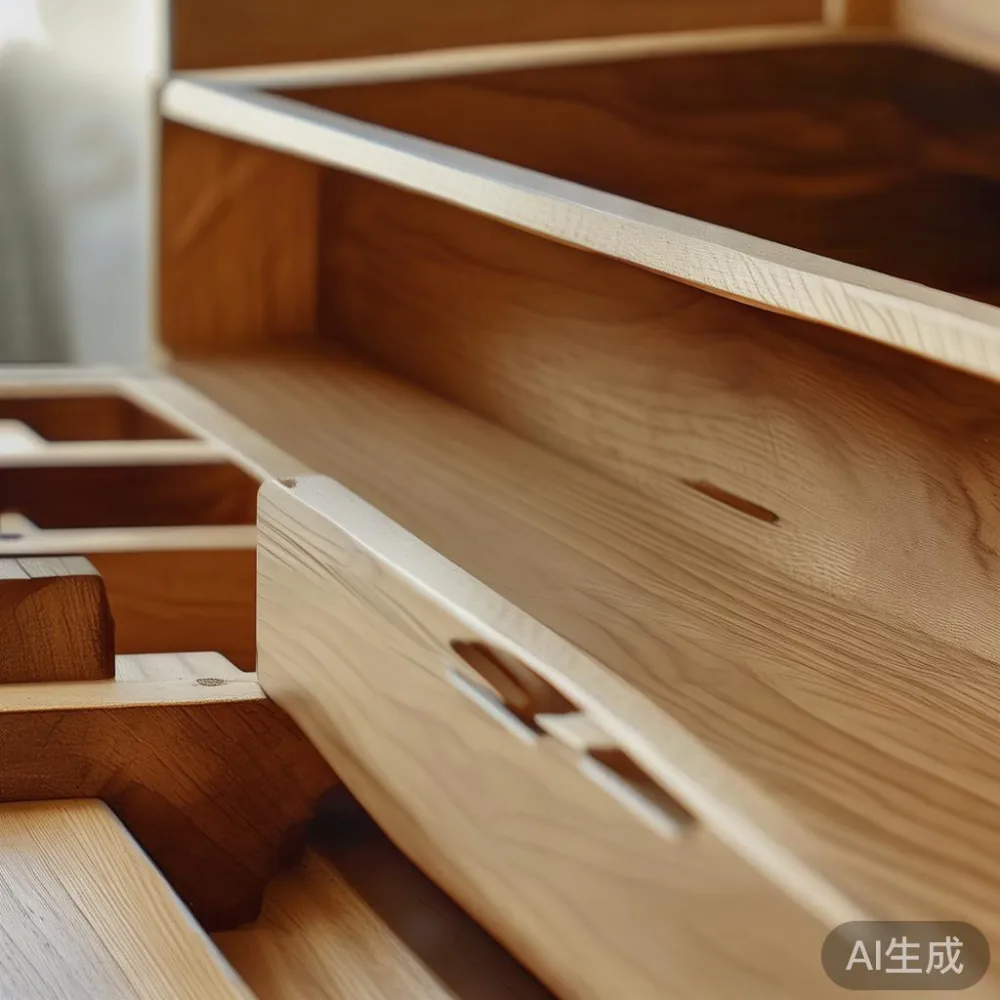
Wood is hygroscopic. It absorbs moisture from the air when the relative humidity rises, and it releases moisture when the air dries out. A solid wood dining table or wardrobe does not stay exactly the size it was on the day it left the workshop. It swells, shrinks, and occasionally cracks along the grain because the wood fibres are quietly negotiating with the room.
For Singapore homes, the useful numbers to remember are these: a 180 cm oak dining table top can move roughly 4–6 mm in width across the year, and a 220 cm wardrobe side panel can shift 5–8 mm in height between the March dry spell and the December monsoon peak. That is small, but it shows up as a sticky drawer in March and a 1 mm gap in a door panel in November. It is also why a tight drawer organizer sometimes refuses to slide after a wet week, even when nothing is visibly wrong with the wood.
Three movements matter in practice:
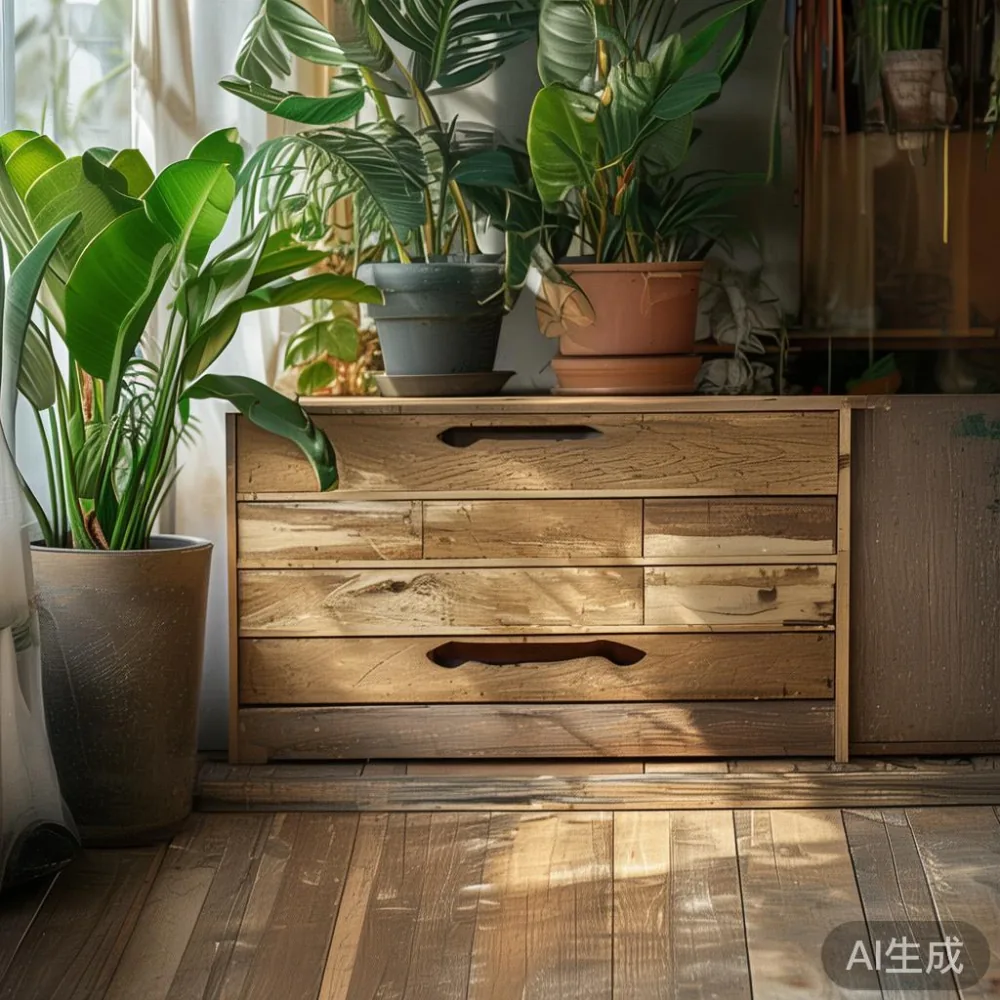
Expansion across the grain. Movement along the board's length is negligible (about 0.1%). Across the grain it is significant — 1% to 3% for most hardwoods between 30% and 90% relative humidity.
Cupping and bowing. A solid wood sofa frame, a bed frame headboard, or a wardrobe door is rarely a single board. When one face absorbs more moisture than the other (often the inner face inside a closed cabinet versus the room face), the panel cups. The bowl of the cup points toward the wetter side.
Checking at the joint. Hairline cracks usually appear at the end grain of a tabletop or where a tenon enters a mortise. End grain loses and gains moisture up to 10× faster than side grain, which is why a dining table often cracks at the ends before the middle.
None of this means solid wood is the wrong choice. It means the wood is doing its job, and the rest of us need to give it room.
Is Singapore's 80–85% Relative Humidity Really the Problem, or Is It the Daily Swing?
The short answer is the daily swing. Pure tropical humidity, handled consistently, is manageable. The damage happens when a piece sits at 88% overnight and 62% during the afternoon because the air-conditioner ran from 9 am to 6 pm. That 26-point swing in nine hours is harsher on a wardrobe or a bed frame than a steady 82% would ever be.
A 2024 walk-through I did of a 1,020 sq ft Punggol condo showed me exactly this. The owners had a French light luxury style solid wood sideboard in the living room. The corridor-side wall ran 4.5 m and backed onto the air-conditioned common corridor of the block, while the room side faced an enclosed balcony where humidity hovered at 87%. The sideboard had developed a 2 mm convex bow along its 160 cm back panel — a textbook case of one face drying while the other stayed damp. They called us not because the wood was defective, but because they could not understand why a S$2,400 piece had bent.
Two numbers worth knowing for any Tampines, Bedok, or Punggol home:
Ideal indoor target: 50–60% relative humidity, measured at the middle of the room, away from the wall.
Acceptable swing: no more than 15 percentage points in a 24-hour window. Anything beyond that stresses the joints, the drawer organizer slides, and the finishing coat.
This is also why we tell buyers that an air-conditioner set to 24 °C, with doors and windows closed for four to six hours, will pull a room down to roughly 55% — exactly where a solid wood bed frame or dining table is comfortable. The problem starts the moment you open the balcony door for ventilation.
How to Choose a Bed Frame or Wardrobe That Holds Up in a HDB or Condo
Choosing well is 60% of the battle. The other 40% is placement and care, but the piece has to start as the right piece.
For how to choose Mid-century modern bed in Singapore, the question to ask is not only about style. It is about which species of wood is doing the work, whether the slats are kiln-dried to below 10% moisture content, and whether the headboard is a single board or a laminated panel. A kiln-dried frame with quartersawn oak or ash will out-cycle a frame with plain-sawn rubberwood in this climate by a clear margin. The price difference is usually S$300–S$600 for a queen size, and it shows up as fewer seasonal creaks.
For how to choose Italian light luxury wardrobe, focus on three things. First, the back panel: a true 18–22 mm solid back with breathing gaps at the top and bottom is far more stable than a 6 mm plywood skin. Second, the door hinge system: European soft-close hinges allow the door to self-adjust as the panel expands, and a 3 mm lateral drift will not pull the hinge out of alignment. Third, the interior: a fitted drawer organizer with felt-lined compartments lets you store small items without forcing the drawer into tight tolerances.
For European light luxury for apartment settings, the conversation usually lands on proportion and air-flow. A 240 cm wardrobe in a 9 m² bedroom eats the back wall and traps moisture behind it. Choosing a 200 cm version with a 40 cm clearance on either side, or a side-by-side configuration, lets the back breathe and prevents the panel from sitting against a permanently damp plaster wall.
At MIDHILL we kiln-dry our boards to 8–10% moisture content before assembly and ship with a 10-year structural warranty, because we know that a frame built for a 60% indoor humidity is what survives a Bedok four-room flat for the next decade.
What About the Drawer Organizer, the Marble Table, and the Smaller Pieces?
Smaller pieces take the worst of it because they are closer to the floor, where humidity is highest, and they are often shoved into corners with poor air movement.
A drawer organizer is the most under-rated humidity sensor in any home. Place one inside a closed wardrobe for two months and the felt liners will feel slightly stiff in March and slightly soft in November. That is the wood underneath breathing. Choosing a solid wood organizer — for example a 45 cm × 35 cm ash or walnut unit — gives you a piece that tracks with the wardrobe rather than against it. A plywood organizer with a paper laminate will delaminate at the corners within 18 months in a Tampines flat that runs no dehumidifier.
A marble table is sometimes treated as immune to humidity, but the wooden sub-frame, the apron, and the stretcher are not. The marble top is stable, but the legs of a 120 cm round dining table can still cup if the air around them sits at 85% for weeks. Keep coasters under anything wet, and never drape a damp cloth over the apron.
A solid wood sofa frame usually hides inside upholstery, which is its protection. The risk shows up at the feet, where exposed end grain meets a wet floor after a mopping session. Felt pads under every leg cost under S$2 for a set and prevent the most common cause of cupped sofa legs in Singapore condos.
How Should Singapore Owners Care for Their Pieces Week to Week?
Care is less heroic than most articles suggest. It is mostly about three habits and one rule of thumb.
Habit one: measure the room. A S$25 hygrometer on a bedside table, calibrated every six months, tells you more than any warranty card. If it reads 50–60% during the day and 58–65% at night, your furniture is comfortable. If it reads 70% at 11 pm after the air-conditioner has been off for four hours, you have a humidity problem and not a furniture problem.
Habit two: air the wardrobe. Open both doors for 20 minutes twice a week, even on rainy days. Stale air inside a closed wardrobe can sit at 80–85% even when the bedroom is at 58%. The drawer organizer slides will thank you, and so will the shirts inside.
Habit three: wipe with a damp — not wet — cloth once a month. Avoid silicone polishes, which seal the surface and trap moisture in the wood. Use a soft cotton cloth and clean water, then dry immediately.
The rule of thumb: if the room feels damp to your skin, the wood feels it more. Singapore owners often tell us their piece "changed" during a renovation, when in fact the new plaster walls were still bleeding moisture for six weeks. A hygrometer would have told them the room was sitting at 78% throughout that period.
For families with small children, a 12 L dehumidifier running 4 hours a day in the bedroom brings the typical HDB flat down from 78% to about 58% on a single kWh cycle of about S$0.18. That is roughly S$22 a month if you run it nightly, and it is the single most effective piece of furniture insurance available.
Is Mid-Century Modern Bed Worth It in This Climate?
This is the question I get most often from couples in Punggol who have just collected their keys and are furnishing two rooms in eight weeks. Is Mid-century modern bed worth it as a long-term buy in Singapore? My answer, after selling and shipping these frames to homes in 15 countries for the past sixteen years, is yes — with conditions.
The conditions are honest ones. A Mid-century modern bed is usually built around tapered solid wood legs, a low platform, and clean horizontal lines. Those lines do not forgive a bowed side rail. They also do not forgive a sticky drawer organizer tucked into the under-bed storage, which is one of the reasons the style works so well with felt-lined compartments. Pick kiln-dried white oak, ash, or teak; choose a slatted base with individual slats that can be lifted out for cleaning; and budget for a S$60 dehumidifier tab in the under-bed drawer during the November–January monsoon.
For owners choosing best European light luxury sofa for 2026 in a Singapore context, the parallel advice is similar: solid wood frame, eight-way hand-tied springs if the budget allows, and a loose seat cushion with a breathable down wrap. The sofa will outlive three sets of upholstery if the frame survives the humidity, and the frame survives the humidity when the kiln-drying was done correctly to begin with.
If you are drawn to modern Modern light luxury furniture for an HDB or a small condo, the trick is to match the scale to the room. A 110 cm nightstand works where a 70 cm one would float, and a 180 cm dining table works in a 12 m² kitchen-diner where a 220 cm one would bully the corridor.
What Should You Do If Your Piece Has Already Started to Move?
Hairline cracks and seasonal sticking are not emergencies. A 1 mm seasonal gap at the end of a dining table top will close again when humidity returns. A drawer organizer that feels tight in March will feel loose again in August. The mistake owners make is to refinish the surface, fill the crack with putty, or sand the drawer, all of which create a worse problem six months later.
Three calm responses:
Measure first. Run a hygrometer for two weeks before doing anything to the wood. You will usually find the cause in the data.
Adjust the room. Move the piece 5–10 cm away from a non-breathing wall, open the wardrobe doors twice a week, and run a dehumidifier in the bedroom.
Call the maker. A furniture maker who kiln-dries correctly and offers a 10-year structural warranty should be willing to look at a piece that has shifted beyond seasonal norms. At MIDHILL we offer lifetime refinishing on solid wood pieces, which means a hairline crack at year three can be filled, sanded, and re-oiled without the cost of a replacement.
If a side panel has cupped by more than 4 mm across its width, or a leg has twisted more than 5°, the piece is telling you that a joint has failed. That is a structural conversation, not a humidity conversation, and the warranty applies.
What Realistic Numbers Should a Buyer Plan Around?
Numbers calm the conversation, so here is the working budget and care schedule I share with new owners in Tampines and Bedok.
Initial budget: a queen-size solid wood bed frame (oak, kiln-dried, 8–10% moisture content) at S$1,890–S$2,600; a 180 cm dining table (ash or walnut) at S$1,990–S$3,200; a 200 cm wardrobe (18 mm solid back, soft-close hinges) at S$2,400–S$3,800; a 45 cm × 35 cm solid wood drawer organizer at S$140–S$220.
Annual care budget: S$25 for a calibrated hygrometer (replace every three years); S$22 per month for dehumidifier electricity in the bedroom during the monsoon; S$0 for monthly wipe-down with a soft cotton cloth.
Replacement vs repair: a S$200 refinish at year six or seven restores a tired dining table top to something close to new. A S$2,200 replacement rarely makes sense if the frame is still square.
Delivery and access: Singapore HDB corridor widths of 1.2–1.5 m and lift door widths of 0.9 m handle most pieces up to 240 cm in length when tipped on edge. Anything longer than 240 cm, or wider than 90 cm in any single dimension, should be checked against the lift and corridor before delivery day. Free shipping kicks in over US$350, which is roughly S$470 — within reach of a single dining table or wardrobe.
Returns: 14-day returns on stock items, with the piece kept in its original packing. Custom orders require a 30% deposit and are non-returnable, which is one reason we encourage buyers to visit the Tampines showroom before committing to a 240 cm wardrobe or a king-size solid wood sofa frame.
Where Does This Leave the Owner Who Has Read Three Articles and Still Feels Unsure?
Uncertainty is reasonable. Solid wood is a living material, and Singapore is one of the most demanding climates in which to own it. The honest summary is this: kiln-dried solid wood, kept between 50% and 65% relative humidity, with air around it allowed to move, will outlive a flat-pack alternative by decades. The habits are not expensive, the measurements are not complicated, and the warranty exists because the maker knows the answer.
If you want a starting point for your own home, pick one room, put a hygrometer in it for two weeks, and look at the numbers. If the room sits above 65% for most of the day, your next purchase should include a dehumidifier before it includes another piece of furniture. If it sits between 50% and 65%, you can choose with confidence — a solid wood sofa frame, a bed frame, a dining table, a wardrobe, a nightstand, or a marble table with a solid wood sub-frame will all behave the way the catalogue promised.
And the small details — a felted drawer organizer, a 5 cm gap behind the wardrobe, a soft cotton wipe once a month — quietly carry the rest of the work, month after month, monsoon after monsoon.
For product specifications, care sheets, and warranty terms, the MIDHILL catalogue is available at api.midhill.co, and the showroom in Foshan ships to Singapore with landed delivery in 18–24 working days for stock pieces.