How Humidity in Southeast Asia Affects Wood Furniture (and What to Do About It)
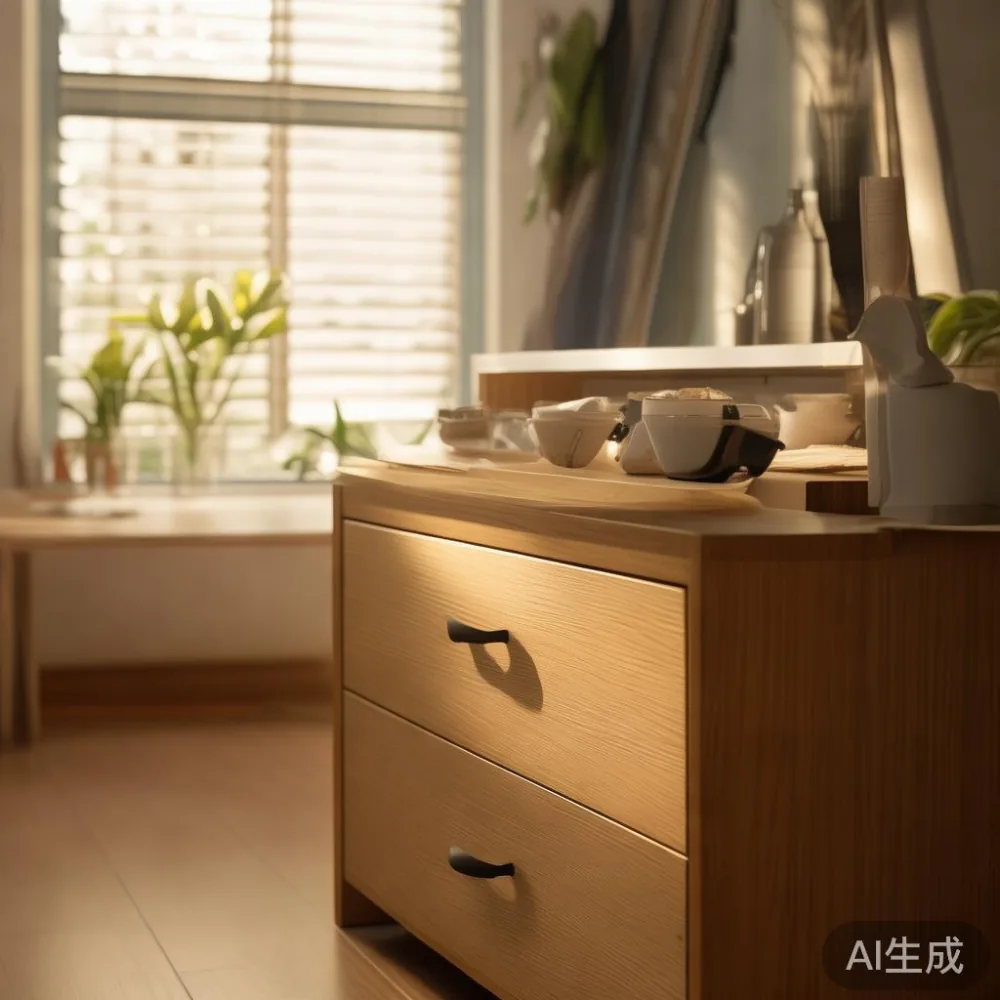
I keep a small digital hygrometer on my workbench in Tampines, and on most afternoons it reads between 78% and 88% relative humidity. Last month I visited a client in a Punggol Waterway Point condo who had just moved in with two brand-new solid wood pieces and a set of American light luxury style bedside cabinets. Within nine days the drawers on his nightstand were sticking so badly that he could barely open them. Nothing was broken. The wood had simply absorbed moisture from the air, swelled by roughly 2-4% across the grain, and the joinery did what joinery does in this climate: it moved. That single visit is the reason I am writing this guide, because most care guides I read online were written for homes in Toronto or London, not for a 4-room HDB in Bedok Reservoir.
Why Singapore's Climate Is Hard on Solid Wood
Singapore sits about 1.3 degrees north of the equator. Average daily humidity runs 70-90% year-round, with monsoon months (November to January and June to September) pushing the upper end higher. Outdoor temperatures swing between 24 degrees C at night and 33 degrees C in the afternoon, and air-conditioned interiors usually sit around 22-25 degrees C with 50-65% RH. That 20-30% humidity gap between inside and outside is the real culprit.
Solid wood is hygroscopic. It absorbs and releases moisture until it reaches equilibrium with its environment. Oak, ash, walnut, and rubberwood (often used in a solid wood bed frame) move more aggressively than engineered alternatives. A 150 cm wide oak dining table top can change width by 3-6 mm across a single monsoon week. Over a year, that is enough cumulative movement to crack veneers, rack drawer boxes, and stress dowel joints.
For HDB and condo owners specifically, there are three aggravating factors:
1. Lift and corridor constraints. Standard HDB passenger lifts are about 1.1 m wide by 1.4 m deep with a 630 kg rating, and most service lifts cap at 1.8 m height. This pushes buyers toward flat-pack or partially assembled pieces that arrive with looser joinery tolerances, which then need to accommodate wood movement on site.
2. Air-conditioning cycling. Many Singaporeans switch off the AC when they leave for work. A bedroom at 24 degrees C and 55% RH at 9 am can be at 29 degrees C and 78% RH by 6 pm. Wood responds to every cycle.
3. Concrete slab moisture. Ground-floor units, especially in older Tampines or Bedok blocks built before 2000, can wick moisture up through the slab. A wardrobe sitting flat on that slab will absorb water through its base panel if there is no buffer.
The Symptoms I See Most Often
Across roughly 60 site visits a year in Singapore and Johor Bahru, the same five problems show up over and over:
Sticking drawers. Drawer boxes swell sideways until the sides rub against the cabinet carcass. In a 45 cm wide drawer, a 2% expansion is 9 mm - more than enough to jam. A proper drawer organizer will still ride on its runners, but only if the carcass itself stays square.
Cupping on table tops. A marble table is immune to this because the stone is dimensionally stable, but a 200 cm solid wood dining table can cup 4-7 mm across the width if one face absorbs more moisture than the other. Usually it is the underside, sealed away from air, that stays drier while the top breathes in monsoon air.
White haze or bloom on finishes. Moisture trapped under a lacquer or wax finish pushes to the surface and leaves a milky film. Wiping it off does not fix the cause; only stabilising the humidity does.
Cracked panels on wardrobes. Wide flat panels - the sides of a three-door wardrobe, for example - are the highest-risk surfaces. End-grain checking along the seasons is normal; through-cracks are not, and they usually trace back to a unit placed too close to a frequently opened balcony door.
Musty smell in drawer interiors. If a drawer organizer is loaded with fabric or paper and the drawer has been closed in a humid room for weeks, you can get a faint mildew scent. This is not a manufacturing defect; it is moisture and lack of airflow.
How do I care for a coastal style in humid weather?
A coastal style - light oak, white-washed finishes, woven cane accents - holds up beautifully in Singapore if you stabilise the room around it. Keep relative humidity between 45% and 60%, wipe spills within 10 minutes, run a dehumidifier set to 50% RH for 4-6 hours on high-humidity days, and apply a fresh coat of clear paste wax every 9-12 months on exposed end grain. Coastal pieces already use lighter finishes that breathe, so the maintenance window is wider than for heavy French light luxury pieces with thick lacquers.
Practical Numbers: What to Buy, Where to Put It, and When to Run It
Hygrometer: A basic digital unit costs SGD 12-25 at Challenger or Taobao. Put one in each room that contains a solid wood piece. Check it at the same time each day, ideally 2 pm, for a week, before deciding on intervention.
Dehumidifier: A 12 L/day unit (mechdry or similar) covers about 25 sqm and uses roughly 180 W. Running it 6 hours a day at SGD 0.32 per kWh costs about SGD 0.35 a day, or SGD 10-11 a month. For a 90 sqm HDB, that is reasonable insurance for a solid wood bed frame costing SGD 1,800-3,500.
Distance from walls: Leave at least 5 cm behind a wardrobe and 10 cm between a tall piece and a side wall. This lets air circulate and prevents the dead-zone humidity that breeds mould.
Distance from windows: Keep wood furniture at least 60 cm from windows that are opened frequently. The air right next to an open window in Tampines can read 92% RH while the centre of the room reads 65%.
Raise heavy pieces off the floor. Use 1.5-2 cm plastic or felt feet under wardrobes in ground-floor or north-facing units. SGD 8 for a set of eight from HomeFix.
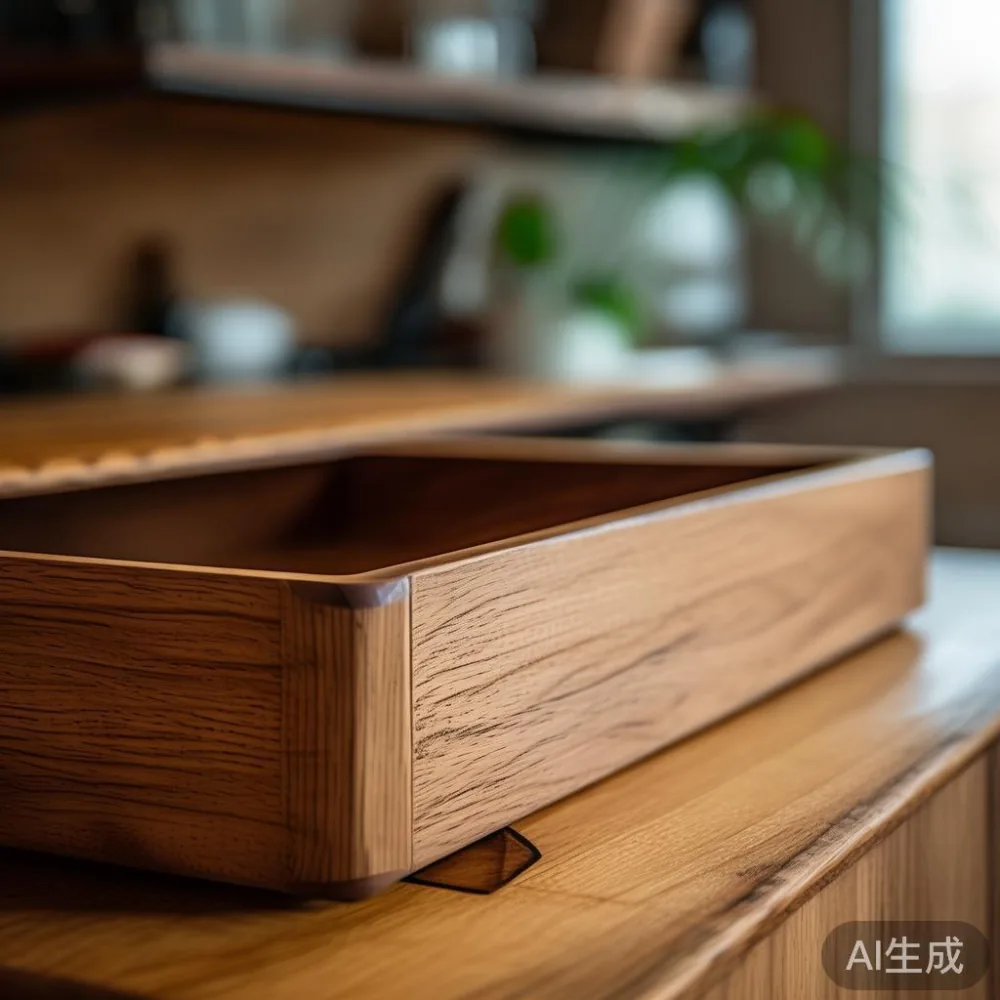
Drawer interior: A removable drawer organizer - bamboo, fabric-lined, or melamine - lets you pull the whole tray out and air it on the balcony for 30 minutes on a dry afternoon. Doing this once a month prevents the musty-drawer problem entirely.
Maintenance Calendar for Singapore
Weekly: Dust with a dry microfibre cloth. Wet-wiping should be avoided; if you must, wring the cloth until no water drips, then wipe, then dry.
Monthly: Empty every drawer organizer, leave drawers open for 20-30 minutes while the AC runs, vacuum inside corners with a brush attachment.
Every 6 months: Tighten the figure-8 fasteners on drawer runners. Check that wardrobe doors still hang square. Run your hand along table edges to feel for raised grain.
Every 12 months: Apply a thin coat of beeswax or hard wax oil on high-touch surfaces. For post-modern light luxury pieces with matte lacquer finishes, use a dedicated matte-finish cleaner instead of wax, which can leave shiny patches.
Every 5-7 years: Consider a professional refinish. The cost in Singapore is roughly SGD 280-450 for a four-seater dining table, depending on the existing finish.
What About Marble, Cane, and Mixed-Material Pieces?
A marble table needs a different conversation. Stone does not move with humidity, but the wooden sub-frame under a marble top can. Wipe spills containing acid (lime juice, vinegar, cola) within 5 minutes to avoid etching. Use coasters - always - because ring marks on marble cannot be buffed out at home.
Cane and rattan panels, common on coastal and post-modern light luxury headboards, are sensitive in the opposite way: they dry out and crack if humidity drops below 40% for extended periods. A nightstand with a cane-front drawer is fine in Singapore; just keep it out of direct afternoon sun streaming through a west-facing window.
Upholstered components on a solid wood sofa (cushions, back pillows) absorb moisture and can develop a musty smell in non-air-conditioned rooms. If your living room is rarely air-conditioned, choose removable, washable covers and rotate the cushions weekly so no single spot stays damp.
When to Call the Maker Instead of Fighting It Yourself
Some movement is unavoidable and even desirable - it is how you know the piece is real solid wood rather than veneer over MDF. Some movement is a problem. Call the maker if you see:
- A crack longer than 5 cm or wider than 1 mm that runs with the grain.
- A drawer that no longer closes after two weeks of stable indoor humidity.
- White bloom that returns within 48 hours of wiping.
- A wardrobe door that has dropped more than 4 mm so the latch no longer catches.
- Any joint that has visible daylight through it where there was none at delivery.
A good maker will talk you through adjustment over WhatsApp before suggesting a site visit. Many issues - a sagging hinge, a drawer that needs 1.5 mm shimmed off the side, a runner that needs resetting - can be sorted in 20-30 minutes at your home. Companies that ship internationally to 15 or more countries and offer a 10-year structural warranty tend to have these protocols dialled in, because they have seen the same humidity problem in Bangkok, Manila, and Kuala Lumpur.
One last thing on logistics: if you are ordering a piece from overseas, ask the maker to leave the panels undersized by 2-3 mm on width and let them acclimatise in your HDB for 7-14 days before final assembly. This is standard practice for Foshan factories shipping to Southeast Asia, and it is the single most effective step you can take to avoid the racking and cracking I see on freshly delivered furniture.
Frequently Asked Questions From Singapore Buyers
Is air-conditioning enough, or do I need a dehumidifier? Air-conditioning does drop humidity, but only in the room it serves and only while it is running. A bedroom AC set to 23 degrees C typically pulls the room to 50-60% RH. That is enough for a solid wood bed frame. For larger living areas with multiple pieces - a sofa, dining table, sideboard, and TV console - a dehumidifier is more reliable and more economical than overcooling the whole room.
How long should I let new furniture acclimatise? 7-14 days in the room where it will live, with drawers left slightly open and doors left ajar. Keep the AC running during this period if possible.
Will my warranty cover humidity damage? Read the warranty carefully. Most structural warranties cover joinery failure and manufacturing defects, not movement caused by sustained humidity outside the 40-65% RH range. Humidity-related issues are usually addressed through after-sales service rather than warranty claims, often at a modest fee.
Can I put a wardrobe against an HDB service yard wall? Better not. Service yards in Singapore run hot and humid and often have poor ventilation. Keep wardrobes on interior walls and put plastic or composite shelving in the service yard instead.
What about outdoor balcony pieces? Teak and other dense tropical hardwoods handle covered balcony conditions reasonably well but will silver and roughen within 6-12 months. Oil them every 4 months. Anything made of engineered wood or MDF will fail on a balcony within a single monsoon season.
A Note on Choosing Pieces Built for This Climate
If you are buying new, ask the maker three specific questions. First, what is the moisture content of the wood at the point of shipping - the answer should be 8-12% for Southeast Asia. Second, how is the joinery constructed - mortise and tenon, dowel, or biscuit - and does it allow for movement? Third, what is the finish thickness, and is it breathable? A French light luxury piece with a thick polyester finish looks beautiful but is less forgiving in our climate than a piece with a hand-rubbed oil finish.
On the question of how to care for a master bed specifically, the same rules apply as for any large solid wood piece: stabilise humidity, keep it off the floor if you are on a ground-floor unit, leave breathing room on all sides, and wax the end grain once a year. A master bed in rubberwood or ash, properly looked after, will outlast three rounds of mattress replacement - roughly 30 years - which is the honest benchmark for well-made solid wood bedroom furniture.
My final piece of advice, after roughly a decade of walking into HDB flats across Tampines, Bedok, and Punggol with a hygrometer in one hand and a flashlight in the other, is this: do not fight Singapore's humidity. Work with it. Buy pieces built for it, stabilise the air around them, and check on them once a season. The cost of prevention - SGD 10-15 a month in electricity for a dehumidifier, SGD 30-50 a year in wax and felt feet - is trivial compared with the SGD 1,200-3,500 you would spend replacing a cracked dining table or a racked wardrobe.
Where to Start This Week
Buy a SGD 15 hygrometer. Place it in the room with your most expensive wood piece. Read it at 2 pm for five days. If it sits above 68%, run a dehumidifier for four hours and recheck. That single data point will tell you more about your home than any care guide, including this one. Once you know your numbers, the rest is routine.