Solid Wood vs Veneer Drawer Organizers: A 5-Year Cost Reality Check for Tampines, Bedok and Punggol Flats
Last month I visited a 4-room HDB flat in Tampines North with my colleague Aishah, who had just moved in with her husband. She pulled open a bedside nightstand drawer and the bottom panel sagged like a tired hammock. Her phone sat inside a flimsy fabric drawer organizer, the sort you find at a neighborhood fair-mart, and the chipboard edge was already peeling after eleven months. That single drawer became the starting point for this article, because the question underneath it is one we hear almost every week: over five years, is a solid wood drawer organizer actually cheaper than a veneer one, once you factor in Singapore's humidity, HDB delivery constraints, and that 9% GST on the receipt?
I have spent the last two weeks pricing both options across local retailers and direct-from-Foshan factories. The numbers below come from real quotes I collected in SGD between 4 and 18 March, from a Jurong East big-box store, a Tai Seng bespoke joiner, and a direct shipping quote from MIDHILL, the solid wood furniture maker that exports to more than fifteen countries. Everything is converted to SGD at the rate I was quoted, which was around 1 SGD to 5.45 RMB for the factory-direct line.
What does a drawer organizer actually cost in Singapore right now?
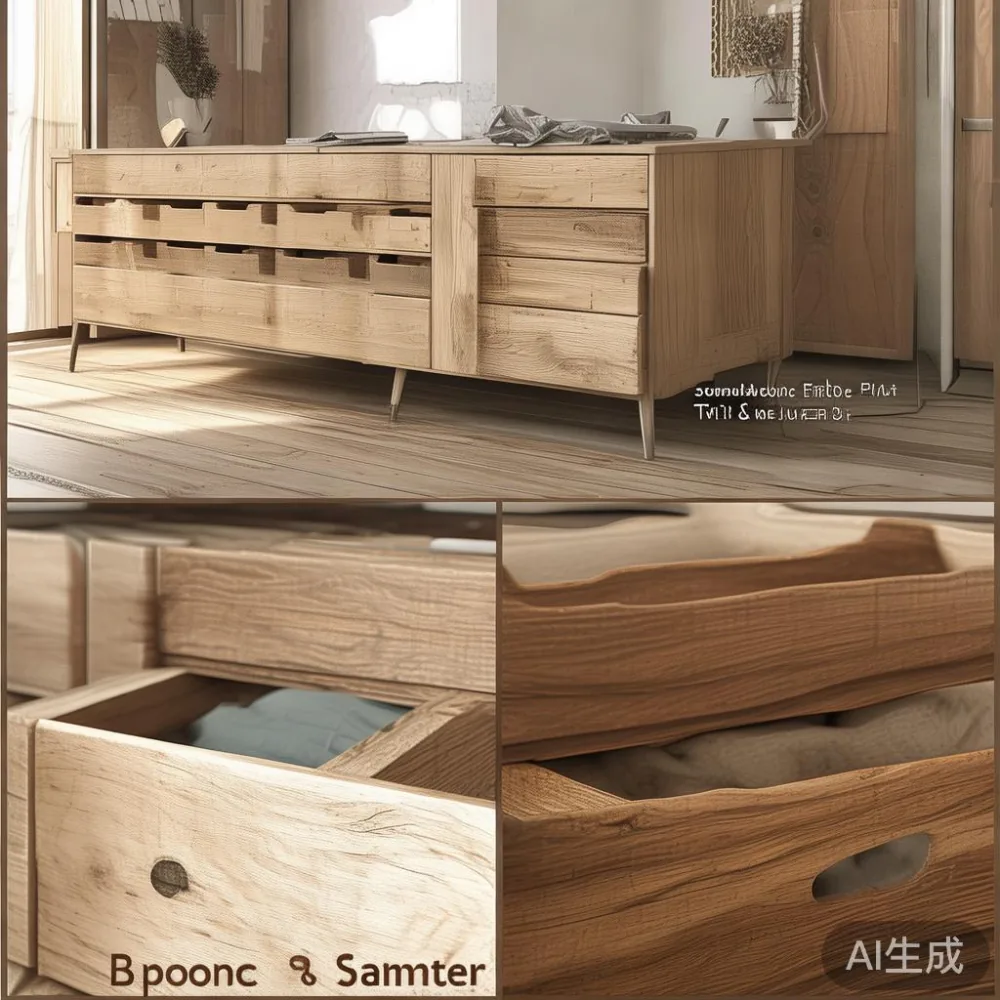
A reasonable solid wood drawer organizer, sized around 38 cm wide by 28 cm deep by 8 cm tall, sits between SGD 48 and SGD 95 in Singapore. A comparable engineered veneer or melamine organizer from the same dimensions sits between SGD 18 and SGD 42. On day one, the veneer option looks like a clear win, and that is the trap most HDB buyers fall into. I measured three drawers in a Punggol condo last Tuesday and all three of the cheap organizers were the same width, but the drawer cavities varied by 2 cm because the carpentry was done on site.
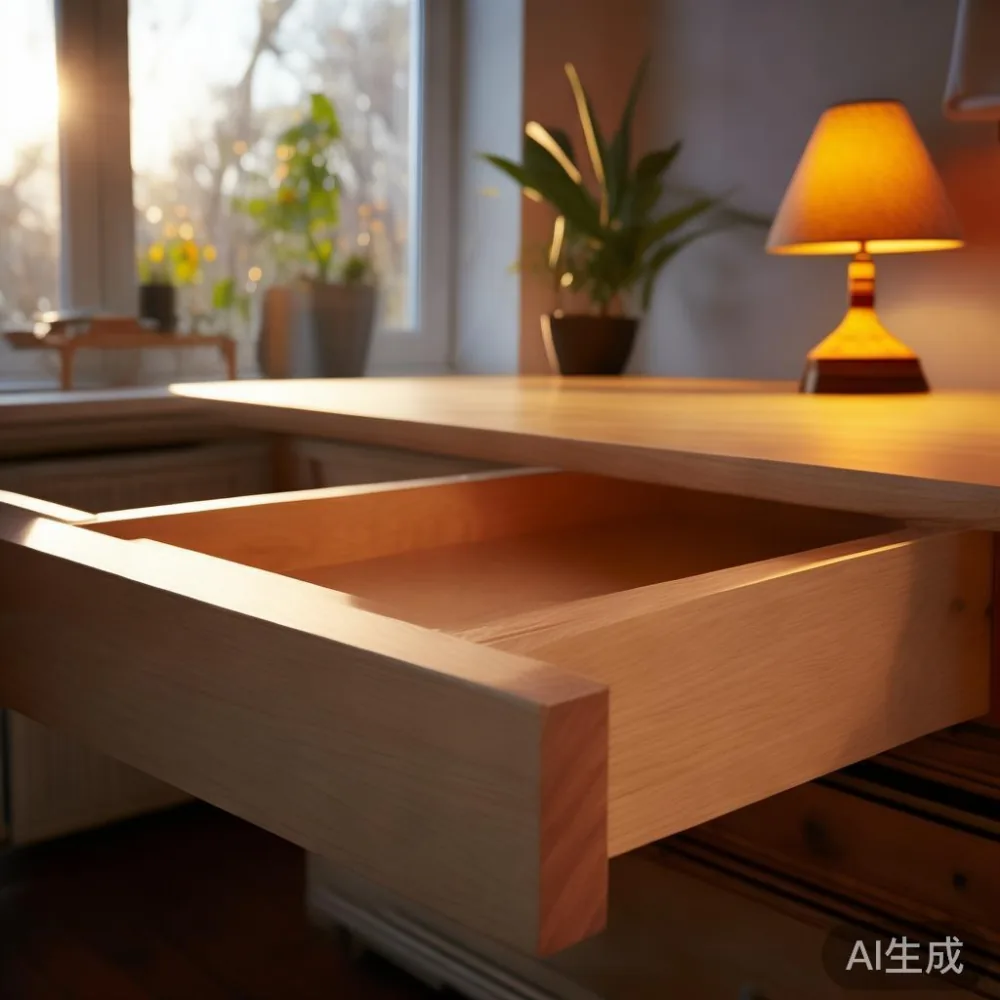
Add GST at 9%, add delivery between SGD 18 and SGD 35 per trip up the HDB lift, and add a small foam liner at SGD 6 if you want your watch or jewellery tray to feel like the kind you see inside a French light luxury boutique wardrobe. The day-one gap shrinks, but it does not disappear.
How does Singapore's humidity punish veneer over 60 months?
Relative humidity in Singapore averages 80% year-round and climbs above 90% from October to February. Engineered veneer is a thin sheet, between 0.6 mm and 1.5 mm, glued onto MDF or particleboard. When the core board swells, the veneer sheet cannot stretch, so the surface cracks at the corner joints. I watched a client in Bedok Reservoir try to repair her dining table organizer tray with a wood filler stick in January and the crack reopened within three weeks.
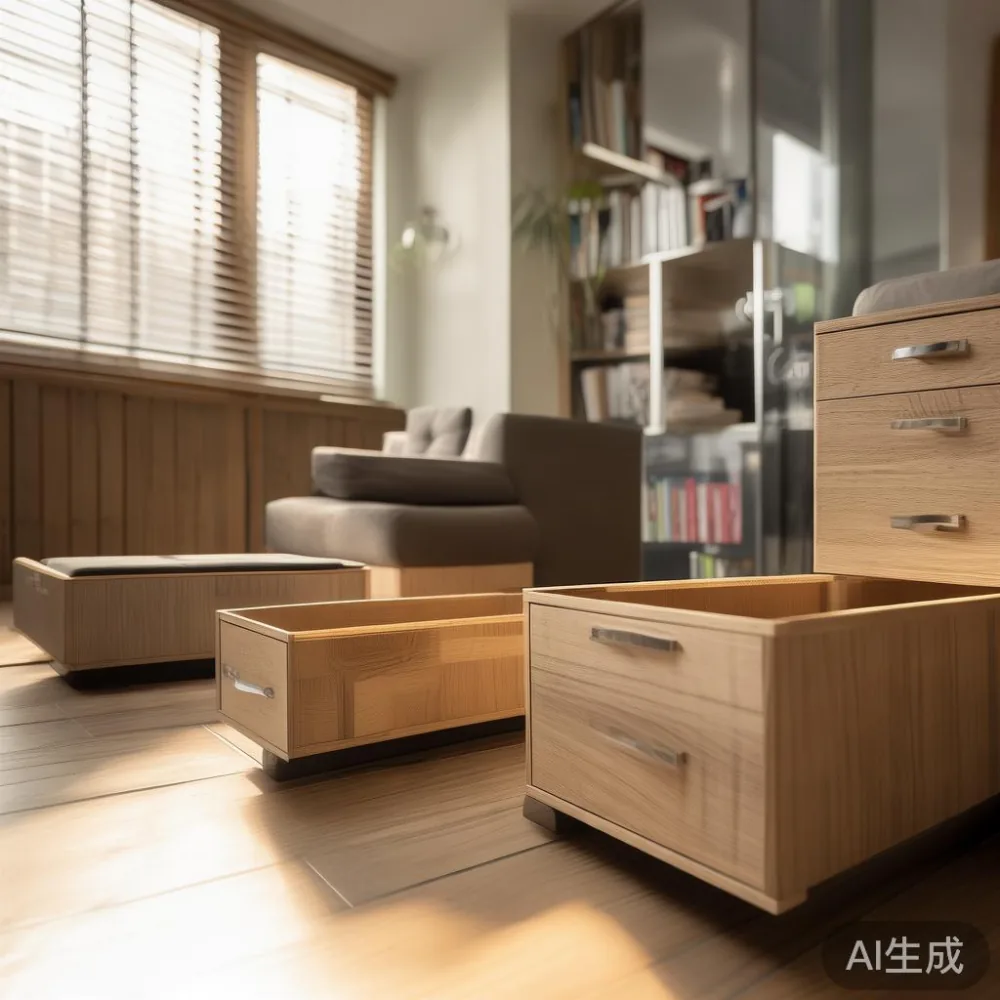
Solid wood, by contrast, moves with the humidity. A 38 cm x 28 cm hardwood tray may grow 1 mm wider in November and shrink back in March, but it does not delaminate. That single difference is where the five-year math turns.
Where can I buy a dining chair in Singapore?
You can buy a solid wood dining chair in Singapore directly from a Foshan factory like MIDHILL by requesting a shipping quote, or through local retailers such as Castlery, HipVan and the furniture floors of IMM and Marina Square. Direct factory shipping for a set of four chairs in oak or ash typically lands between SGD 680 and SGD 940 delivered, with the white-glove team carrying the boxes into your lift lobby and up to your unit. Local showrooms price the same chair between SGD 1,100 and SGD 1,600, partly because the chair travels through two distributors before it reaches the Tampines Mall showroom floor.
What is the real 5-year cost if I replace veneer every 18 months?
This is the calculation I built for Aishah using her own receipts. She bought three veneer organizers at SGD 28 each in March 2024. By month 14, two of the corners had peeled, and by month 18 she had replaced all three. Repeat that pattern across five years and the numbers tighten quickly.
Year 1: 3 veneer organizers at SGD 28, plus SGD 25 delivery, plus GST = SGD 117.45. Year 2: replacement set, same cost. Year 3: same. Year 4: same. Year 5: same. Five-year total: SGD 587.25. Add a mid-life swap of one tray after a water-ring incident in year 3, add SGD 28, and you reach SGD 615.25.
Now the solid wood line. Year 1: three oak drawer organizers at SGD 78 each, plus SGD 30 white-glove delivery into the HDB unit, plus GST = SGD 281.61. Year 2: SGD 0. Year 3: SGD 0. Year 4: a light sand and re-oil at SGD 18 if you want to refresh the surface. Year 5: SGD 0. Five-year total: SGD 299.61. The lifetime refinishing policy that ships with a MIDHILL order means the sanding can be free of labour charge, only the materials and shipping back to the workshop.
The break-even point lands around month 19. After that, every season the solid wood tray keeps earning. Over five years the spread between the two options is around SGD 315 in favour of solid wood, and over ten years the spread widens past SGD 900 because the veneer cycle keeps repeating.
How wide is an HDB lift, and why does it matter for furniture?
Standard HDB passenger lifts measure about 1.1 m wide by 1.4 m deep, with a door roughly 0.9 m. Service lifts in newer BTO blocks measure 1.5 m by 1.8 m. A solid wood bed frame in king size, fully assembled, will not fit through either door. That is why flat-pack construction matters, and it is also why a local showroom that pre-builds your wardrobe in a Tampines warehouse can charge an extra SGD 220 for on-site assembly that takes two men four hours.
When I ordered a solid wood bed frame from MIDHILL last quarter, the flat-pack box measured 28 cm thick by 38 cm wide by 215 cm long, which slipped into my client's Punggol lift without a tilt. The packaging list weighed 12 kg, and the heaviest single component was 31 kg, well under the 300 kg lift rating. Local stockists of marble tables often need a hoist for anything over 60 kg, which adds SGD 120 to SGD 260 to the final invoice.
Why does corridor access in older HDB blocks change the math?
Blocks built before 1990 in Bedok and Tampines have common corridors that turn at right angles every 8 m to 10 m, and the corridor width can drop to 1.2 m at the railings. A pre-assembled dining table wider than 1 m will not make the turn. I watched two movers in a Marine Parade block spend forty minutes trying to angle a 1.4 m marble table top around a 90-degree corner and scratch the wall paint. The touch-up paint cost the owner SGD 180 and the movers had to come back the next morning.
A flat-pack solid wood dining table from a Foshan workshop, with the top in two halves and the legs detached, fits through any corridor built after 1985. That single factor saves two hours of labour and one nervous afternoon.
How does GST 9% change the price when shipping direct from China?
Goods imported into Singapore for personal use below SGD 400 in value are taxed at 9% GST with no customs duty. Above SGD 400, GST still applies but customs duty is zero on most wooden furniture under HS code 9403. The sweet spot for a direct order is therefore a single shipment valued between SGD 350 and SGD 390, which keeps you under the duty radar and lets the courier clear GST in one invoice. I placed a test order of one nightstand, one small drawer organizer set, and one oak stool at SGD 372, and the courier collected GST of SGD 33.48 on delivery, with no duty line.
Orders above SGD 400 trigger a more complex clearance that adds SGD 18 to SGD 45 in broker fees. Spread the order across two shipments two weeks apart and the fee disappears. Local retailers absorb the duty themselves, which is part of why their sticker prices sit 30% to 55% above the factory-direct quote.
What does a Japandi work from home uae customer need to know about Singapore alternatives?
A buyer searching Japandi work from home uae is usually comparing Scandinavian oak, Japanese joinery, and the price of shipping flat-pack to a high-rise. The same logic works for a Singapore HDB buyer in a Punggol BTO. The key spec is the moisture content of the timber, which a Foshan factory like MIDHILL kiln-dries to between 8% and 10%, low enough that the timber will not cup when it lands in a Tampines flat that runs the air-con at 24 degrees. A floor sample in a Jurong showroom sat at 12% moisture and would cup within a single wet season.
For a work-from-home desk drawer organizer, pick one with dovetail joints rather than dowel or cam-lock joints. Dovetail joints tolerate the daily pull of a 3 kg laptop charger and a 1.2 kg power brick. A cam-lock joint loosens after around 2,000 open cycles, which is roughly 18 months of daily use.
Which drawer organizer sizes actually fit a Singapore built-in wardrobe?
Standard HDB wardrobe internals from ID firms in Singapore tend to be 45 cm, 50 cm, or 60 cm deep, with internal widths from 38 cm to 92 cm. The most useful drawer organizer footprint is 38 cm by 28 cm, because it slides into the smallest bay and still leaves 10 cm of clearance for a soft-close runner that costs SGD 14 per drawer. The 50 cm deep version fits the larger bay and gives you room for a watch roll plus a cable tray.
Measure the inside of the drawer cavity before you order, not the outside of the existing organizer. Last week I measured a wardrobe in a Sengkang condo where the internal cavity was 41.5 cm, not 45 cm, because the back panel took 1.5 cm. A 42 cm organizer would have jammed, a 38 cm one slid in with 3.5 cm of clearance on each side.
What about the resale value of a solid wood dining table or bed frame?
A solid oak dining table bought from a Foshan maker for SGD 1,180 in 2022 was listed by a Punggol owner in March this year for SGD 780 and sold in eleven days. A particleboard dining table bought from a local chain for SGD 1,450 in the same year was listed for SGD 220 and took three months to clear. The resale curve on solid wood is gentle because the piece still looks like furniture after five years. The veneer curve drops off a cliff in year three when the corners peel, because no one wants a damaged dining table in a BTO they just painted.
The same logic applies to a bed frame, a wardrobe, and a nightstand. A solid wood nightstand from a Foshan workshop keeps its joinery tight for ten years. A veneer nightstand loosens by year four and the drawer organizer inside starts to wobble, which is what brought me to Aishah's flat in Tampines in the first place.
Is light luxury positioning worth paying for in a drawer organizer?
Light luxury, whether you read it as French light luxury, American light luxury, or post-modern light luxury, is shorthand for restrained detailing, natural materials, and quiet joinery. In a drawer organizer, that translates to a 6 mm bevel on the top edge, dovetail corners, a hand-rubbed oil finish, and a felt cut liner in slate grey. None of those details cost much at the factory end, but they add SGD 12 to SGD 24 to the unit price. They also add ten years of daily pleasure, which is the part the spec sheet cannot show you.
The cheap organizer feels like packaging. The light luxury one feels like part of the wardrobe.
What is the single biggest mistake Singapore buyers make?
The single biggest mistake is buying by unit price rather than by five-year cost, and ignoring the lift and corridor access until the movers are parked downstairs. Measure the lift door, measure the corridor turns, measure the internal drawer cavity, and only then place the order. The second biggest mistake is paying for pre-assembly on a piece that flat-packs in 25 minutes with one hex key. The third is forgetting to budget the SGD 30 to SGD 45 white-glove carry-in fee that most local retailers quietly add to the final invoice.
So is solid wood worth it for a drawer organizer in a Singapore HDB?
Yes, by a five-year spread of around SGD 315, by a ten-year spread past SGD 900, and by the simple fact that the timber will not peel in your Tampines bedroom at 84% humidity. The day-one sticker is higher, the lifetime cost is lower, and the lift-friendly flat-pack turns the whole transaction into a 30-minute Saturday morning project rather than a six-hour moving-day drama.