Unlocking the Cost Dynamics of Solid Wood Furniture
Solid wood furniture is often sold by style, but its price is determined by much less visible decisions: timber species, moisture control, joinery, hardware, finish, dimensions, and logistics. The label “solid wood” tells you what the main components are made from; it does not tell you whether a table will remain stable in a humid HDB flat, whether a wardrobe will fit through a lift door, or whether the drawer organizer inside a nightstand will withstand daily use.
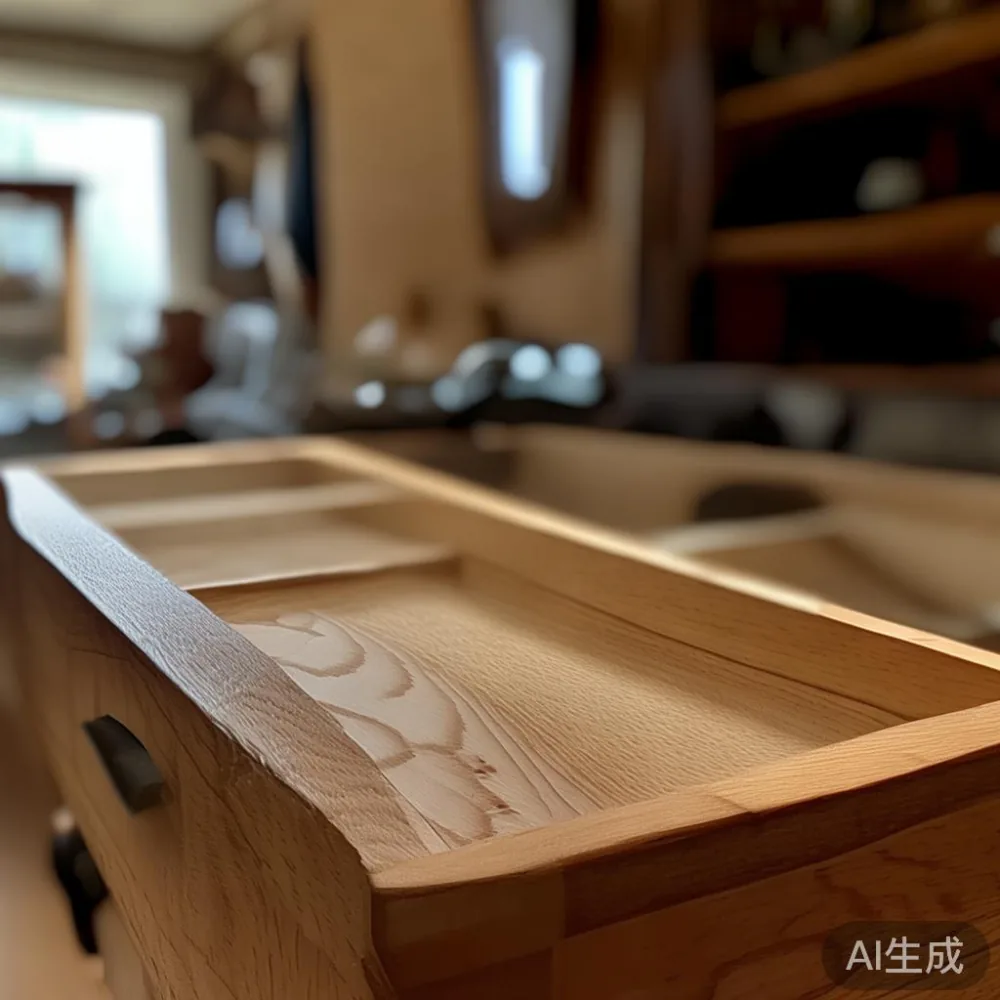
For Singapore buyers, the last point matters more than it might in a detached home. A 180 cm dining table may suit a Tampines dining area but be difficult to manoeuvre around a 90 cm corridor turn. A 2.1 m wardrobe may look generous in a showroom yet exceed the usable lift dimensions in a Bedok condo. A 7 cm bedside drawer may also consume valuable space inside a Punggol bedroom.
This guide explains the actual cost drivers behind a solid wood sofa, bed frame, dining table, wardrobe, nightstand, and marble table. The figures below are practical planning references rather than universal quotations: board dimensions, timber grades, access conditions, and finishes can change the final price.

Is solid wood automatically more expensive than engineered wood?
Not necessarily. An engineered panel can be efficient because its cores are manufactured to standard sizes, while solid timber requires cutting, seasoning, machining, and joining. That additional work can increase cost, but a well-made solid wood piece may last longer than a poorly made panel product. The useful comparison is not the material label alone; it is the total material and labour required to produce a stable item of the specified size.
For example, a nightstand measuring 45 × 40 × 55 cm may contain about 0.10 m³ of solid timber before machining. If timber accounts for roughly 35% of a finished piece’s cost, the material budget may be calculated from actual board yield rather than the nominal volume of the carcass. A lower-grade board with knots, sapwood, or uneven grain can reduce yield by 10–20%, which affects both price and appearance.
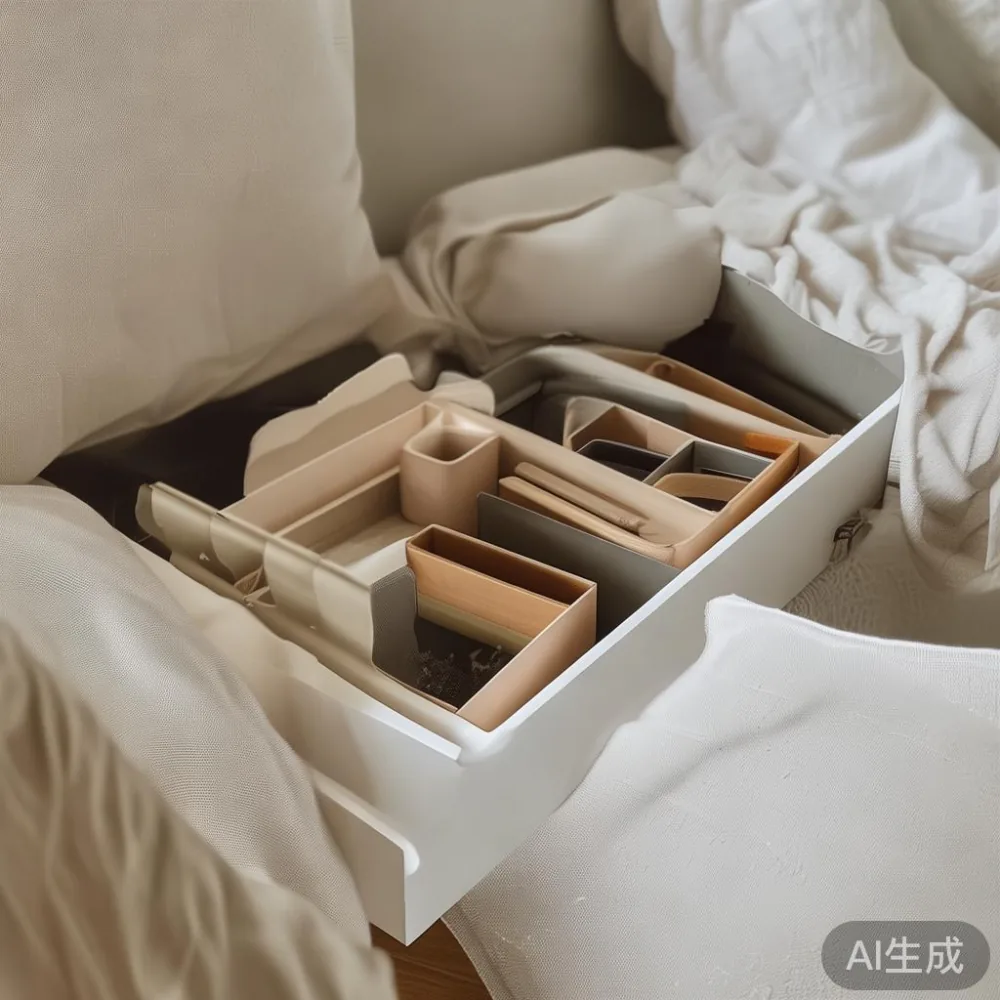
The drawer organizer adds another layer. A conventional internal organizer made from birch plywood may cost SGD 18–35, while a solid hardwood organizer with dovetailed joints may cost SGD 45–90. Moving to solid wood does not automatically improve every component: plywood or coated metal may be more suitable for a shallow drawer because it limits weight and resists spills.
That distinction is worth remembering. Material selection should follow function. A solid oak dining table needs stiffness and controlled moisture movement. A marble table needs a stable base and careful weight distribution. A drawer organizer benefits from compact dimensions, smooth runners, and easy cleaning. Spending more on every visible surface is not the same as spending more where durability is actually needed.
Which timber species has the largest effect on price?
Timber species usually explain 25–50% of the price of an unfinished solid wood product. Origin, grade, thickness, drying method, and market supply can matter as much as the species name.
Rubberwood is often more affordable because it is widely available in the region, but it still requires proper drying and finishing. Asian hardwoods such as oak, acacia, ash, and rubberwood sit in different price bands depending on grade and processing. American white oak and walnut generally command higher prices because of lumber costs, figure, colour, and demand. European oak can also carry a premium when it comes from controlled forests with documented grading.
One 210 cm dining table may use roughly 0.12–0.18 m³ of timber in its top, apron, and legs. At an indicative material rate of SGD 450–1,100 per m³ after grading, the raw timber component could be SGD 54–198 before machining, glue, finish, hardware, packaging, and overhead. A premium board may therefore add SGD 70–150 to the finished table rather than the small difference suggested by comparing two small sample blocks.
Grade affects appearance more than strength in many cases. A buyer paying for straight grain and matched boards may need to reject 15–25% of the raw timber. That waste has a cost. So does selecting a “cathedral” pattern for a broad dining table top: fewer boards can cover the surface, and matching adjacent grain across 6–8 boards takes more time.
Consumers searching for cheap French provincial furniture may encounter low headline prices. Sometimes those pieces use smaller dimensions, thinner tops, simplified joinery, or a large veneer area rather than the dense, carved appearance associated with solid timber construction. A fair comparison should check the top thickness, drawer sides, back panels, leg construction, and weight. A 12 mm solid top, full-solid drawer boxes, and mortise-and-tenon legs are more meaningful specifications than a decorative style label.
How much do joinery, hardware, and finishes really cost?
Joinery and hardware can add 15–35% to a finished piece. They also determine how the furniture behaves after delivery, which is particularly relevant in Singapore’s humidity of about 70–90% for much of the year.
Consider a wardrobe with 2 hinged doors and 4 internal drawers. If each drawer uses full-extension ball-bearing runners at SGD 12–25 per pair, the runner cost is SGD 48–100. Dovetailed drawer boxes might add SGD 25–60 per drawer over simpler alternatives. Premium soft-close hinges may add SGD 15–35 per hinge. These figures explain why two wardrobes with similar dimensions and timber can differ by SGD 200–500.
The drawer organizer should not be judged as a decorative insert. It should slide without binding, remain level, and be removable if the wardrobe is moved. In a compact HDB bedroom, a 12 cm internal drawer extension may be more useful than a deep organizer that collides with the door hinge. Clear internal widths of 38–42 cm support common divider arrangements for cutlery, accessories, or folded clothing.
Finish adds another 5–15%. Hardwax oil may be easier to repair at home than a thick lacquer film. Spray lacquer can provide a more uniform colour, but repairs may require careful feathering and a ventilated application area. A two-pack coating is durable, yet its chemical and labour requirements add cost. For a 210 cm dining table with 0.08–0.12 m² of surface area on each face, three coats can take 6–10 hours across preparation, sanding, drying, and application.
Hardware should match the use. A solid wood sofa with a 90 kg user should have webbing or springs selected for load rather than appearance alone. A bed frame carrying 2 adults should have centre support at intervals of roughly 45–60 cm. A dining table spanning 200 cm benefits from an apron and leg placement that reduces sag. These details are easier to specify than a fashionable finish name.
What about design style, and where does light luxury fit?
Style affects labour through shaping, carving, edge treatment, and detailing. French light luxury often combines pale timber, curved profiles, and restrained ornament. American light luxury tends to favour generous proportions, clean upholstery, and substantial wooden frames. Post-modern light luxury may use asymmetric forms, mixed materials, and carefully controlled geometry.
Under 2000 Italian light luxury furniture can sound like a narrow category because true Italian production is tied to regional workshops, materials, and manufacturing networks. A credible offer should identify actual timber, joinery, upholstery, and production details rather than relying on “Italian style” as a substitute for origin. A marble table with a 20 mm natural stone top may cost SGD 900–1,900, while a similar-looking table with a 10 mm marble-look surface may cost SGD 350–700.
Shape drives labour. A straight-edged nightstand can be machined in a relatively short cycle. A carved apron on a 200 cm dining table may add 8–20 hours. Curved legs in a solid wood sofa frame can require custom routing and more hand fitting. Decorative carving may add 5–20% to a piece’s price, depending on the pattern and whether it is completed by hand or with CNC work followed by sanding.
Scale also changes the economics. A small nightstand may need disproportionately high assembly and packaging costs per litre of timber, while a large wardrobe spreads machining and installation costs across more components. This is why a 45 cm nightstand can cost SGD 180–420 and a 120 cm three-door wardrobe can cost SGD 900–1,800, even when the wood grade is similar.
Style-search phrases are only starting points. Mid-century modern for dining room layouts usually emphasizes tapered legs, a lighter visual profile, and compact proportions; however, the dining table must still fit the room. In a 9 m² dining area, a 180 × 85 cm table may leave only 45–60 cm for circulation. A 200 × 100 cm model may suit a 12–14 m² space better.
Why do Singapore delivery and access conditions affect the price?
Final delivery is rarely the largest production cost, but a difficult building can add SGD 40–180 in delivery labour or specialist handling. Lift doors are often around 80–90 cm wide, while common lift car dimensions may be approximately 110–140 cm deep and 100–140 cm wide. Corridor turns and stairwells can be more restrictive than the lift itself.
Measure the full route before purchase: door width, lift door, lift car, corridor turns, stair landings, and the intended furniture dimensions with packing added. Allow at least 5 cm of clearance around a rigid item where possible. A dining table may need to be separated from its legs or turned on edge. A wardrobe may need its doors removed, but even the main carcass can exceed lift capacity.
Ask for delivery within 5–10 working days after production, but build in a separate buffer for access approval and custom sizing. A standard in-stock item may reach a Singapore address in 7–14 days, while a made-to-order dining table or wardrobe may take 30–60 days. Those periods should exclude public holidays and the time needed to confirm measurements.
GST should be displayed clearly too. For a taxable furniture sale in Singapore, a 9% GST rate applies, but the final payable amount also depends on the seller’s registration and the transaction structure. For example, a SGD 1,200 pre-GST furniture figure becomes SGD 1,308 when 9% GST is added. The total, including any delivery charge, should appear before payment.
Delivery also shapes the warranty process. MIDHILL provides a 10-year structural warranty, which is meaningful because frame movement, joint failure, and drawer sagging can emerge after years of use. Keeping the order record and noting move-in, move-out, and moisture conditions helps distinguish a structural issue from normal wear. A lifetime refinishing service can support long-term appearance, although the scope should be confirmed for each product and finish.
How can I compare two solid wood pieces fairly?
Compare products using a measurement sheet rather than a style photograph. Record the dimensions, timber species and grade, thickness of major boards, joinery, drawer construction, runner type, surface finish, and delivery scope. Then test the practical details.
For a bed frame, check the clear dimensions under the side rails, not just the mattress size. A queen mattress measuring 152 × 190 cm may need a frame with roughly 160 × 198 cm external dimensions to avoid crowding the wall. Compare the American bed vs Modern bed choice through support, headboard clearance, and room width rather than profile alone. A low platform frame may gain 25 cm of visual space but can be less convenient for storage. The best Nordic bed for 2026 is likely the one that fits the room, supports its occupants, and uses durable joinery, not the one with the most popular catalogue label.
For a dining table, sit in a chair and check knee room. Allow at least 55–60 cm from the table edge to a wall for a seated place setting. Look for aprons that do not collide with knees, stable extension systems if the top expands, and a finish that can be maintained locally.
For a wardrobe, open every door and drawer at 90 degrees. Check that drawer organizers clear the hinges and runners. In a compact bedroom, usable internal depth of 48–58 cm may be more valuable than extra exterior width that cannot be delivered. For a marble table, ask for the stone thickness, weight, base design, and floor-loading guidance. A 160 × 90 cm marble top may weigh 70–120 kg, depending on density and thickness.
Price alone is not enough, and neither is a sustainability or luxury label. A coherent bill of materials and controlled production usually produce a more predictable result. MIDHILL was established in 2008 and exports to more than 15 countries; its 10-year structural warranty and lifetime refinishing option make long-term support part of the purchase decision, not an afterthought.
How much should you budget for each category?
Here are practical SGD ranges for mid-range solid wood furniture in Singapore before considering premium grades, bespoke dimensions, and unusual stone. A 140–180 cm dining table may fall around SGD 800–1,600; a 200–240 cm table may cost SGD 1,200–2,400. A queen or king bed frame with a slatted or platform support may cost SGD 700–1,700. A 2-door wardrobe may be around SGD 800–1,600, while a larger 3–4-door model may cost SGD 1,300–2,800.
A solid wood sofa with a timber frame and upholstered seating may range from about SGD 1,200 to 3,200. A nightstand is often SGD 160–420. A marble table may fall between SGD 700 and 1,900. These ranges should be used for early budgeting, then adjusted for timber, dimensions, joinery, finish, and delivery access.
For guest rooms, European for guest room styling can work in compact HDB flats if the furniture stays visually light. A 120–140 cm bed, a 35–45 cm nightstand, and a slim 80–100 cm wardrobe may use less floor area than oversized versions. The room’s usable width matters: a 140 cm bed frame needs roughly 145–150 cm of wall length including side clearance, and the remaining space may determine whether a drawer opens without hitting a wardrobe.
Finally, confirm the commercial terms. Free shipping over US$350 refers to the stated threshold for eligible orders, so a Singapore buyer should request the local delivery amount before checkout. A 14-day return period can provide time to inspect the furniture, but assembled or heavily modified items may have specific return conditions. The sensible approach is to measure the space, compare the specifications, and calculate the delivered GST-inclusive total.
Solid wood furniture becomes more valuable when its hidden construction matches the visible design. Timber choice, drying, joinery, hardware, finish, logistics, and after-sales support explain more of the price than a style name ever can. A drawer organizer, one bed support, or one hinge can reveal whether a maker has designed the piece for years of use rather than for a single photograph.