How to Style a Small Apartment Without Making It Feel Crowded
A compact HDB flat or condo in Tampines, Bedok, or Punggol can still feel calm, generous, and carefully composed. The trick is not to fill every wall with large furniture. It is to control visual weight, create useful storage, and leave a few surfaces visibly open so the room can breathe.
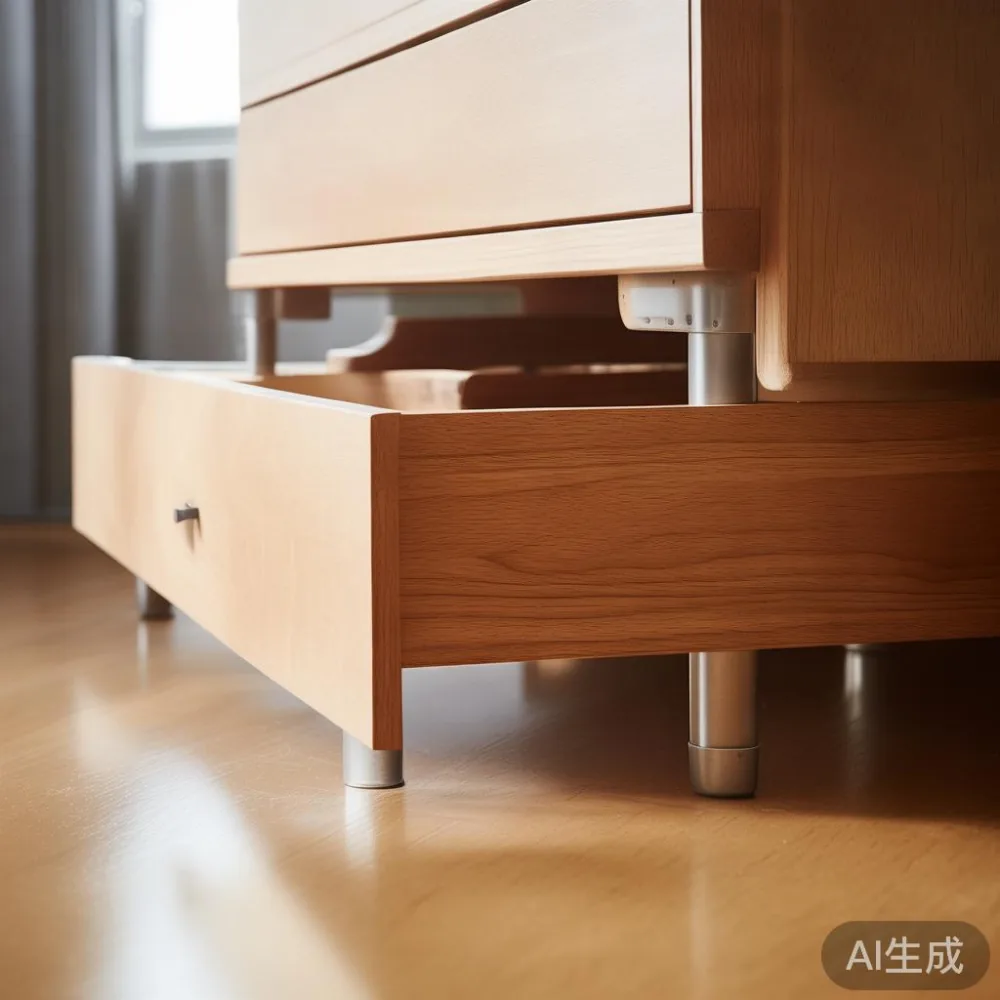
Drawer organizers are particularly useful in small apartments because they make the inside of a cabinet work harder without widening it. They are also the quiet layer behind a polished interior: the drawers look orderly when opened, the contents remain reachable, and the room does not need extra floor area. In this guide, I explain how to combine practical storage with warm solid wood pieces, including a solid wood sofa, bed frame, dining table, wardrobe, nightstand, and marble table.
My colleague and I tested the planning method in a 72 sq m, three-room HDB flat near Tampines West last month. The living room measured 3.4 m wide, while the main bedroom had only 2.7 m of usable width after the wardrobe was installed. We replaced several open wire racks with slim drawer organizers and reduced the visible number of freestanding objects from 14 to 6. The room felt larger because the sightlines were cleaner, not because we removed every item.
How can I make a small Singapore apartment feel less crowded?
Begin with proportions rather than colour. Measure the narrowest route from the HDB front door, through the corridor, and into the lift. A 90 cm wide lift door and a 105 cm corridor may constrain delivery more than the interior dimensions of the flat. Leave a minimum 75 cm route through the main living area, keep 60 cm in front of drawers, and allow about 90 cm beside a dining chair in frequent-use positions.
For a living room, a sofa with a depth of 88–95 cm is often easier to live with than one at 105 cm. A 180–220 cm solid wood sofa can seat three people while retaining a useful margin in a 3.4 m wide room. Choose low-profile arms, pale timber, or softened upholstery, and avoid pushing every piece against the wall. In a Punggol family unit, one compact 140–160 cm sofa may work better than two bulky chairs.
Light also controls how crowded a space appears. Use one warm ceiling light, one floor lamp, and a table lamp rather than six bright fittings. Keep the lamp shade at least 140 cm above the floor so it does not visually interrupt the room. Curtains hung 15–20 cm above the floor make the window appear taller, while a mirror opposite the window can return daylight into the room without adding furniture.
A restrained palette of warm white, oatmeal, light oak, muted sage, and charcoal will keep the apartment coherent. Each large item should share one wood tone. If the bed frame is light oak, repeat that tone in the nightstand and dining table, but vary the shapes so the room does not feel like a catalogue.
What should a drawer organizer actually solve?
A drawer organizer should solve a specific storage problem, not become a collection of boxes inside another box. Measure the internal width, depth, and height of the drawer before shopping. Allow 2–3 cm clearance on each side where modules slide in, and check whether the drawer front overlaps the runner. For frequently used cutlery, a 42–48 cm wide tray may fit a standard cutlery drawer. For a slim bedside drawer, modules around 30 cm wide can divide the space without making it inaccessible.
Use dividers for socks, cables, and charging accessories in the bedroom; shallow trays for cosmetics and stationery in the nightstand; and deeper modular inserts for kitchen utensils in the dining table or kitchen cabinet. Labeled compartments save time and discourage items from being piled back in randomly. Keep only what you can reach without emptying the drawer.
For children’s rooms, use organizers with rounded corners and no small detachable parts. For a 4-year-old, reserve one low drawer within 60 cm of the floor for frequently used toys. Put heavier items such as books and water-based paint below waist level, while lightweight bedding can go higher. In senior-friendly layouts, place daily-use items between 70 and 120 cm from the floor to reduce bending.
Wood inserts can look more refined than all-plastic trays, but they need more care in humid weather. Wipe them with a damp cloth and dry immediately. Avoid leaving drawer organizers beside a bathroom sink or under an open window where persistent dampness could affect adhesives. A removable waterproof liner gives another year of service without replacing the whole insert.
How do I keep the visual footprint of storage low?
Match drawer fronts to the cabinet face where possible. If that is impractical, choose inserts that are hidden when the drawer is closed and use consistent materials across the room. Height matters too: a shallow organizer in a deep drawer leaves awkward voids, while a narrow tray placed at the back creates dead space. Build around the drawer’s real use, not its nominal volume.
For the bedroom, a full-height wardrobe can feel heavy if every panel is dark and bulky. A 180–220 cm wide wardrobe with pale timber doors, slim handles, and a mirror on one door can make a 2.7 m wide bedroom more flexible. The mirror is most useful opposite the main window. If you are considering how to style French provincial wardrobe in bedroom, use curved details sparingly—one arched mirror, one upholstered stool, or a softened headboard—because too many decorative cues compress the visual field.
One useful comparison is French bed vs Italian light luxury bed. A French-style bed usually brings carved or curved profiles, while an Italian-inspired frame often relies on clean geometry and sharp lines. Both can suit a compact flat when scaled correctly. For a room under 12 sq m, select a 140 cm queen bed rather than a 180 cm king, and allow 60 cm along at least one side for a nightstand or cleaning access.
If your search includes the top 10 European light luxury furniture, treat that list as a style reference rather than a shopping checklist. Look for repeatable details, warm timber, restrained hardware, and pieces that can live together. A room does not need ten imported statements. Two well-proportioned pieces and one practical organizer can create more coherence than six fashionable objects.
Which furniture pieces should stay slim in an HDB or condo?
Start with the largest item: the bed frame. A low platform frame creates openness below the mattress, while a 20–25 cm headboard can frame the wall without rising excessively. If you are researching how to style European light luxury bed in apartment, focus on proportion, tactile timber, and soft textiles rather than a heavily carved frame. A solid wood sofa with a 82–88 cm high back adds comfort without towering over a 240 cm ceiling.
The dining table is another pressure point in a three-room flat. A round 100–120 cm diameter table can seat three or four and preserves circulation better than a rectangular table. A 140–160 cm rectangular dining table with rounded corners suits a dedicated dining zone, but avoid one wider than 90 cm in a narrow corridor. A single pedestal base leaves more knee room than four widely spaced legs.
The wardrobe should sit flush against a wall or fit within a 60 cm recess. The nightstand should be no wider than 40–45 cm in a narrow bedroom. A marble table works well as a living-room centrepiece if its base is compact and the top is rounded; a 70–90 cm coffee table is more suitable than a 120 cm stone slab. If you like the idea of a French provincial coffee table, adapt the shape with soft edges and aged-looking timber, but keep the footprint below 100 by 55 cm.
For Japanese for small living room, borrow the principles of visual simplicity rather than turning the flat into a themed replica. Low seating, concealed storage, measured gaps, and a limited material palette are practical ideas. A 30–35 cm tall side table can supplement a compact sofa, but it should not sit in the main walking route.
How should I plan delivery through a narrow lift and corridor?
Measure the route before ordering. Record the flat door width, corridor turns, lift door opening, lift car dimensions, and the narrowest landing. Singapore condo service lifts may restrict furniture to a particular day or require protective floor coverings. Ask the building manager for the loading window, maximum item length, and whether the lift must be reserved. For HDB blocks, check whether the chosen delivery slot avoids peak meal times and school-run traffic.
Choose flat-pack or modular construction where the product permits it. A bed frame delivered in 2 boxes of no more than 160 by 45 by 25 cm may pass a standard 90 cm lift door more easily than a single 210 cm carton. A dining table should separate into a top and base if the top is under 160 cm. A marble table usually needs two people and proper lifting straps because the material can be heavy and brittle at the edges.
Budget roughly SGD 80–180 for standard furniture delivery within Singapore, with extra charges possible for carrying a sofa above the second floor, using a crane, or scheduling a restricted service lift. Prices may change, so confirm the quotation. MIDHILL furniture can be packed for the relevant access points, and a delivery plan should include the lift and corridor dimensions before the vehicle is assigned.
Check the warranty and after-sales terms before purchase. MIDHILL offers a 10-year structural warranty and lifetime refinishing, which are useful points to compare when assessing long-term care. Singapore prices normally include GST when sold locally, but confirm the final invoice. Allow 2–7 delivery days for stocked items, while made-to-order pieces may require 6–10 weeks.
Assembly also affects the sense of clutter. Assemble the bed frame in the bedroom rather than across the living room, and remove packaging within 24 hours. Keep hardware in a labelled drawer organizer so screws do not spread across the floor. For returns, retain protective covers for at least 14 days where the return policy permits, and confirm the original packaging condition.
How can I create a light-luxury room without buying too much?
Light luxury is about quality, restraint, and touch. French light luxury often introduces curved silhouettes, upholstered surfaces, and a warm layered palette. American light luxury leans toward clean lines, comfortable proportions, and natural oak or walnut tones. Post-modern light luxury can work with mixed shapes and subtle material contrast, provided the room maintains one visual anchor.
Choose one anchor per zone. In the living room, that might be the solid wood sofa; in the bedroom, the bed frame; in the dining area, the dining table. Add a smaller focal detail, such as a marble table or a framed print measuring 50 by 70 cm. Keep textiles to 2–3 colours, and repeat one of them in a different room so the apartment feels connected.
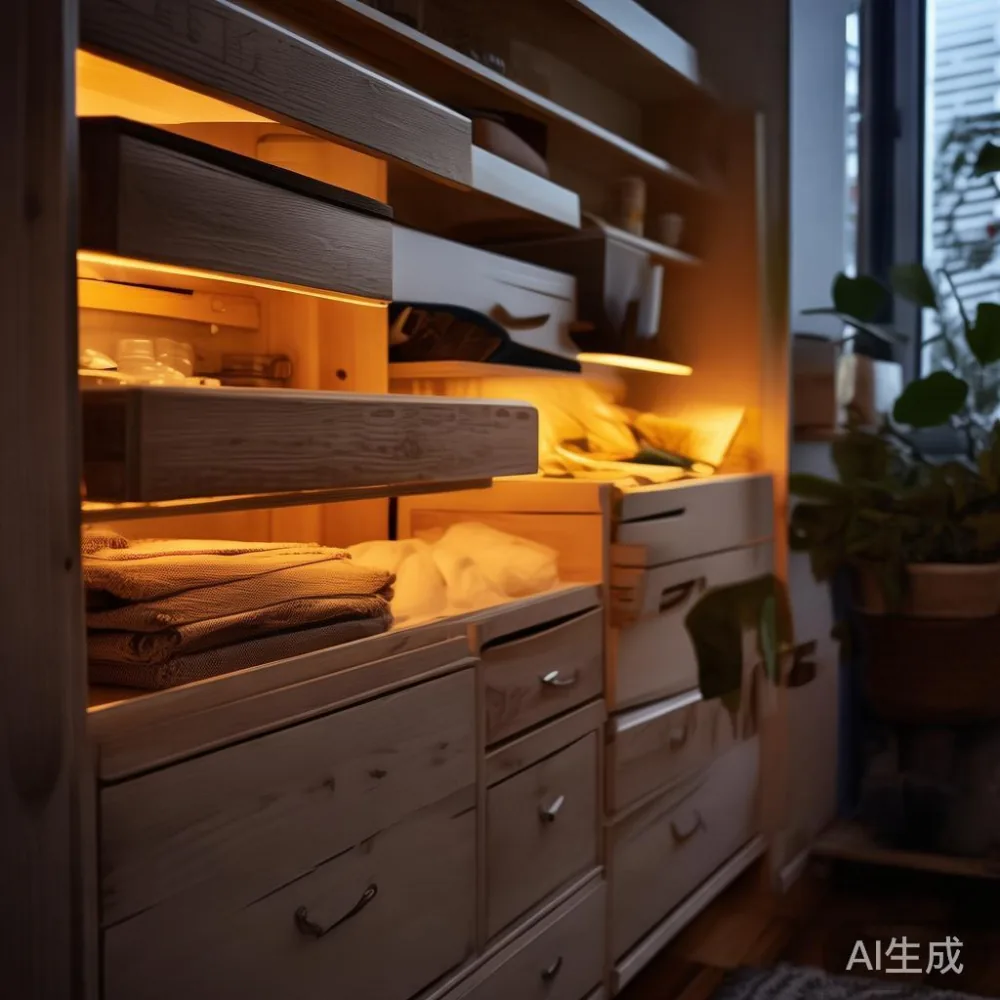
Storage should disappear into the composition. A drawer organizer in a nightstand is nearly invisible when closed, while one in a dining table cabinet can hold cutlery neatly. Avoid exposed baskets on every open shelf. One basket with a restrained colour may be enough for throws, but everything else can go behind doors or into drawers.
Leave 15–20% of visible surfaces empty. On a 120 cm console, leave at least 20 cm clear at one end. On the dining table, keep one 40 cm section free when the room is not being used. These open areas are not wasted; they allow the eye to rest and make the same furniture feel less crowded.
What is the practical order of work for a compact apartment?
Measure first, then clear, then purchase. Record every window, door swing, lift opening, and corridor pinch point over 2 days. Remove furniture that is used less than once a month. Sketch the zones at 5 cm intervals if you enjoy planning by hand.
Next, identify the top 3 storage failures. These are often charging cables, kitchen tools, and miscellaneous bedside items. Solve those with drawer organizers before adding decorative boxes. Next, select furniture according to the remaining clearances: a 180–200 cm solid wood sofa, a 140 cm bed frame, a 100–120 cm dining table, a wardrobe no wider than 220 cm, a 40 cm nightstand, and a compact marble table only if circulation allows.
Complete the room with 4–6 small accessories rather than 15. A 45 cm ceramic lamp, a 50 by 70 cm artwork, and two 40 by 40 cm cushions are enough to soften a basic scheme. Hang art with its lower edge 15–20 cm above the sofa back and use one matte finish to keep reflections under control.
Finally, test the layout for 7 days. Notice where people step over bags, where doors catch, and which surfaces collect clutter. Move one item at a time and wait 24 hours before judging the change. This method costs little and usually reveals more than an expensive impulse purchase.
A well-styled small apartment is not defined by emptiness. It is defined by control: clear routes, closed or organized storage, correctly scaled furniture, and a few materials that invite touch. With careful measurements and disciplined drawer organizers, even a 72–95 sq m home can carry a composed French, American, or post-modern light-luxury mood without looking overfilled.