How Southeast Asian Humidity Affects Solid Wood Furniture
Singapore’s warm, humid climate can change the dimensions of solid wood furniture by several millimetres over a year. In an HDB flat in Tampines, a dining table near an open balcony may absorb moisture during the monsoon periods, while a drawer organizer in a Bedok bedroom experiences drier air whenever the air-conditioner runs for several hours. That repeated expansion and contraction is why careful wood selection, stable finishes and sensible maintenance matter.
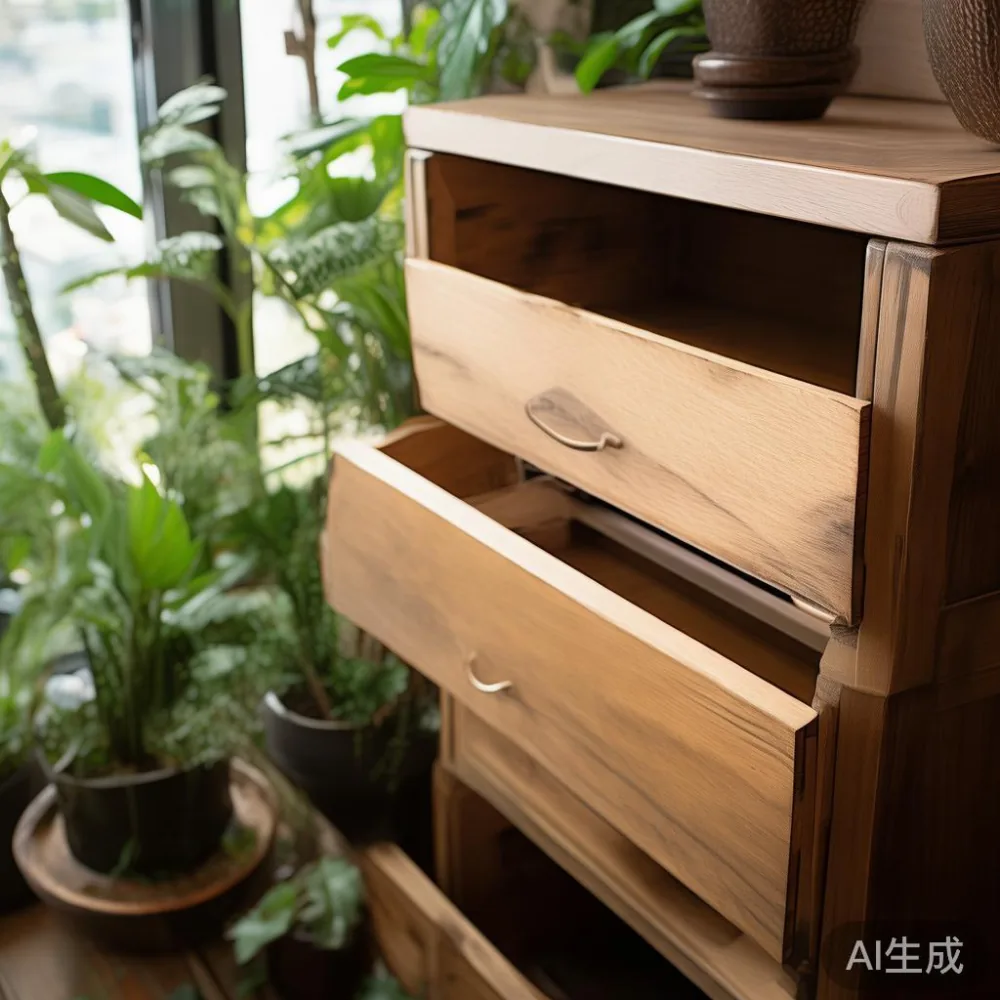
This guide explains how relative humidity affects solid wood, how to identify movement, and what Singapore homeowners can do to protect furniture in Punggol condos, HDB kitchens and other compact interiors. It also covers sizing for narrow lift lobbies, delivery planning and the service terms available from MIDHILL furniture, a Foshan solid wood manufacturer established in 2008 and exporting to more than 15 countries.
What Singapore’s humidity does to solid wood?
Wood is hygroscopic: it takes on moisture when the surrounding air is humid and releases it when the air becomes dry. Southeast Asian humidity commonly ranges from about 60% to 85% outdoors, while air-conditioned interiors may fall to 45% or 55%. The exact figures vary by hour, weather pattern and building exposure.
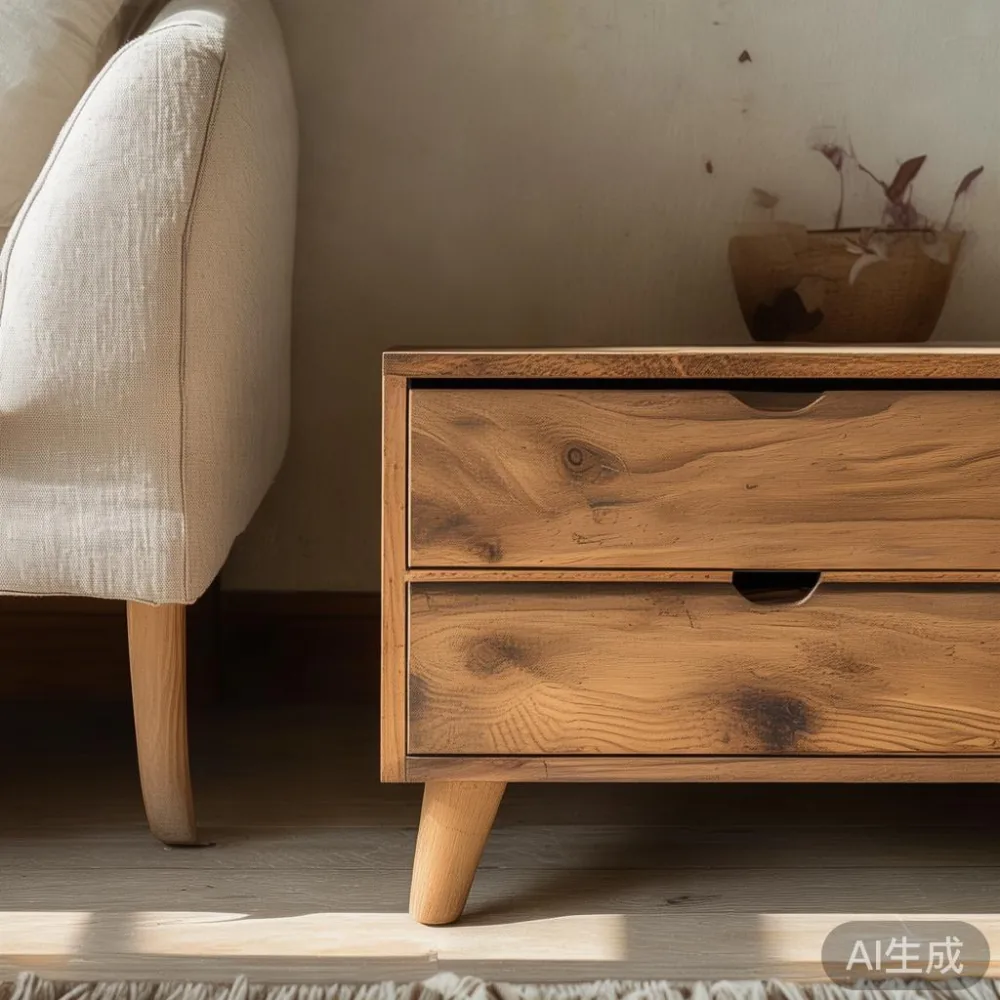
Seasonal movement is normal in solid hardwood. A 180 cm dining table may expand by roughly 3–6 mm across its width as relative humidity changes substantially, and a 120 cm bed frame may move around 1–3 mm along its length. These are estimates rather than defects. Veneered panels and manufactured boards can behave differently, but their adhesive layers and surface coatings also respond to moisture and temperature.
Wood movement often appears as small gaps at drawer joints, slight changes in the fit of a wardrobe door, or a tick under a drawer organizer runner. A drawer organizer may tighten as its wooden components swell and loosen as the room dries. The aim is not to prevent all movement. It is to limit abrupt moisture changes and help the furniture acclimatise.
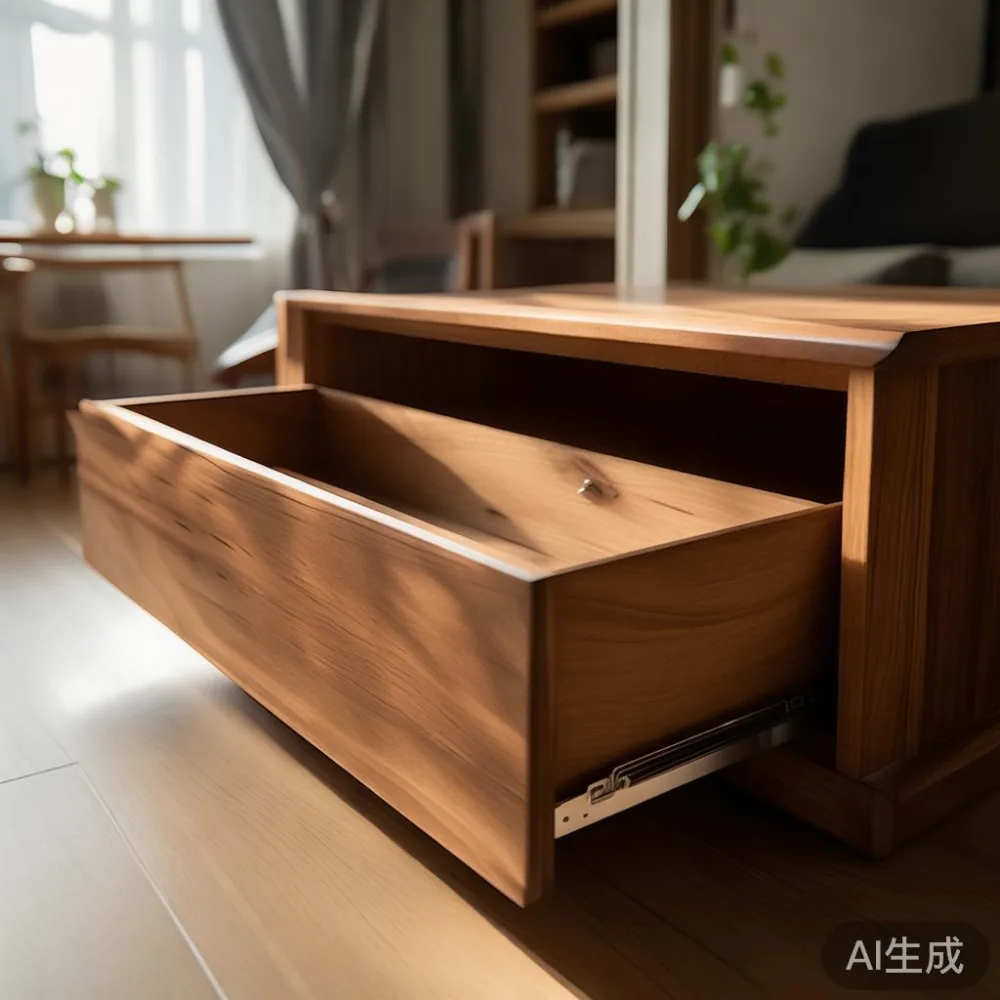
Temperature also matters. A surface can be 5–8°C cooler than the outdoor air beside an uninsulated balcony wall. Warm, moist air entering a corridor can therefore create a local microclimate around a wardrobe or nightstand. Air circulation is usually more helpful than chasing a dry surface with excessive heat.
How can I tell if a solid wood table or drawer organizer is humidity-damaged?
Start with the symptoms. Look for cracks wider than 1–2 mm, persistent sticking or rubbing, mould around joints, a dull finish, or a warped drawer base. Lift the base of a drawer organizer slightly and check whether one corner rises more than 3 mm above another. For a dining table, place a straight edge across the top and compare the gap with a 300 mm steel ruler. A reading above about 3 mm over 1 metre deserves closer inspection.
White, powdery deposits can indicate mould, while darker streaks around screw holes may point to trapped moisture. Do not confuse ordinary grain lines with cracks. A grain line runs continuously along the timber and does not open when pressed. A structural split usually interrupts the fibre and can be seen with strong side lighting.
Use a moisture meter for an approximate reading, but digital meters vary in accuracy and are calibrated for specific wood species. For general household checks, hold the meter against the underside of a drawer organizer, the end grain of a bed frame and the underside of a nightstand. Readings taken from the surface should not be treated as laboratory results. If a piece has been exposed to water, isolate it from textiles and other wooden objects, then contact the maker for diagnosis.
Last month, I visited a colleague’s three-room HDB flat in Bedok after he had stored a solid wood nightstand in a corridor for 6 days during a renovation. The side facing the wall felt noticeably cooler. Its drawer organizer had developed a 2 mm gap and would not close at one corner. After the nightstand was moved, wiped and left in a ventilated room for 14 days, the gap reduced to less than 0.5 mm. The episode showed how exposure to condensation can be more damaging than ordinary seasonal humidity alone.
Which timber and finish choices make sense for Singapore?
For furniture used in Singapore, kiln-dried hardwood with a stable factory finish is a practical choice. Oak, ash, beech, rubberwood and other commonly used species differ in movement rates, so ask for the species and moisture-treatment details rather than relying on a broad “solid wood” label. A maker should be able to explain the drying process and the finish intended for humid environments.
Oiled or water-based finishes generally require more attentive care than a well-applied film finish. An oiled dining table should be protected from water rings and prolonged dampness. A drawer organizer with lacquered or sealed surfaces can be wiped more readily, although scratches can still admit moisture. For a marble table, the humidity concern applies mainly to the timber support or cabinet body; the stone itself is not hygroscopic in the same way.
Light-luxury design does not have to mean fragile surfaces. French light luxury often pairs pale oak or ash with restrained profiles and bronze-toned details. American light luxury tends toward broader forms, natural grain and comfortable proportions. Post-modern light luxury can use geometric drawer layouts and mixed textures. In each style, moisture performance begins with the timber, joinery and finish—not only with appearance.
At MIDHILL, solid wood sofas, bed frames, dining tables, wardrobes and nightstands can be evaluated as complete pieces, with drawer storage specified as part of the room rather than treated as an isolated accessory. The relevant comparison is between top 10 American furniture references and locally practical specifications: drawer dimensions, finish type, movement allowance, warranty and after-sales care.
How much room do you need for delivery through a Singapore HDB or condo?
Measure the route before ordering. A standard HDB lift lobby may be about 140–170 cm wide, and a common lift car around 110–140 cm deep. Condo service lifts can be larger, but loading bays and turn radii still need checking. Measure the narrowest doorway, corridor turn, lift door and actual lift car rather than using the building brochure.
A flat-pack dining table may fit through an 80–90 cm opening more easily than a fully assembled 180 cm table. A bed frame delivered in 2–3 protected cartons usually suits narrow access better than one large carton. For drawer organizers, consider whether the piece will be assembled in the bedroom, where a 100 × 60 cm working area may be needed.
Check whether the lift booking requires a deposit, a protection mat and specific moving hours. Building management policies commonly require furniture moves to be scheduled outside peak periods, and corridors must not be blocked. Write down the delivery date, carton count and estimated assembly time. MIDHILL provides delivery and a 14-day return window; confirmation of the applicable charges should be obtained before purchase.
Budget in SGD. For local examples, a tailored drawer organizer may range from SGD 180 to SGD 650 depending on timber, dimensions and internal fittings, while a solid wood bed frame may run from SGD 1,200 to SGD 3,500. A dining table can range from SGD 900 to SGD 3,200, and a wardrobe from SGD 1,800 to SGD 5,500. These are planning ranges, not fixed quotations. Prices shown in Singapore normally include GST, but it is sensible to confirm the total on the invoice.
How should you protect a drawer organizer from daily humidity?
Keep the drawer organizer away from direct balcony doors, bathroom-adjacent walls and exterior corners with condensation. A distance of 30–60 cm from a frequently opened door can reduce exposure, but the more important point is airflow. Avoid placing damp laundry, laundry baskets or wet towels directly against a wooden wardrobe or nightstand.
Leave space around the piece where possible. For a drawer organizer, do not overfill drawers with damp clothing or linen; allow damp contents to dry before closing them. Clean with a soft cloth lightly dampened with water and mild soap, then dry immediately. Wipe a dining table in the direction of the grain and remove spills within about 10 minutes.
Maintain indoor relative humidity at roughly 50–65% where practical. A calibrated hygrometer placed near, not directly against, the furniture can help. In Bedok, Bedok Reservoir or Tampines areas with stronger moisture exposure, use the air-conditioner or dehumidifier consistently rather than switching between very dry and humid settings. A target of 5 percentage points or less per hour is more useful than an arbitrary daily limit, because rapid changes can stress the surface.
Do not place a hot metal pan, radiator or hair dryer against wood. Heat can dry one area faster than another and open local cracks. Felt pads under a nightstand should be breathable and renewed every 6–12 months. For a wardrobe, leave the doors occasionally open for 15–30 minutes after the room dries, unless privacy or child-safety needs make that impractical.
What should Singapore buyers ask before ordering solid wood?
Ask whether “solid wood” refers to the frame, legs, drawer fronts, drawer sides and back panel. Some components may be plywood, finger-jointed timber, veneer or another engineered material. Ask for the timber species, finish type, expected tolerances and care instructions. A movement allowance of 2–4 mm across a 100 cm drawer front may be reasonable for a humid climate.
For a drawer organizer, request clear internal dimensions. A fitted insert for cutlery may need a 45 cm compartment, while a cutlery tray for 24 pieces may occupy roughly 30 × 38 cm. For jewellery, use a 12 × 12 cm section or larger. Precision helps prevent organisers from binding during expansion.
Review the warranty in writing. MIDHILL offers a 10-year structural warranty and lifetime refinishing, which should be distinguished from a guarantee against every seasonal movement. Clarify what refinishing includes, how the service is arranged and whether transport charges apply. Free shipping applies to orders above US$350; Singapore customers should request the local delivery quotation and any applicable GST treatment before payment.
International style references are useful, but specifications should suit the local home. Italian light luxury for bedroom projects can inform a refined solid wood bed frame, while Italian light luxury for bedroom storage can guide a wardrobe with pale timber, slim handles and organised interiors. The best Post-modern bed for 2026 may suit a compact Punggol room, provided its assembled dimensions and mattress clearance work with the lift route.
How do you style light luxury furniture in a small Singapore apartment?
Modern light luxury for small living room layouts depends on scale and visual breathing space. Choose a dining table that leaves 90 cm for main circulation and 60 cm for secondary movement. A 140–160 cm table often works better than a 200 cm model in a compact dining zone. A slim solid wood sofa can define the living area without crowding a 90 cm passage.
For storage, consider how to style light luxury wardrobe in apartment interiors: use matching grain directions, limit mixed brown tones and keep the drawer organizer aligned with the wardrobe modules. A coordinated nightstand with a 35–45 cm top can hold a lamp and glass of water without taking over a 280–320 cm bedside gap.
Light colours reflect more daylight and can make a room appear wider, though they show marks readily. A pearl-grey or warm-white finish may be easier to maintain than very pale untreated oak. A marble table can provide contrast beside solid wood chairs, but the dining table’s stable base and wipe-clean finish still matter in a humid setting.
For trade buyers, wholesale Modern light luxury furniture enquiries should specify timber, finish, dimensions, packaging and local delivery terms. “Wholesale” alone does not establish moisture suitability. Request samples and production details, especially for drawer organizers and other pieces that will be built for air-conditioned rooms.
What is a sensible humidity-care routine?
Check the hygrometer twice each week and after heavy rain. Inspect drawer runners every 3 months and the dining table every 6 months. Look underneath a wardrobe and behind a nightstand for dust, moisture staining or insects. Tighten fittings gradually if a door begins to rub; aggressive adjustment can damage the joint.
Wipe wooden surfaces every 2–4 weeks during humid periods and every 8–12 weeks when the air-conditioner keeps the room stable. Re-oil an oiled finish according to its condition, usually every 12–24 months under household use. Avoid silicone-based furniture sprays unless the finish manufacturer permits them, because they can interfere with future refinishing.
Keep a purchase record with the order date, finish, species and warranty documents. Photograph the furniture after delivery. If a drawer organizer develops a large gap, a dining table develops a deep split, or mould appears, stop using the affected part and seek professional advice. With sensible placement, stable indoor humidity and regular care, solid wood furniture can retain its proportions and appearance for many years in Singapore’s demanding climate.