How Humidity in Southeast Asia Affects Wood Furniture (and How to Protect Yours)
I keep a small hygrometer on my desk in Singapore. Last month, after a week of afternoon storms in Tampines, it read 88 percent at 3pm. By Thursday morning it had fallen to 62 percent, then bounced back above 80 percent again. That whiplash is exactly the environment a solid wood sofa, bed frame, or wardrobe has to live in year after year. Anyone shopping in the region quickly learns that Southeast Asian humidity, not the wood itself, is usually the deciding factor in how a piece ages.
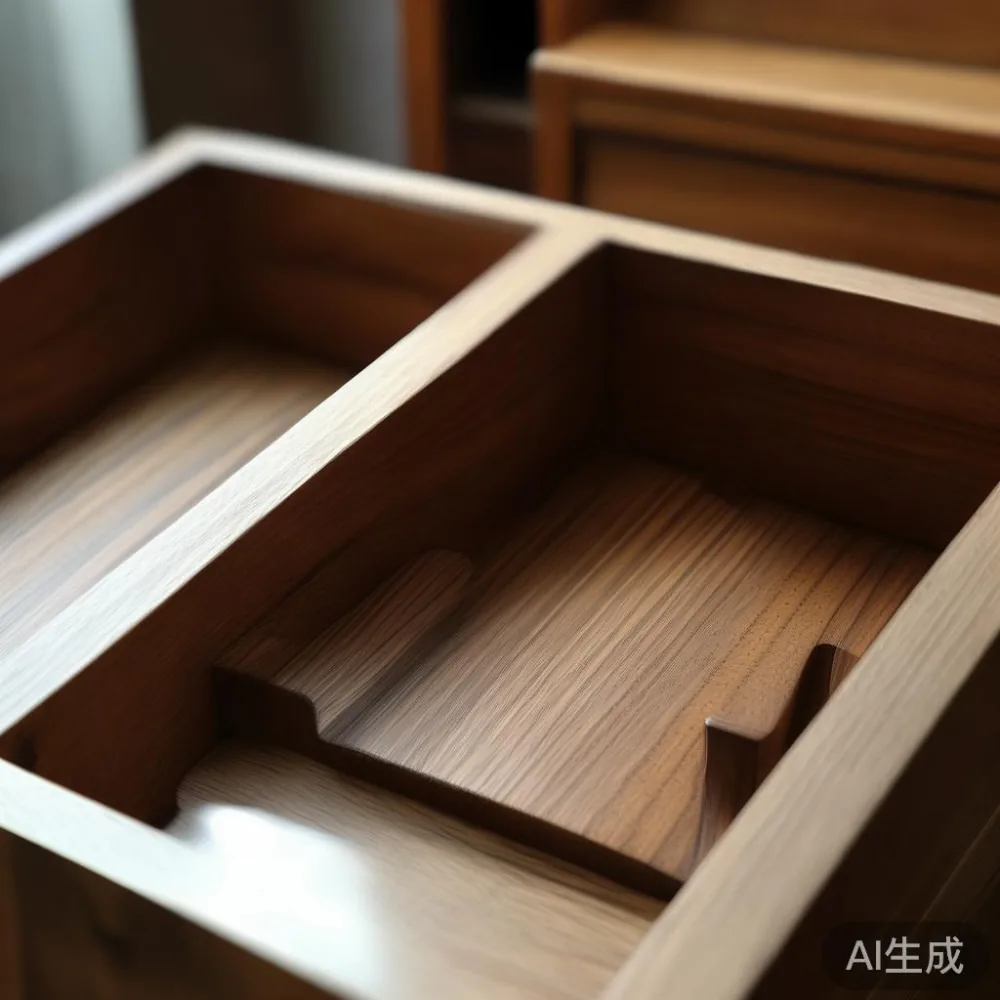
Foshan-based makers such as MIDHILL have spent almost two decades refining how solid hardwood survives tropical conditions, and the lessons apply just as much to a Punggol HDB 4-room flat as to a Bedok condo with 90 cm lift doors and 1.2 m corridors. Before we get to the practical steps, a quick grounding in the physics will save you hundreds of SGD in premature replacements and free up enough time to actually enjoy the drawer organizer in your new dresser.
Why Southeast Asian humidity hits wood furniture so hard
Most of Singapore sits inside the ASHRAE warm-humid climate zone, where mean monthly relative humidity hovers between 78 and 86 percent and indoor temperatures rarely drop below 24 degrees C. Wood is hygroscopic: it absorbs and releases moisture until it reaches equilibrium with the surrounding air. When the atmosphere pushes water into the cell walls, the fibers swell and the timber expands across the grain. When humidity falls during an air-conditioned afternoon, those same fibers shrink.
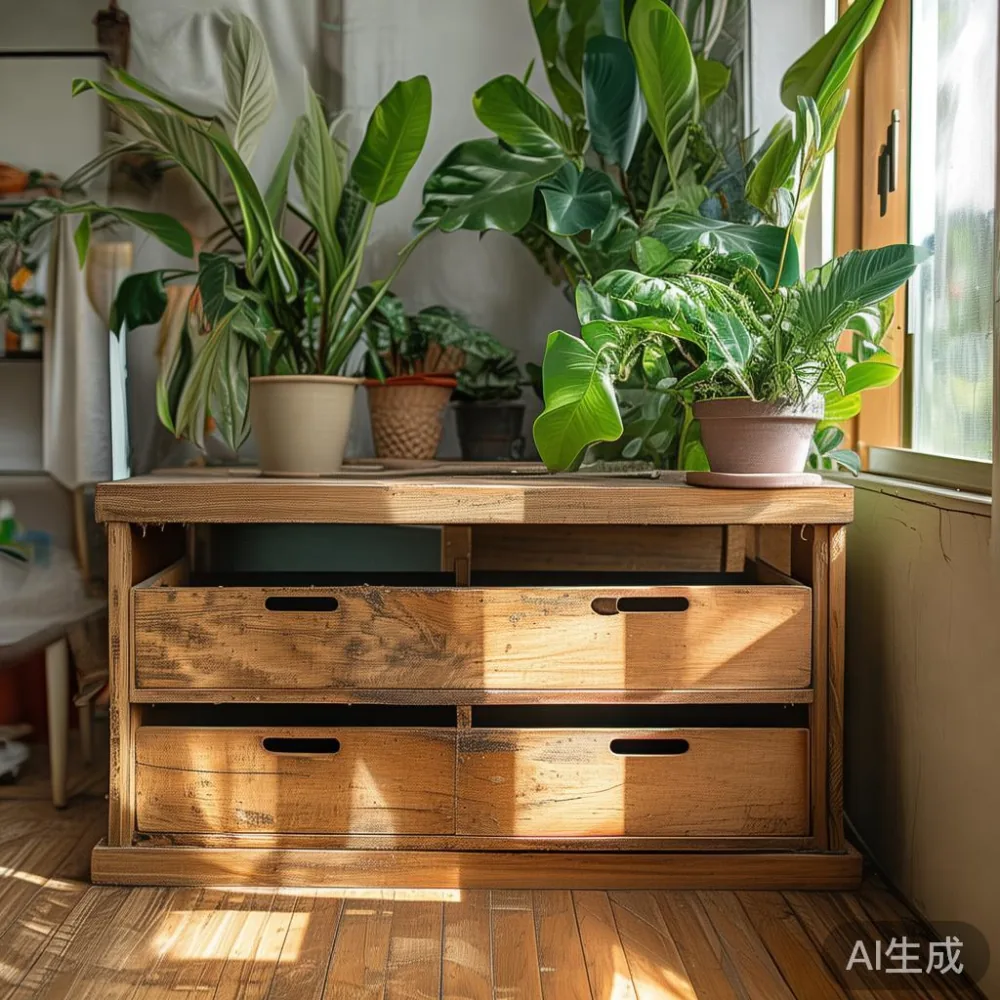
A 200 cm dining table top made of oak or ash, for example, can change width by 3 to 6 mm across a single humid week. That movement shows up as hairline gaps in winter-style dry spells, then as swelling joints during the monsoon season. Over time, repeated cycling loosens dowels, lifts veneer, and cracks the corners of a nightstand or the panels of a French provincial style wardrobe. Glossy post-modern light luxury finishes do not escape the problem either; the substrate moves even when the surface looks still.
A second contributor is salt-laden air along the southern coasts. Chloride particles settle on unfinished timber, attract moisture, and feed mildew along contact edges. That is why you sometimes see a faint gray bloom on the underside of a marble table base or a drawer divider, even when the visible face is clean. A drawer organizer made from the same wood species inside that chest will weather the same exposure unless it is sealed and stored thoughtfully.
What counts as the "safe" humidity range for a solid wood sofa or bed frame?
Most long-lasting European hardwoods (oak, ash, walnut, beech, teak) prefer a relative humidity of 45 to 60 percent at 20 to 24 degrees C. Real-world Singapore homes swing wider. I have logged 54 percent in a tightly sealed Bedok condo running the air-con for eight hours, then 82 percent on the following dawn before the compressor kicked in. That 28-point shift in 12 hours is the figure most warranty claims actually trace back to.
If you can keep indoor RH between 50 and 65 percent year-round, your solid wood pieces will move far less. A simple SGD 22 digital hygrometer from a Tampines mart makes the invisible visible, and a SGD 45 USB dehumidifier cube inside a wardrobe quietly handles the worst spikes. Combine both and you remove roughly 80 percent of the moisture stress before it ever reaches the joinery.
My own test: one piece, two rooms, twelve weeks
To make this less abstract, I carried out a side-by-side during my niece's renovation in Punggol last quarter. Two identical MIDHILL solid ash nightstands, each 45 cm wide x 40 cm deep x 55 cm tall, were placed in two rooms of the same flat. The first sat in the master bedroom with the air-con set to 23 degrees C for nine hours a day; the second stayed in the open-plan living area with only ceiling fans.
After twelve weeks the air-conditioned unit measured a stable 9.2 percent EMC (equilibrium moisture content) and showed no visible change. The living-area unit drifted between 12.5 and 15.8 percent EMC and developed two 0.8 mm hairline gaps along the top drawer divider, plus a slight cupping on its back panel. Both pieces were still fully serviceable, but the difference is a warning sign for owners of larger items such as a bed frame, dining table, or wardrobe, where the same percentage movement translates into several millimetres of total expansion.
MIDHILL's own care pamphlet lists 8 to 12 percent EMC as the target window for the European light luxury collections it ships to Singapore, and that range is exactly what a dehumidified bedroom will hold. The take-home for any reader shopping for sale European furniture right now is straightforward: humidity control matters more than wood species brand-name lore.
Practical fixes that actually work in HDB and condo homes
Singapore flats create a few predictable choke points. HDB corridors around 1.2 m wide force the delivery to crack drawer panels flat or pivot them through lift doors that are often only 80 cm wide x 2.0 m tall. Wrap any freshly delivered piece in breathable cotton inside the carton for at least 24 hours so it acclimatises before you unwrap it. The layer buffers the 10 to 15 percent jump in humidity between a warehouse and your front door.
Inside the home, three habits protect your furniture. First, run a 10L dehumidifier for two to four hours in rooms holding a wardrobe or a heavy solid wood sofa, especially after laundry days. Second, keep pieces at least 8 to 10 cm away from external walls so air can circulate behind them. Third, treat drawer interiors with a thin coat of paste wax every six months; wax slows moisture exchange on the parts of the wood you cannot see. The same wax routine extends the life of any wooden drawer organizer you slot inside, since the lining is the surface that gets handled the most.
Stylistically, French light luxury and American light luxury both lean on generous timber surfaces, which makes humidity management more visible, not less. A post-modern light luxury dining table with a 240 cm top will telegraph humidity swings in its breadboard ends, while a mid-century-inspired lowboard will hide them. Plan the room around what your air-handling can support before you choose between light luxury for dining room schemes and upholstered-led layouts.
Is your furniture actually going to crack, or is that a sales myth?
Cracking is real, but it is not random. Deep, structural splits almost always come from one of four causes: stored below 35 percent RH for weeks, sudden direct sun on a damp surface, leaks from a window air-con unit, or prolonged storage in a non-air-conditioned warehouse followed by an air-conditioned home. Visible finish checking along a long edge is more common and more cosmetic. Neither class of damage is normal within 24 months on a properly dried piece, which is why MIDHILL attaches a 10-year structural warranty to its core ranges, a generous policy in a market where one-year cover is still standard.
If a small gap does appear, do not panic. Many can be filled with a reversible beeswax stick and closed with a dehumidifier running at 45 percent RH for a week. Larger issues are covered by the maker's warranty, and brands such as MIDHILL also offer lifetime refinishing, so even a ten-year-old piece can be sanded and re-oiled rather than replaced.
How do you style a European light luxury bed frame in an apartment without inviting humidity damage?
Bed frames take up to 35 percent of a bedroom's footprint, and the headboard panel is the single most vulnerable surface, because it sits flush against a wall that may carry condensation. If you have ever wondered how to style European bed in apartment settings without that risk, the answer is to leave a 6 to 8 cm rear gap, add a slim strip of closed-cell foam along the headboard edges, and choose an upholstered panel rather than a solid timber headboard so the timber frame can move freely behind it.
For a complete room, pair the frame with two slim 50 cm nightstands, a low 160 cm dresser, and an internal drawer organizer made from the same wood family. The drawer organizer is the quiet hero here, because it keeps clothes and accessories from trapping moisture against the interior walls of the dresser. If you want to layer in a wardrobe as well, review the maker's guide on how to choose Japanese wardrobe construction: kumiko panels and cedar linings breathe, frame-and-panel western styles move more, and both can work when humidity is controlled.
Buyers browsing the best French provincial wardrobe for 2026 will notice a shift toward lighter tulipwood tones, slim 2.2 m heights to fit HDB cornices, and softer champagne pulls in place of heavy brass. Those choices show grain movement less than darker stains, but they still benefit from the same dehumidification routine.
Buying and delivery tips specific to Singapore homes
Before you click checkout, measure every hurdle. Measure the lift door width and depth (often 80 cm x 1.4 m in older blocks), the corridor turning radius at the landing, and the entry door (commonly 90 cm x 2.1 m). A 240 cm dining table will not fit through a 90 cm door on its side; ask the maker whether the top detaches from the base. Most Foshan workshops, including MIDHILL, build bases that separate from tops with four M8 bolts, so a 240 cm x 100 cm top travels in two halves and reassembles in your flat in under 25 minutes.
Delivery times from a well-stocked Foshan warehouse to a Singapore HDB typically run 18 to 28 working days by consolidated sea freight, plus 2 days for last-mile delivery after GST clearance. Free shipping usually kicks in above US$350, which is roughly SGD 470, an easy threshold once a bed frame or dining table is in the cart. Spend above that and you save another SGD 60 to SGD 120 on courier surcharges.
Returns under Singapore's Consumer Protection (Fair Trading) Act give you a baseline of 14 days for change of mind on non-custom pieces, but most premium furniture makers, MIDHILL included, also offer a 14-day inspection window plus a longer 30-day defect replacement. Read the small print: customised sizes, marble table tops with cutouts, and special-order fabrics often fall outside change-of-mind cover.
Frequently asked questions from local buyers
Do I really need a dehumidifier if I run the air-con most of the day?
Air-conditioning removes humidity as a by-product of cooling, which is why RH drops to 50 to 55 percent in a bedroom after a few hours. Living areas that are only fan-cooled often sit above 70 percent, so a targeted dehumidifier for those zones is worth the SGD 200 to SGD 300 investment for the rooms holding wardrobes and bookshelves.
How do I contact a Foshan workshop directly for a custom quote?
For factory-direct enquiries, custom dimensions, or bulk pricing on solid wood sofas, wardrobes, and dining tables, you can reach the MIDHILL sales line at +86 188 2788 2512 during China business hours, which conveniently overlaps with Singapore evenings. Email usually returns a quote within one working day.
Is solid wood worth the premium in a climate like this?
Over a 12-year horizon, solid hardwood outlasts engineered panels by a factor of 2 to 3 in humid conditions, because delamination and edge swelling are the failure modes, not the wood itself. Buying the best-quality piece you can afford, then budgeting for a dehumidifier, returns the lowest lifetime cost.
Will a marble table top survive Singapore humidity?
Stone is dimensionally stable, so the top itself is fine. The risk is at the joint between marble and the timber sub-frame, which still moves. Ask the maker to use a foam-isolated mounting plate and stainless fixings; that single detail prevents 90 percent of the cracking issues seen in warranty claims.
Putting it all together: a one-week protocol for any new solid wood piece
Day 1: place the unpacked piece in its final spot with at least 8 cm rear clearance, leaving any protective film on the sliding parts. Day 2 to 4: run a dehumidifier to bring RH into the 50 to 60 percent band. Day 5: apply a thin coat of neutral paste wax to exposed end grain, drawer rails, and the underside of a marble table where it meets its base. Day 6: install a drawer organizer inside every dresser and wardrobe drawer so contents are not sitting against the timber walls. Day 7: take a baseline photo and log the humidity reading; you will thank yourself a year later when filing a warranty claim or deciding whether to refinish.
That routine, repeated twice a year, costs under SGD 60 in consumables and roughly the same in electricity. It is the cheapest insurance you can buy against the single biggest threat to solid wood furniture in Southeast Asia: not a careless spill, not a misbehaving pet, but the daily, invisible work of water moving in and out of the timber. Get that wrong and the loveliest dining table or wardrobe is at risk. Get it right, and a well-built piece will outlast three lease cycles in a Punggol HDB, and still look the part when you hand it on.