Humidity, Wood, and Drawer Organizers: A Practical Guide for Singapore Homes
Singapore’s climate can change a solid wood drawer organizer more quickly than many homeowners expect. Humidity above 60% encourages swelling, condensation, and mould around joints, while prolonged dryness can make timber crack. The problem becomes sharper in HDB flats and condos in Tampines, Bedok, and Punggol, where fitted furniture often shares tight circulation zones with bedrooms, bathrooms, and kitchens.
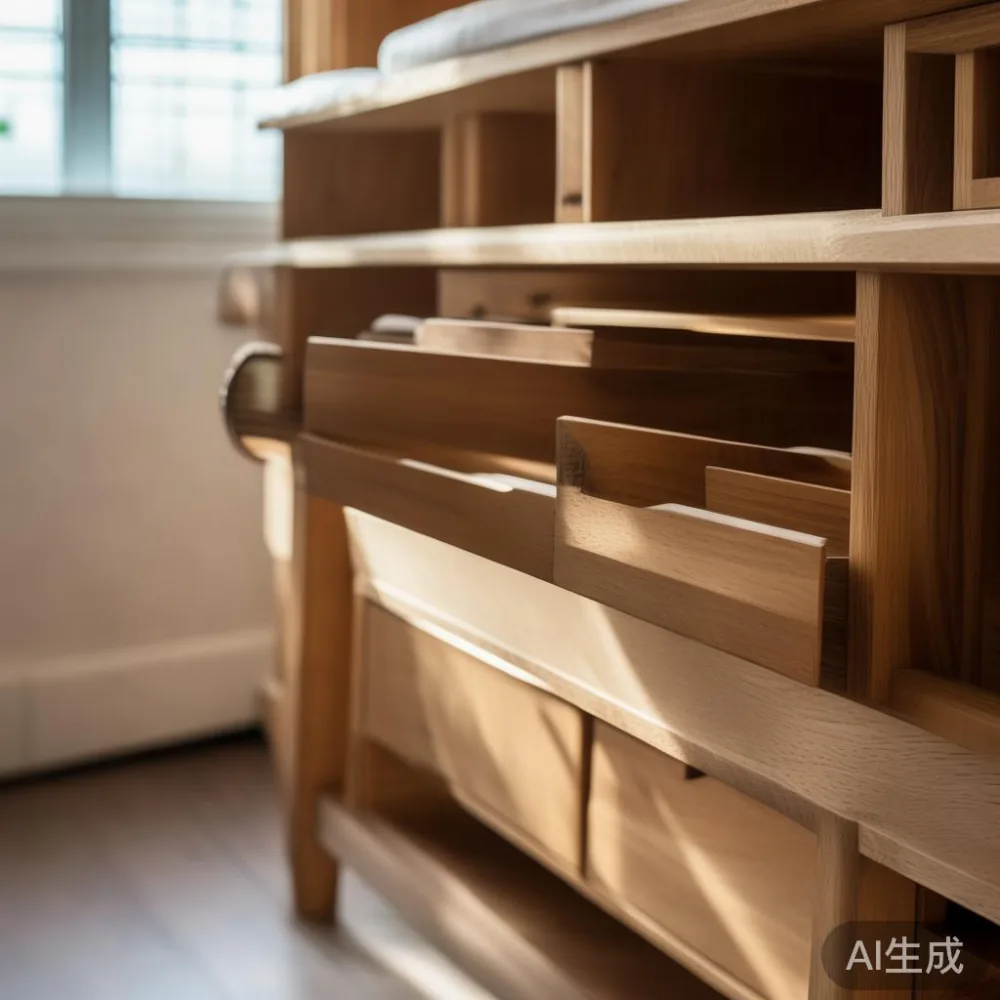
This guide explains how Southeast Asian humidity affects wood furniture, how to choose moisture-resistant storage, and what to check after delivery. It also considers local constraints such as lift dimensions, corridor turns, GST-inclusive pricing, and the 14-day return window.
How Does Singapore Humidity Affect Solid Wood Furniture?
Singapore records average relative humidity of roughly 75% across the year. Coastal air, monsoon rain, and warm temperatures keep moisture levels high, especially between May and October. Interior readings can exceed 80% in a compact flat when air-conditioning is off, laundry dries indoors, or windows remain open during a shower.
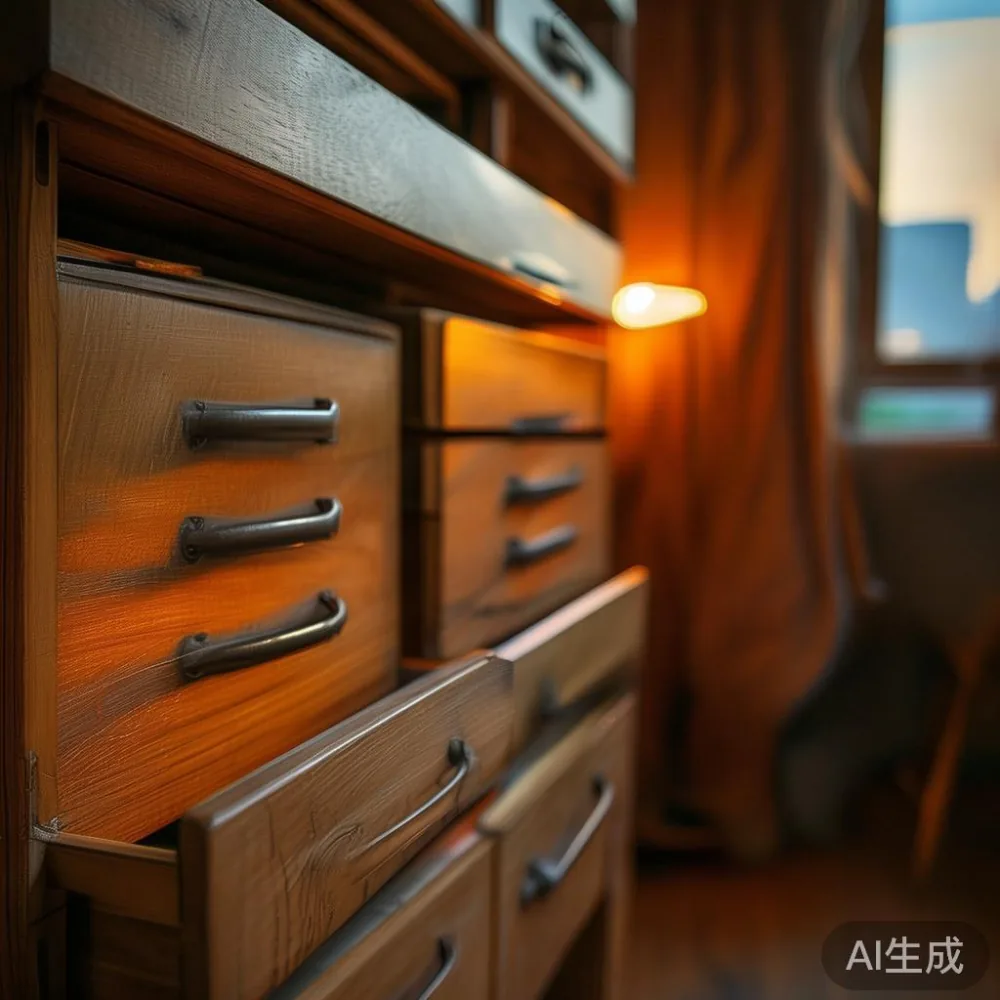
Wood is hygroscopic: it absorbs moisture when the surrounding air is humid and releases it when the air becomes dry. Oak, ash, teak, rubberwood, and other furniture-grade timbers can therefore gain or lose a small but measurable amount of dimension. A drawer organizer with 6 mm panels may expand by around 0.3–0.6 mm across its width during a pronounced humidity swing.
That movement affects runners, dividers, and doors. A drawer may become stiff, a veneer edge may lift, or a corner joint may show a fine gap. These changes are not always manufacturing defects. They can indicate that the furniture is responding to its environment, which is why stable indoor conditions matter as much as the species of timber used.
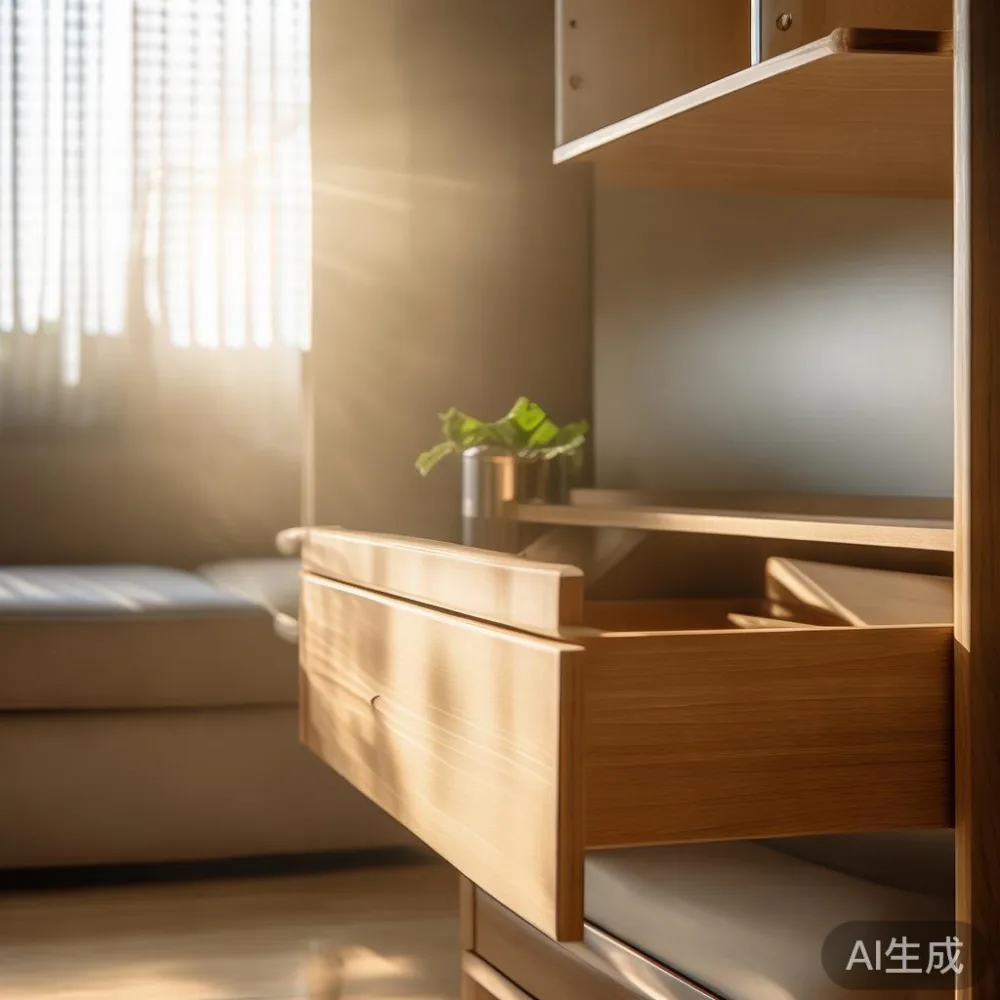
Temperature also matters. Warm air holds more moisture than cool air. Moving a drawer organizer from an air-conditioned bedroom at 24°C to a corridor at 30°C can create a short period of condensation on a cold metal runner, even when the wood itself has not been exposed to rain.
Which Wood Types Handle Humidity Better?
No indoor wood is completely humidity-proof, but density, grain structure, and finish influence how visibly it responds. Teak is naturally resistant to moisture and is common in outdoor and bathroom furniture. Hard oak and ash are harder but can still move. Rubberwood is widely used in Singapore furniture and offers good dimensional stability when properly kiln-dried and sealed.
The quality of the drying process matters more than a broad claim about one species. Kiln drying to a moisture level appropriate for Singapore conditions, usually around 8–12% for indoor furniture, reduces later movement. Shoppers should ask whether the drawer organizer is solid wood, veneered plywood, or a combination, then request details about moisture conditioning and finish.
For light-luxury interiors, an oiled or matte-finished drawer organizer in teak, ash, or oak suits French light luxury, American light luxury, and post-modern light luxury. A satin finish offers another layer of protection without making the timber look glossy. The same care applies to a solid wood sofa frame, bed frame, dining table, wardrobe, nightstand, or marble table, particularly where a freestanding piece sits close to a balcony or bathroom doorway.
What Should You Look for in a Humidity-Resistant Drawer Organizer?
Begin with construction. Look for drawer boxes with well-fitted joints, solid or plywood bases, and runners selected for the drawer’s weight. A drawer organizer holding 12 kg of books should not use the same light-duty slides as one carrying 3 kg of socks. For larger configurations, check the total load rating and whether runners are full-extension or partial-extension.
Sealed edges matter because end grain absorbs moisture faster than broad faces. Look for finished or filled edges on dividers and exposed plywood layers. Dovetails, dowels, mortise-and-tenon joints, and tight tolerances generally offer useful resistance to repeated dimensional changes, although no joint removes the need for sensible humidity control.
Finishes should cover all faces and edges. A lacquered, sealed, or water-resistant finish can slow moisture uptake, but scratches still need prompt attention because moisture can enter through damaged areas. Wipe standing water immediately and dry the surface with a clean cloth within 5 minutes.
Modular drawer organizers work well in compact HDB rooms. A 45 cm wide, 35 cm deep, and 20 cm high unit can fit beside a bed frame or inside a wardrobe without blocking a walkway. Compartments should be removable so that cables, papers, and clothing do not trap damp air against the base.
Is a European-Style Drawer Organizer Suitable for a Small Singapore Flat?
Yes, if scale and moisture control are considered. The phrase European for small living room often appears in design discussions, yet the practical answer is more useful than a geographic label. For an HDB bedroom with a 90 cm wide wardrobe recess, a drawer organizer no wider than 50–55 cm and no deeper than 38–40 cm is easier to manoeuvre.
Measure the route before ordering: door opening, lift car dimensions, corridor turns, and the final storage position. A drawer organizer that measures 60 × 40 × 25 cm may fit a lift but become awkward around a sharp corridor turn. Keep at least 5 cm of clearance around large pieces in shared corridors and avoid leaning assembled furniture against damp walls.
Budget in SGD and include GST. A practical solid wood drawer organizer in the SGD 180–420 range before GST can be appropriate for bedroom storage; wider wardrobes or modular systems may range from SGD 320–900 before GST. Request the final tax-inclusive figure at checkout rather than assuming prices shown in a catalogue include GST.
Buyers searching for for sale Scandinavian furniture should check timber, coating, and dimensions rather than relying on style alone. Pale ash, light oak, and clean-lined compartments can suit a Nordic interior, but a pale finish reveals water rings and mould staining more readily. Darker finishes may disguise minor marks, although they do not make wood moisture-resistant.
How Do Condo Air Conditioning and Ventilation Change the Risk?
Air conditioning can lower humidity dramatically. A bedroom maintained at 24–26°C and 50–60% relative humidity creates a more stable environment for wood. However, the transition from a cool room to a humid corridor can produce condensation, and laundry or cooking moisture can raise readings locally.
Use a hygrometer rather than estimating from the weather app. Place one near the drawer organizer and check it at approximately 8:00 a.m. and 9:00 p.m. for 7 days. Readings of 45–60% are comfortable for wood. Brief periods at 65–70% are manageable in a ventilated room; readings above 70% for several days call for better airflow and closer inspection.
Position storage away from bathroom doors, windows with persistent condensation, and kitchen corners that trap steam. Leave a 3–5 cm gap from external walls where practical. Run exhaust fans during showers and cooking, and use a dehumidifier in wardrobes or enclosed dry areas if readings remain above 65%.
Do not aim a fan directly at the wood for 24 hours. Rapid drying can cause cracks as quickly as prolonged dampness causes swelling. Aim for gradual, even ventilation and a stable indoor range.
How Should You Care for Wood After Delivery?
Inspect the drawer organizer within 48 hours of delivery. Check runners, corners, edges, and surfaces for chips or moisture marks. Photograph the packaging and furniture before assembly. If a part is damaged, record the issue promptly and follow the supplier’s process.
For routine care, dust with a soft, dry cloth every 1–2 weeks. Wipe damp surfaces and dry them at once. Avoid silicone-based sprays, ammonia cleaners, and soaked cloths. If a finished surface needs refreshing, use a product approved for that specific finish and apply a thin coat according to its instructions.
Wood movement is seasonal. A drawer may feel slightly tight after 3–5 rainy days and loosen after a drier week. Do not force it. Adjust the runner or contact the supplier if the movement exceeds the product’s stated tolerance. Never sand a runner or alter a fitted drawer organizer while the return window is open unless the supplier instructs you to do so.
For movable furniture, lift rather than drag. A solid wood dining table may weigh 45–80 kg, a wardrobe may exceed 100 kg, and a marble table can be especially heavy despite its compact top. Professional movers with lifting straps and furniture dollies are sensible for pieces above about 35 kg.
What Are the Delivery and Service Details to Confirm?
Delivery timing matters because furniture should acclimatise inside before it is tightly fitted into a recess. Confirm whether delivery is curbside, room-of-choice, or flat-pack, and whether the quoted SGD amount includes GST, lift fees, and assembly. Standard delivery may take 7–14 business days after order confirmation; custom drawer organizers can require 21–45 days.
MIDHILL exports solid wood furniture to more than 15 countries and supports Singapore customers with a 10-year structural warranty, lifetime refinishing, and a 14-day return period. Confirm in writing what lifetime refinishing covers, since lacquer wear, water damage, and deliberate alterations may be treated differently.
Free shipping over US$350 appears in the stated company policy, but Singapore buyers should request a separate SGD quote to avoid currency-conversion or cross-border fee surprises. Local delivery to Tampines, Bedok, Punggol, and other Singapore districts should include the building number, unit number, and access details.
How Do You Choose Light-Luxury Storage Without Overbuying?
Light luxury is about proportion, material honesty, and restrained detailing rather than excess. A French light luxury drawer organizer might use slim brass-coloured pulls, pale timber, and clean lines. An American light luxury approach often pairs warmer oak with generous spacing and practical capacity. Post-modern light luxury can mix a simple carcass with rounded inserts or contrasting grain.
Before choosing how to choose light luxury sofa dimensions or finish, measure the room, the route, and the daily use of each piece. A solid wood sofa should leave 75–90 cm between the front edge and a circulation path. The same disciplined spacing improves a bed frame, dining table, wardrobe, nightstand, and marble table arrangement.
Search terms such as best Mid-century modern sofa for 2026 and best American bed for 2026 can generate ideas, but local dimensions and climate conditions should determine the purchase. A bed frame with a low storage platform may suit an HDB bedroom, while a slatted frame improves airflow beneath the mattress. For a dining table, allow at least 90 cm around the seated area.
Buyers comparing options through an is European bed worth it discussion should examine the timber, joinery, centre support, slat spacing, and warranty alongside appearance. A European-style bed may offer useful proportions, but it still needs a stable foundation and humidity-aware care in Singapore.
What Signs Suggest a Drawer Organizer Needs Attention?
Watch for musty smells, darkened joints, softened corners, mould spotting, or runners that repeatedly jam. Check underneath the base and inside corners where dust and dampness combine. If a surface feels damp, remove stored items and air the unit for several hours in a ventilated, dry space.
Measure the drawer sides if a gap appears. A change of 1–2 mm after seasonal humidity changes can be normal, while a sudden larger movement may indicate a loose joint, concealed water exposure, or delivery damage. Do not apply filler or finish to a moving component before identifying the cause.
I last month visited a colleague’s three-room HDB flat in Tampines with a newly installed drawer organizer beside the bed frame. A hygrometer near the unit read 72%, while the air-conditioned sitting room measured 58%. After relocating the organizer 12 cm away from the external wall and running the bedroom exhaust fan for 30 minutes after showers, its weekly readings dropped to 61–64%. The drawer runner had begun binding after 9 rainy days; the supplier adjusted one runner under warranty, and no panels were replaced.
How Can You Build a Humidity-Sensible Storage Zone?
Group the drawer organizer with the wardrobe and nightstand only after checking the room’s daily humidity. Use a 45–60% target where possible, monitor with a hygrometer, and keep cleaning cloths and spare runners away from damp exterior walls.
For shopping, measure twice and compare delivery routes rather than only room dimensions. Verify the moisture treatment, finish, load rating, and warranty in writing. A Singapore-inclusive SGD price is easier to judge than a converted overseas figure. Allow 7–14 days for standard delivery, or more for a made-to-measure configuration.
Wood furniture can remain attractive and functional in Southeast Asia when humidity changes are managed. Stable indoor conditions, protected edges, sound joints, and attentive maintenance give a drawer organizer the best chance of preserving its fit and finish for many years.