Sizing Your HDB Living Room: A Singapore Guide to Drawer Organizers, Sofas, and Solid Wood Pieces
Last month I visited a 95 sqm BTO flat in Punggol with a homeowner named Yi Lin, and the most common complaint was not about the paint colour or the floor tiles. It was about furniture that looked right in a Tampines showroom but blocked her corridor doorway the moment it arrived. Her father had bought a 2.4 m solid wood sofa that physically would not fit into the lift, and the delivery team had to reverse the entire order. That single afternoon convinced me that for Singapore HDB living rooms, sizing is not a styling preference. It is a logistics problem, and a drawer organizer conversation often starts on the same day a sofa conversation does.
Why HDB living rooms punish furniture that looks right online
Most HDB flats built between 2010 and 2024 have a living room width of about 2.8 m to 3.2 m and a depth of 3.4 m to 4.0 m once you subtract 30 cm to 50 cm for the air-con ledge, the TV console allowance, and the corridor walkway of around 90 cm that fire-safety regulations expect. Lift interiors are typically 1.1 m deep by 1.5 m wide with a 2.1 m door height, and the corridor turns into your unit add another 1.5 m to 2.0 m of diagonal clearance that any flat-pack must survive. So before you fall for a 2.6 m American sofa vs Modern sofa comparison on Instagram, measure the lift door, the corridor bend, and the actual ceiling height at the entry. Yi Lin learned this the hard way: her replacement sofa is now 1.9 m, and it glides in without a tilt.
The same geometry shapes how you plan storage. A drawer organizer only feels tidy if the drawer that holds it is wide enough for the organiser's own footprint. Most common modular drawers in solid wood wardrobes, bedside nightstands, and dining-table sideboards have an inner width of 38 cm to 52 cm and a depth of 30 cm to 45 cm. An organiser advertised as 40 cm by 30 cm can technically fit, but if the drawer rails eat 1.5 cm on each side, you actually have 37 cm of usable space, and the organiser rocks. Buyers often blame the organiser, when the drawer is the real culprit.
How do you measure your HDB living room before buying a sofa or wardrobe?
The fastest method is a four-tape walk-through. Tape 1: the lift door diagonal from the inside floor to the top corner on the opposite side, usually about 1.85 m. Tape 2: the corridor turn measured from the lift landing to the front door hinge, where HDB corridors tend to be 1.2 m to 1.5 m wide. Tape 3: the front door itself, which for most 4-room and 5-room flats is 0.9 m wide and 2.1 m tall, narrower than the lift by a hair. Tape 4: the living room wall-to-wall, taken at skirting level because cornices and fan brackets eat 5 cm to 10 cm overhead. Write all four numbers on the wall with a pencil and photograph them. Anything that arrives should be 5 cm smaller than the smallest of these four numbers in each relevant direction.
For the wardrobe, the rule shifts from corridor to clearance. A 1.8 m three-door wardrobe typically weighs 110 kg to 140 kg when made from solid oak or ash, and a flat-packed unit can hit 90 kg in MDF. Either way, your HDB floor loading is 5 kPa per square metre for residential spaces, well above what a single wardrobe demands, but the wall anchors matter because wardrobe tip-overs are a real injury cause in households with toddlers. Drill into concrete, not just plaster, and budget SGD 80 to SGD 150 for a professional installer who will also level the unit against your slightly uneven HDB screed. A well-levelled wardrobe is the difference between drawers that glide and a drawer organizer that drags because the drawer itself sits at a 2 degree tilt.
What size should a three-seater solid wood sofa be for a 4-room HDB?
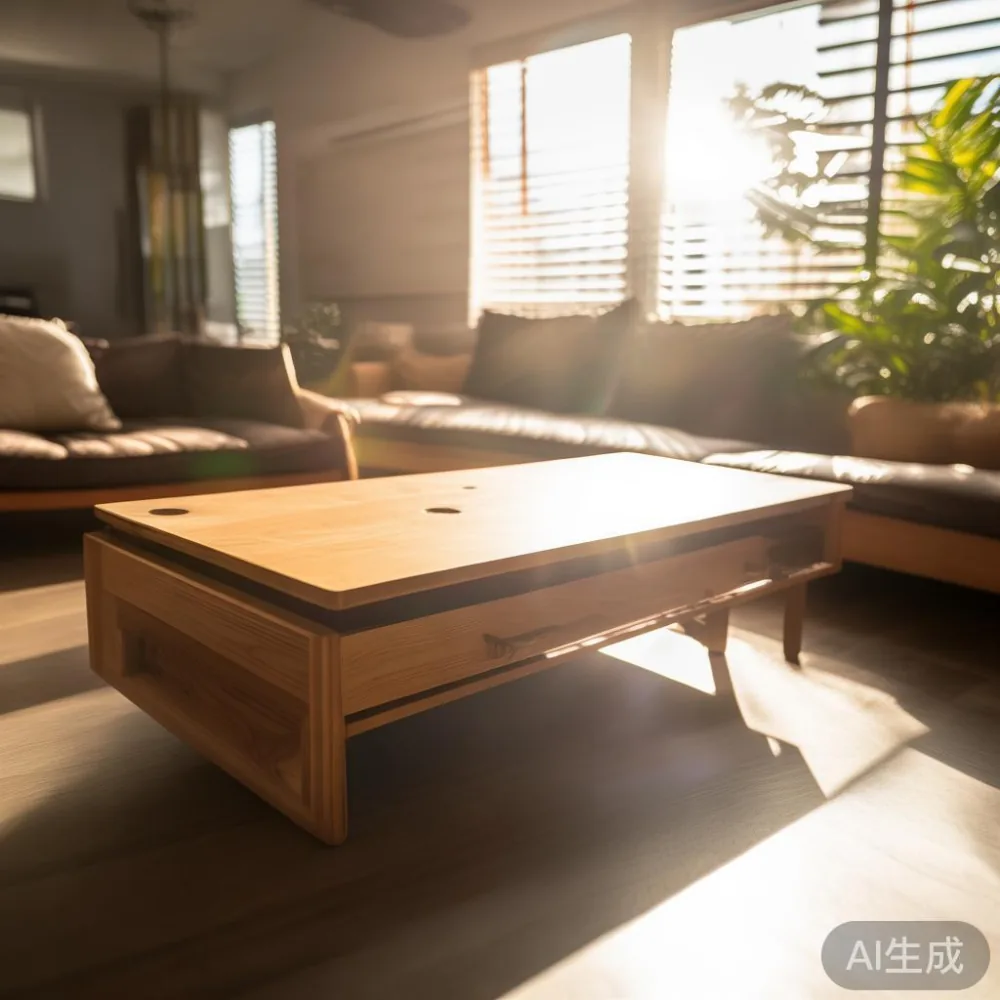
For a standard 4-room HDB living room of roughly 9 sqm to 11 sqm, a three-seater solid wood sofa between 1.8 m and 2.1 m long, 85 cm to 90 cm deep, and 85 cm tall at the backrest is the practical sweet spot. Anything past 2.2 m will swallow your walkway. A L-shape solid wood sofa is tempting, but a 2.4 m by 2.4 m L-shape needs at least 3.2 m of wall on the long side and 2.5 m on the return, which is more than many BTO layouts can spare once you leave 90 cm for circulation. If your household is three adults, consider a 2.0 m three-seater paired with a single armchair at 0.85 m, leaving a 1.2 m by 0.6 m marble table or coffee table between them. A typical MIDHILL coffee table in light oak measures 1.2 m by 0.6 m by 0.42 m, fits through the lift on its side, and weighs around 28 kg to 35 kg, which two delivery men can carry without a trolley.
Sofa frame height is also a sleeper issue. Frames above 95 cm tall will block the lower windows of typical HDB living rooms, which start at around 90 cm above the floor, and your curtains will not hang correctly. Frames between 80 cm and 90 cm keep the room airy. Cushion depth matters more than people expect: a 55 cm seat depth supports a 1.75 m adult's thighs without compressing the lower back, while a 60 cm depth reads as lounge-style but pushes the front edge 5 cm past where your toes expect it. Try sitting on a sample at the showroom for at least three minutes before committing.
How do you match your dining table and nightstand to the same scale?
The dining table is the second-largest piece after the sofa, and it dictates whether the room reads as crowded or calm. For a 4-room HDB, a six-seater solid wood dining table between 1.4 m and 1.6 m long by 0.8 m wide gives each diner 60 cm of elbow room, which is the minimum restaurant-grade standard. For a 5-room flat up to 13 sqm of living and dining combined, a 1.8 m by 0.9 m table works, but only if you choose a pedestal base rather than four corner legs. Pedestal bases reclaim about 20 cm of legroom per side and prevent the dreaded shin-bump on tight HDB layouts. Marble table tops at 1.6 m by 0.8 m weigh roughly 75 kg to 90 kg, so request that the supplier split the top from the base for delivery and reassemble on site. MIDHILL ships dining tables in two crates, which is one of the small reasons their 14-day return window is realistic in Singapore: pieces actually come back in the same van that delivered them.
Nightstands should echo the bed frame height, not the wardrobe. A standard bed frame sits at 45 cm to 55 cm from floor to mattress top, so the nightstand top should land within 5 cm of that range. Anything 15 cm taller forces you to raise your elbow unnaturally when reading; anything 15 cm lower drags the shoulder down. A two-drawer nightstand with an inner drawer width of 32 cm to 38 cm is the natural home for a small drawer organizer sized for watches, chargers, and earbuds. If your nightstand drawers are narrower than 30 cm, skip the organiser entirely and use felt trays, because a too-small organiser slides around every time you open the drawer.
How do you pick a drawer organizer that actually fits a solid wood wardrobe?
Solid wood wardrobes from manufacturers like MIDHILL use drawers that are typically 45 cm to 55 cm wide internally, 35 cm to 45 cm deep, and 12 cm to 18 cm tall. That internal geometry is the real specification to shop against, not the wardrobe's external 1.8 m by 0.6 m footprint. A drawer organizer marketed as "fits most drawers" usually assumes a minimum 40 cm inner width, which works for the wardrobe but fails in nightstands and sideboards. Measure three drawers in the same unit, because solid wood expands and contracts with Singapore's humidity, and inner widths can vary by 4 mm to 6 mm between drawers in the same piece.
For undergarments and socks, choose an organiser with cells no smaller than 8 cm by 8 cm; anything tighter compresses fabric and causes premature wear at the elastic. For watches and jewellery, felt-lined cells of 6 cm by 6 cm are fine. For kitchen-adjacent drawers holding cutlery and tea towels, look for organisers with raised lips of 1.5 cm to 2 cm so that the drawer can hold a spill without staining the timber below. MIDHILL's solid oak wardrobes are finished with a matte lacquer that resists moisture for about 15 minutes, which is enough for a spill you catch quickly but not enough for a drawer organizer without a lip. Finally, leave 1 cm of breathing room on each side of the organiser. A drawer organizer that fits perfectly on day one will stick by month six as the wood acclimatises to your air-con cycle.
How should style choices like light-luxury, Japandi, or rustic affect sizing?
Style changes proportions, not millimetres. A French light luxury look runs to 95 cm to 105 cm tall headboards, button-tufted backs, and marble or marble-veneer side tables, which means your wardrobe should drop 5 cm in height to keep visual balance, otherwise the bed will look short. An American light luxury look pushes to deeper seat depths of 60 cm to 65 cm and bulkier armrests of 18 cm to 22 cm wide, sofas gain 10 cm to 15 cm in length for the same three-seater count. A post-modern light luxury look adds metallic trim that catches afternoon sun, and the eye reads the piece as 5% to 8% larger than its actual footprint, so go one size down when comparing measurements.
Japandi lines stay slim: 78 cm to 82 cm sofa backs, 42 cm dining-chair seat heights, and tabletops without ornamentation. If you want under 2000 Japandi furniture for a 5-room HDB, expect to source bed frames, wardrobes, and dining sets in the SGD 1,400 to SGD 1,900 range before GST, which adds 9% at checkout. Solid wood in this range is usually ash or rubberwood with an oak veneer, not solid oak throughout, and your drawer organizer choice should match: go for bamboo or birch organisers, not heavy walnut blocks, because the drawers themselves will be lighter and the load capacity lower. If you are weighing a French bed vs Modern bed choice, the French version typically adds 8 cm to 12 cm in headboard height and 3 cm to 5 cm in footboard detail, which can crowd a 3.0 m wide HDB bedroom wall. The modern bed reads cleaner and gives back 10 cm of perceived room width.
For shoppers comparing an American sofa vs Nordic sofa, the American version runs 2.0 m to 2.3 m for a three-seater with deeper seats, while the Nordic version stays at 1.75 m to 1.95 m with shallower seats around 50 cm deep. In a 4-room HDB, the Nordic silhouette usually wins on clearance, but if you host movie nights for four adults regularly, the American depth pays off in comfort. For shoppers debating how to style American bed in room, anchor the wall with a 1.6 m to 1.8 m headboard, leave 50 cm to 60 cm on each side for nightstands, and choose bedding in muted sage or clay tones to soften the bulk. And for those hunting the best Rustic bed for 2026, look for reclaimed-ash frames with hand-planed texture, but check that the footboard height is under 45 cm or your HDB bedroom doorway at 2.1 m will feel chopped in half.
What about delivery, GST, and the small numbers that decide the project?
Singapore adds 9% GST on top of the displayed furniture price, and that 9% applies to delivery fees as well, which often surprises first-time buyers. A solid wood sofa at SGD 1,650 becomes SGD 1,799 with GST, and a SGD 120 delivery becomes SGD 131. MIDHILL offers free shipping over US$350, which in Singapore works out to roughly SGD 470 to SGD 480 at current exchange rates, so a single dining set typically clears the threshold. For smaller pieces such as a single nightstand or a drawer organizer order under SGD 200, expect a SGD 60 to SGD 90 delivery fee depending on whether you are in Tampines, Bedok, or a more distant estate like Tuas or Marina South.
Delivery timelines for in-stock solid wood pieces run 14 to 28 working days from a Foshan warehouse to a Singapore port, then 5 to 9 working days for clearance and last-mile delivery to your door, so plan a 4 to 6 week buffer for reno coordination. Custom pieces such as a made-to-measure wardrobe add another 21 to 35 days. The 10-year structural warranty covers joinery and frame integrity, which matters in Singapore because the humidity swings between 55% and 95% across the year test every glue line. Lifetime refinishing means you can send a scratched dining tabletop back to the workshop every 7 to 10 years for sanding and re-lacquering, and most owners do this twice across a 20-year ownership cycle. The 14-day return window is generous enough to cover the period in which a piece reveals its real-life fit, but read the small print: returns on solid wood pieces altered on site, such as a wardrobe trimmed to fit a cornice, may incur a 20% restocking fee. Plan the fit before the drill, and your drawer organizer, your sofa, and your marble table will all sit where the room actually wants them.