How Humidity in Southeast Asia Affects Wood Furniture (and What It Means for Your Drawer Organizer)
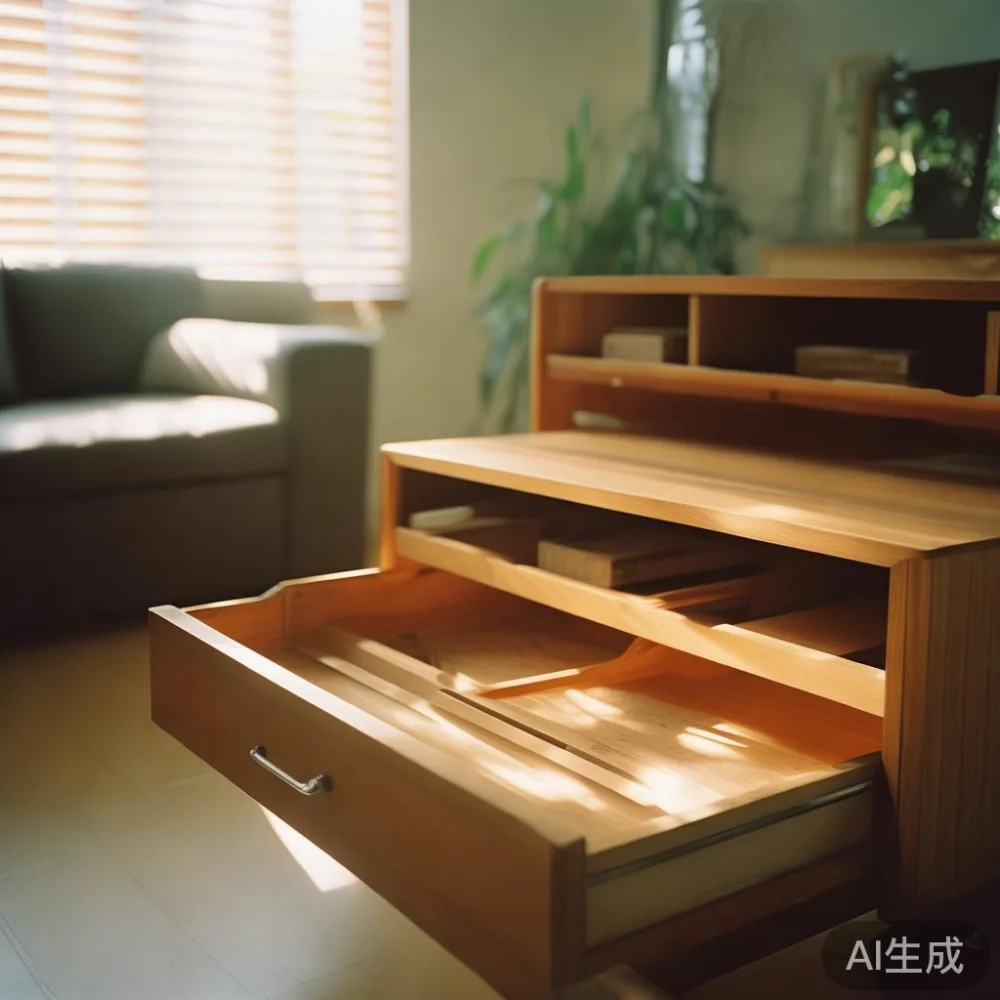
I learned this the hard way last November. After furnishing my new 4-room HDB flat in Punggol with a full solid wood set (a 2.2 m wardrobe, a king-size bed frame, and six cabinets with internal drawer organizers), I noticed three of the organizer drawers had started to stick by the second week of the northeast monsoon. Ambient readings on my little hygrometer sat stubbornly between 78% and 86% relative humidity (RH) for 17 straight days. Even though the timber had been kiln-dried to 8–10% moisture content (MC) at the Foshan workshop, the moment it crossed the South China Sea and entered my Tampines storage unit, it began absorbing water vapour again. Each drawer swelled by roughly 1.5 mm across the width, which sounds tiny but is enough to bind a 12 mm-side runner and ruin a drawer organizer that was perfectly smooth in the showroom. Once I stabilised the bedroom with a 12-litre desiccant dehumidifier running on a humidistat at 55% RH, the same drawers needed only eight days to drift back to their original tolerance. So yes, humidity in Southeast Asia absolutely dominates how wood behaves in your home, especially inside components where tolerances are tight, such as a fitted drawer organizer.
What Does Humidity Actually Do to Solid Wood?
Wood is hygroscopic. It constantly trades moisture with the air around it until it reaches an equilibrium moisture content (EMC). In Singapore, outdoor RH averages 70–85% across the year, with a daily mean around 82%. Indoor air in an air-conditioned HDB flat typically sits between 55% and 70% RH, depending on how often the unit cycles and whether you dry laundry inside. Solid timber responds to these changes along three axes: tangentially (around the growth rings, the most movement), radially (across the rings, roughly half the tangential movement), and longitudinally (almost none). A 1.8 m dining table top can lose or gain 6–9 mm across its width when MC shifts by just 4 percentage points. A drawer organizer built into a wardrobe is even more exposed, because it is usually enclosed, dark, and poorly ventilated. Without airflow, the micro-climate inside that small cavity can run 8–12% higher RH than the rest of the room. That is why the most precise components in any piece, the ones you actually touch and slide every day, react first.
Why Singapore Homes Are a Special Case
There are four local factors that make our environment harder on timber than, say, a London terrace or a Montreal condo. First, year-round heat. The average daily temperature sits between 24°C and 32°C, which keeps the EMC target band unusually high and the drying window for any remedial treatment very short. Second, monsoon spikes. Between November and February, the northeast monsoon dumps 220–290 mm of rain per month, and outdoor RH regularly pushes past 95%. Third, our building stock. Most HDB flats in Bedok, Tampines, and Punggol are 90–115 sqm layouts with 2.4 m ceilings, narrow internal corridors about 1.05–1.2 m wide, and lifts with door openings of roughly 0.9 m wide by 2.1 m tall. Large pieces such as a 2.4 m wardrobe or a 1.8 m dining table usually have to be delivered flat-pack for that reason, which is good news for stability (smaller pieces move less) but bad news for any drawer organizer, because flat-pack joinery can mean slightly looser tolerances than a one-piece solid wood carcass. Fourth, GST and landed cost. At 9% GST on a SGD 4,800 dining set, an extra SGD 432 makes owners reluctant to refinish or replace early, so prevention matters more than here than in lower-tax markets.
Which Species Handle Humidity Well, and Which Don't?
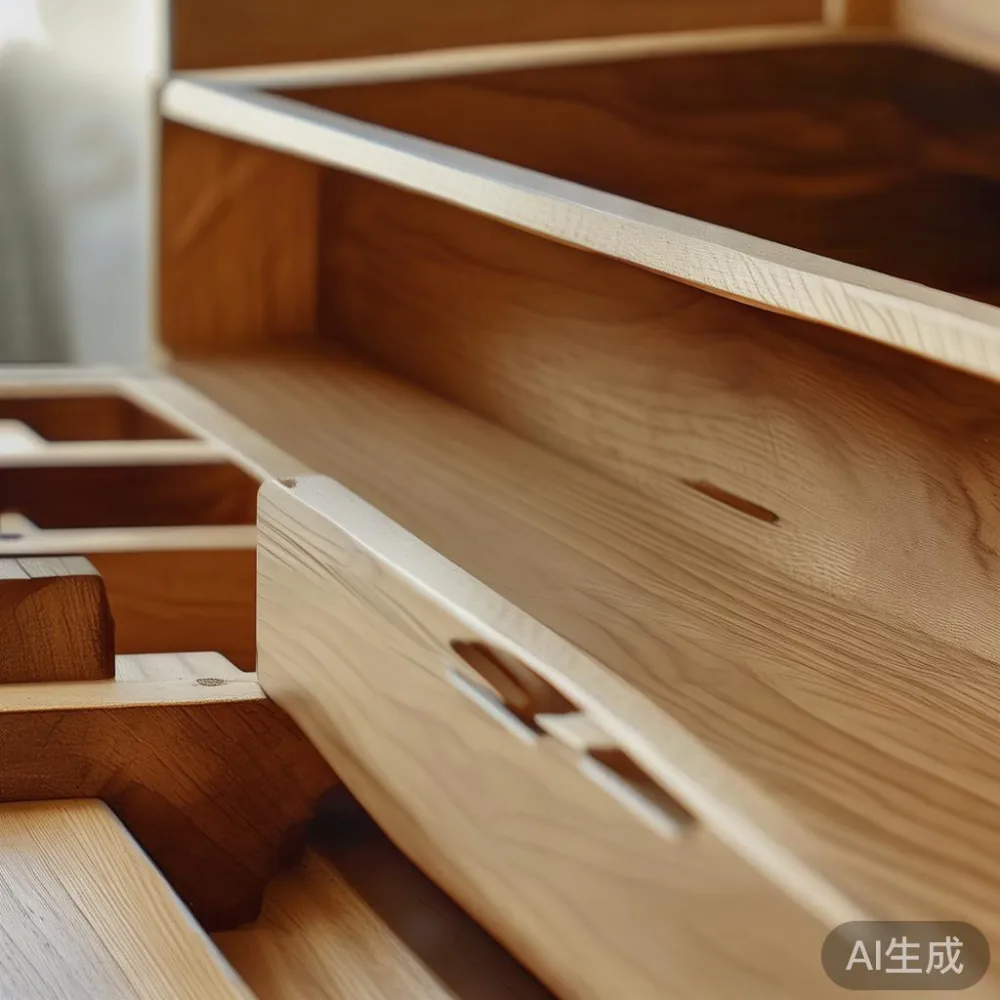
Not all solid wood reacts identically. I visited the MIDHILL showroom in Foshan last March and spent two days comparing samples in their climate chamber set to 35°C and 85% RH. Walnut moved about 4.2% tangentially over a 14-day cycle, white oak about 5.6%, and rubberwood about 6.8%. For comparison, some pine samples moved as much as 8.1%, which is why cheap pine drawer organizers are usually the first to swell and the last to recover. Teak and Burmese rosewood are the local exceptions: their natural oils slow absorption, which is exactly why vintage Peranakan teakware survives in HDB flats that are 40 years old. A practical rule when you are buying a solid wood sofa, a bed frame, or a wardrobe in Singapore: ask the supplier what the kiln-dried MC reading was at the workshop, what EMC range they designed the joinery for, and whether the drawer organizer slides use solid-wood rails rather than metal side runners. Solid-wood rails tolerate micro-swelling gracefully; cheap metal runners simply bind.
How Should I Care for a Drawer Organizer in a Humid Bedroom?
Five concrete steps, in order. Step one, keep room RH between 45% and 60% with a dehumidifier or a well-sized air-conditioner (a 9,000 BTU unit pulling about 850 W can comfortably hold a 12 sqm bedroom in that range). Step two, leave wardrobe doors cracked open for 30 minutes after you run a hot shower, so the moist air does not settle into the drawer organizer cavities. Step three, place a 50 g silica gel canister in each major drawer cavity and replace it every six months (a 12-pack of 50 g canisters costs about SGD 18 at FairPrice). Step four, wipe down sliding surfaces with a microfibre cloth lightly misted with a 1:4 white-vinegar-to-water solution once a month; this removes the sugary residue that humidity turns tacky and that further grips swollen wood. Step five, rotate which drawers you load with heavier items every quarter, so no single rail set takes permanent set. Following these five steps should let a well-built drawer organizer ride out a full monsoon season without a single stuck runner, on a bed frame, a nightstand, or the larger wardrobe carcasses. If you are starting from scratch and want to know how to style a light luxury wardrobe in bedroom layouts that already cope with high humidity, the same moisture budget applies; plan for 45–60% RH first, then layer fabrics and lighting on top of that.
The Light-Luxury Design Question: How Do European and Italian Frames Compare for Tropical Climates?
The phrase European sofa vs Italian light luxury sofa comes up constantly at our showroom counter, and the answer depends less on label and more on construction. A typical European sofa uses kiln-dried beech or birch framing with sinuous spring or elastic webbing, finished in a tight weave of 30,000 to 40,000 Martindale cycles. An Italian light luxury sofa tends to upgrade the carcass to seasoned hardwood, adds a hand-tied eight-way spring, and uses a leather or full-grain textile rated above 50,000 Martindale. In a Singapore context, the difference that matters is the cushion foam: high-resilience foam with a density of at least 32 kg/m³ resists the mild surface tackiness that high humidity can produce on cheaper 18–22 kg/m³ stock. From a furniture sourcing perspective, both European and Italian frames can be excellent for tropical climates if the timber is properly dried and the cushion cores are wrapped in a breathable cambric rather than sealed plastic. Pairing either with a side table built around a marble table top is also a wise move; the marble stays dimensionally stable in a way that solid wood cannot, and a small marble-topped nightstand at around 1,200 mm wide by 450 mm deep by 500 mm tall is a manageable 38–42 kg for two delivery crew to work through an HDB corridor.
Is Scandinavian Furniture a Smart Pick for Humid Bedrooms?
If you have been browsing for sale Scandinavian furniture online, you will have noticed that the aesthetic travels well to Singapore condos: pale oak, soft lines, tapered legs, and minimal hardware all complement a 90 sqm HDB or a 65 sqm Punggol condo nicely. Functionally, though, Nordic design comes from a climate where indoor RH is closer to 40% in winter. A Scandinavian oak sideboard built for that environment usually aims at an EMC of 8–9%, so it will slowly absorb moisture once it lands in a 65% RH Tampines bedroom and the legs can ride up by 1–2 mm. The fix is straightforward: ask the supplier to leave the panels slightly under-dimensioned (around 0.5% under on width) so the swelling has somewhere to land. Many Foshan workshops, MIDHILL included, will do this for tropical export orders on request. A Scandinavian nightstand finished with an oil-wax rather than a polyurethane topcoat will also tolerate the inevitable moisture cycles better, because oil-wax can be refreshed yearly at home for roughly SGD 25–35 in materials.
Bed Frames, Wardrobes, and the Bigger Pieces
A European bed vs Japandi bed comparison often comes down to this: the European frame tends to use thicker corner posts (around 60–70 mm) and a solid slat roll, while the Japandi frame uses finer 40–50 mm components with a headboard channel that exposes the grain. In a humid bedroom, the heavier European frame tends to feel more planted, while the lighter Japandi frame shows movement faster, especially along the slat edges. Both can work, but request FSC-certified white oak or ash and insist on kiln-dried MC of 8–10%. For wardrobes, the rule is even simpler: anything above 1.8 m tall should be anchored to the wall with anti-tip straps (one set costs about SGD 12 from any local hardware chain), and a wardrobe fitted with a drawer organizer should be positioned at least 50 mm away from the HDB wall to allow micro-airflow behind the carcass, otherwise condensation can form between the timber back panel and the cool concrete wall during heavy monsoon weeks. A typical 2 m by 60 cm by 220 cm wardrobe with three soft-close drawer organizers inside weighs between 95 kg and 130 kg, so a two-person delivery is the practical minimum for any HDB lift over 1.0 m wide.
How Long Should a Quality Solid Wood Set Last in Singapore?
With disciplined humidity control, a properly kiln-dried solid wood frame should give 15–25 years of service; with seasonal neglect, that figure drops to 6–9 years before the drawer organizer runners and the larger panels start to show visible failure. Refinishing every 6–8 years, sanding back 0.6–0.8 mm and reapplying an oil or hard-wax oil, can effectively extend service life past 30 years at a cost of roughly SGD 380–520 per dining set if you hire a local finisher, or close to zero in materials if you do it yourself over a weekend. Many Foshan exporters now offer lifetime refinishing on premium lines, which removes the cost anxiety altogether. When you are assessing warranty terms, look past the headline years and ask about the moisture clause: a good warranty should specify an EMC range such as 8–12% MC and explicitly cover cracking, cupping, and runner binding within that range. A 10-year structural warranty that excludes moisture-related movement is in effect a 10-year paper warranty.
Building a Bedroom That Works in a Tropical Climate
Pulling everything together, a Singapore-friendly bedroom layout looks like this: an air-conditioner sized at 250 W per 10 sqm, a dehumidifier set to 50% RH, a solid wood bed frame in white oak or teak at an MC of 8–10%, a light luxury wardrobe fitted with soft-close drawer organizers that use solid-wood rails, and a nightstand chosen with the same species for visual coherence. Add a marble-topped side accent table (a 600 mm diameter round MIDHILL coffee table repurposed as a bedroom accent is a surprisingly common request we see from condo owners) for the surface that has to stay absolutely stable, and finish with textiles rated above 40,000 Martindale so they withstand both humidity and daily use. The total spend for a 12 sqm master bedroom, excluding the air-conditioner itself, typically lands between SGD 4,200 and SGD 7,800 depending on whether you lean Scandinavian, European, or French light luxury, and the room should still look fresh at the ten-year mark if you stick to the moisture budget. Many owners exploring top 10 French furniture lists for inspiration settle on a French light luxury direction precisely because the restrained palettes and slim profiles photograph well in resale listings, an underrated consideration for HDB owners thinking five to seven years out. If a guest room is on the cards, post-modern for guest room styling lets you take a few liberties: bolder hardware, a contrasting dresser top, an upholstered headboard in a 45,000 Martindale fabric, all of which are easier to swap out than a built-in wardrobe, and a useful way to test finishes before committing them to the master bedroom.
Practical Checklist Before You Click Buy
Five confirmations to lock in with any supplier, whether you are ordering a drawer organizer separately or a full nine-piece set running into five-digit SGD figures. First, the kiln-dried MC reading, ideally 8–10% at dispatch and re-checked on arrival. Second, the EMC range the joinery was designed for, in writing. Third, the species and origin, ideally with FSC or PEFC documentation. Fourth, the warranty wording on moisture-related defects, not just structural defects. Fifth, the delivery terms, including HDB lift access, corridor turning radius, and whether the crew will assemble in situ (a typical HDB delivery for a 1.8 m wardrobe costs between SGD 80 and SGD 160, depending on floor level and lift distance). If all five pass, the piece should settle into a Singapore home comfortably and age well; if any one fails, walk away and find another supplier, because humidity will find the weak link within the first six months, every single time.