How Humidity in Southeast Asia Quietly Changes Your Solid Wood Furniture — And What That Means for Every Drawer Organizer
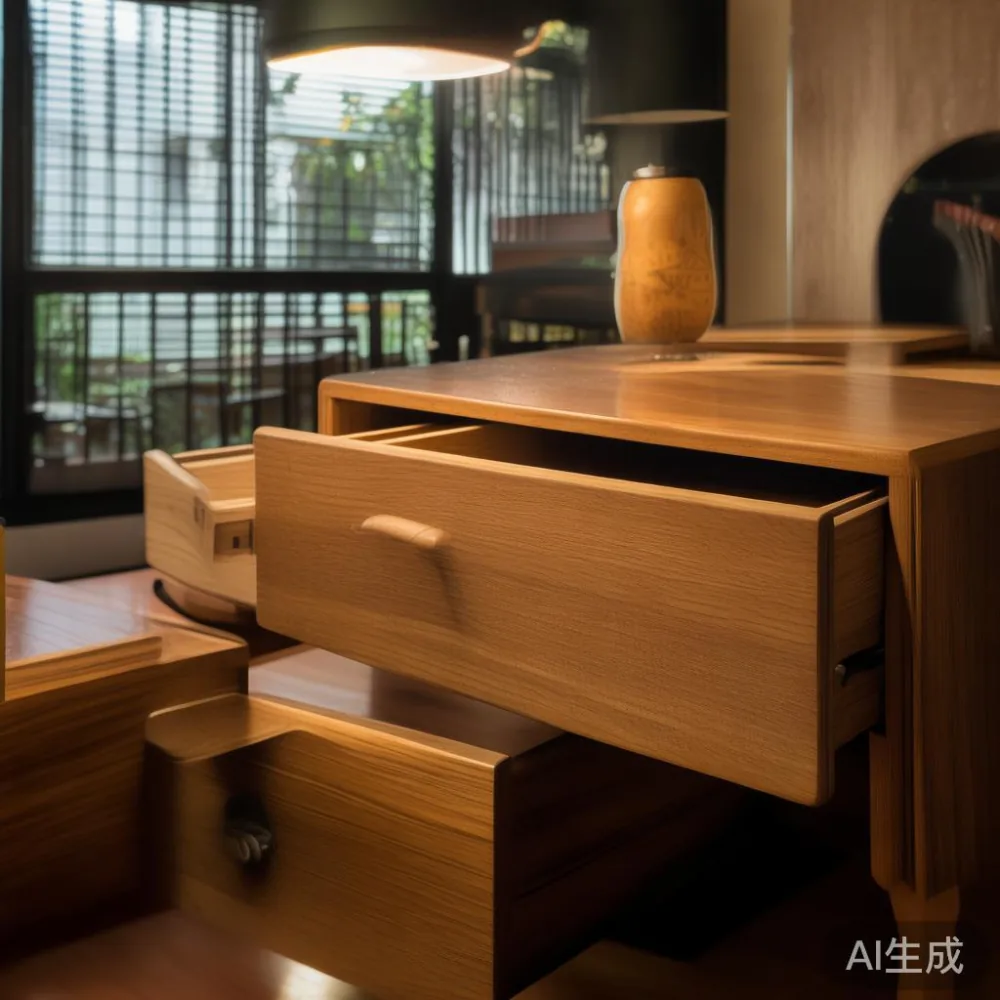
Last month I visited a friend in a 9-year-old Punggol HDB flat on the 14th level. She had a beautiful four-seat solid wood sofa set ordered around the hardwood over a decade ago, with a matching dining table and two bedside nightstands. When she opened the bottom drawer of her sideboard to grab a cloth tape measure, the drawer stuck. We pulled it out, looked at the interior, and found a familiar mess: pens, charging cables, three old receipts, and one crumpled dry cleaning bag. As we cleared it, we noticed something the clutter had been hiding — the inner side panel of the drawer had a faint hairline warp. None of the outer panels showed a problem. The drawer organizer had masked the symptom.
That single afternoon in Punggol is the reason I wrote this article. If you live in Singapore, Kuala Lumpur, Jakarta, or Bangkok, you already know the air feels like a warm sponge from May to October, with relative humidity routinely running between 72% and 88%. What you may not know is how that moisture interacts with the wood inside your bedroom wardrobe, behind the panels of your bed frame, under the marble top of your dining table, and — most tellingly — inside the drawer organizer you use every single day.
Why does Singapore humidity actually damage solid wood furniture?
Wood is hygroscopic. It absorbs and releases moisture until it reaches a moisture content roughly equal to the surrounding air. In Tampines and Bedok, indoor humidity often sits between 65% and 80% even with the aircon running, because corridor air and lift-shafts pull tropical moisture into the home every time the door opens. A solid wood sofa frame, bed frame, or wardrobe panel cut and dried for a 45–55% humidity range (typical European or North American factory conditions) will slowly absorb 1.5% to 3% extra moisture in its first 18 months in a Singapore home. That 1.5% sounds small, but on a 180 cm dining table it can mean 4 to 6 mm of cross-grain movement — enough to open a seasonal crack, tighten a drawer slide, or push a nightstand door out of square.
Engineered boards (plywood, MDF, particleboard) absorb moisture too, but they do it differently: they don't warp cleanly, they swell and crumble at the edges, then delaminate. Solid wood, by contrast, moves. A craftsman who understands this leaves 1.5 mm expansion gaps under drawer bottoms, uses bread-board ends on dining tables, and lets wardrobe side panels "breathe." A craftsman who doesn't will give you a drawer organizer that fit perfectly in March and jams in October.
What does a drawer organizer actually tell you about humidity damage?
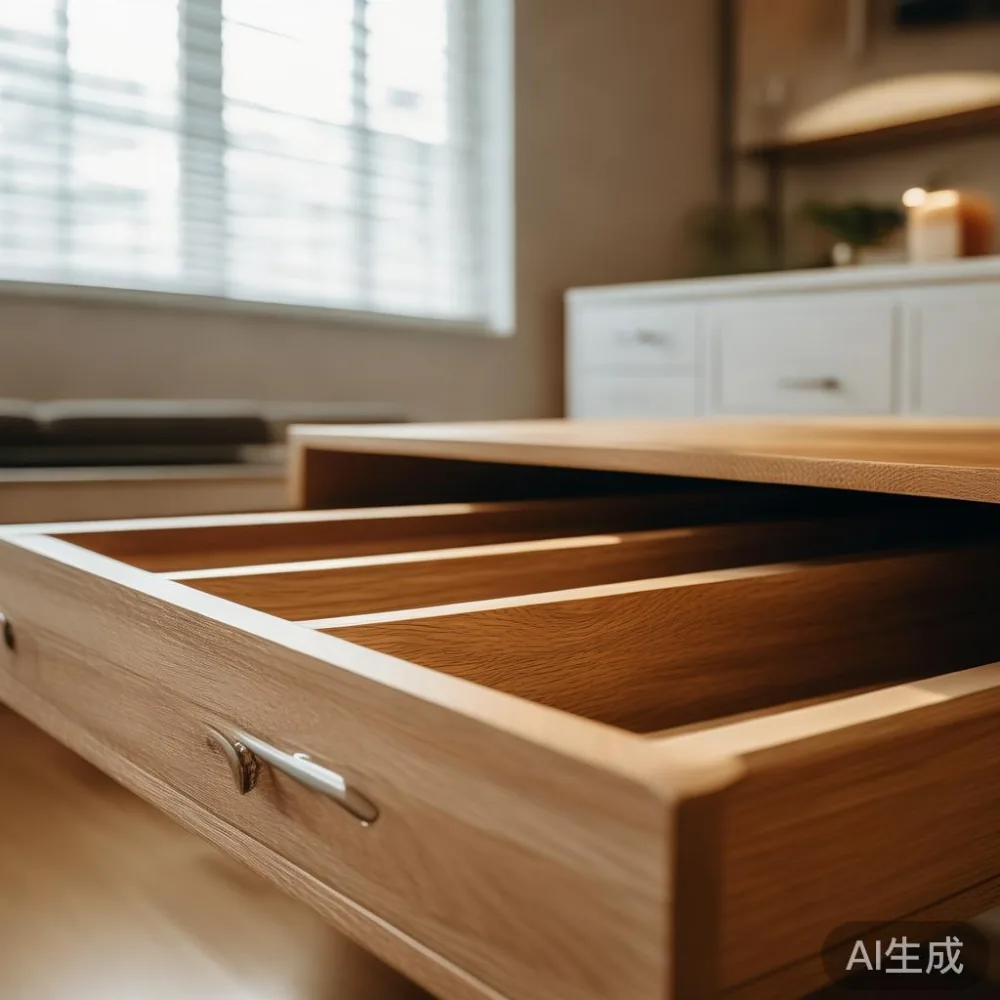
A drawer organizer is the canary in the coal mine of any piece of solid wood furniture. It has more edges per square centimetre than almost any other component — finger joints, dovetail corners, a thin bottom panel, sliding sides — and it lives in a microclimate that is darker, less ventilated, and warmer than the room around it. If humidity is causing movement in your bed frame or your wardrobe, you will see it in the drawer organizer first.
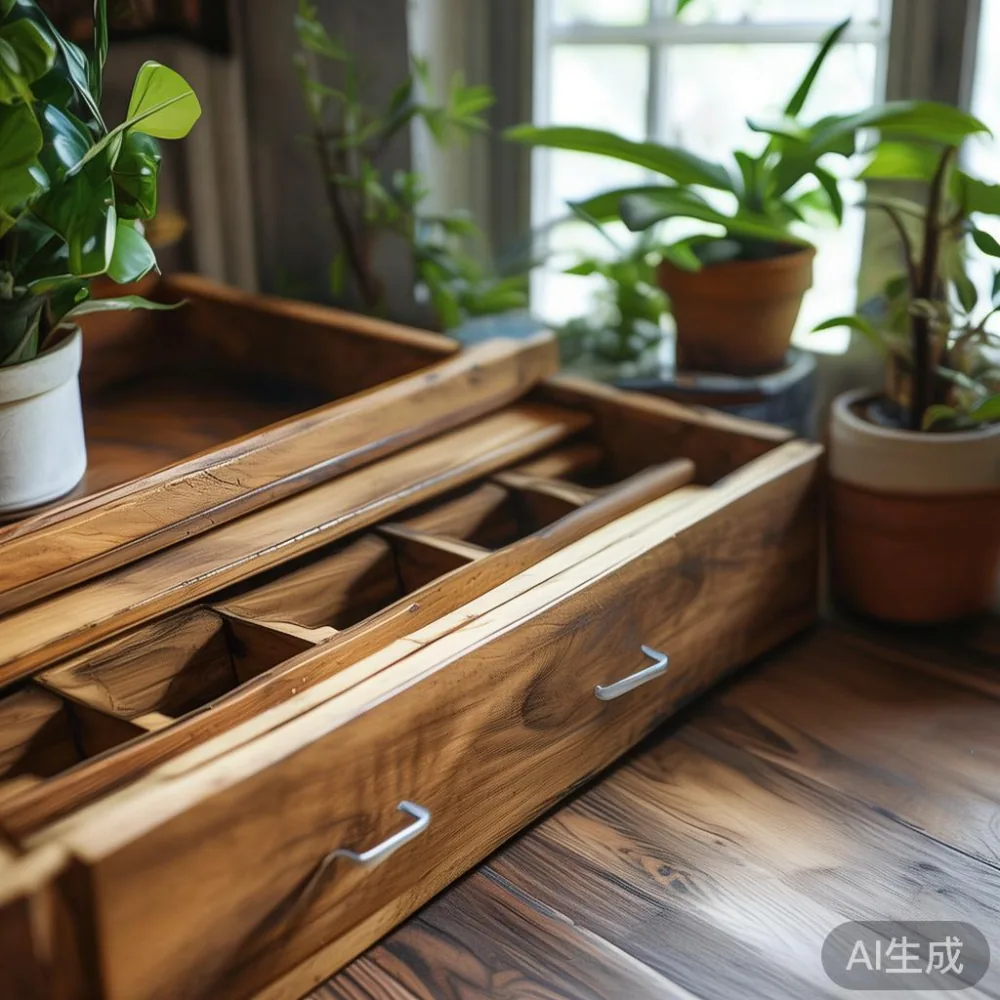
Here is the checklist I walked her through in Punggol, and the same one I now use in client homes across the East Coast:
1. Open-and-close test. Pull every drawer out fully, then push it back. A healthy drawer on quality soft-close slides (Häfele, Blum, Hettich — the German and Austrian hardware most Singapore buyers ask for) should glide with two fingers. If you need a shoulder, humidity has swollen the sides or the bottom panel.
2. Quarter test. Stand a Singapore 50-cent coin on edge inside the empty drawer. If the drawer closes flat without rocking, the box is still square. If it rocks, the diagonals have shifted. On a standard 45 cm × 40 cm drawer, even 2 mm of corner movement is detectable this way.
3. Smell test. A damp drawer organizer smells faintly sweet, like wet cardboard. A dry one smells like the workshop. The sweet smell means moisture content above 14% — too high for Singapore comfort.
4. Paper test. Place a fresh sheet of A4 printer paper inside the drawer for 48 hours. Curled edges mean the microclimate is unstable. Flat paper means the wood is at equilibrium.
5. The felt-tip test. Mark the drawer side and the cabinet wall with a small pencil line each season. If the gap between the marks widens in October and narrows in February, you are watching the wood breathe. Move with it.
How do I style a Nordic sofa in a small apartment?
Pick a Nordic sofa with a pale oak or ash frame, raised 14 to 18 cm off the floor on solid wood legs, in a neutral linen-blend fabric, and pair it with one slim solid wood coffee table, one narrow drawer organizer console behind the sofa, and a single oversized linen cushion in oat or fog grey — that five-piece formula will make any 65 m² Singapore condo feel twice as wide without raising your cooling bill. In a compact HDB living room, scale matters more than the unit count. A 210 cm three-seater will dominate a 3.2 m by 3.0 m living room — sorry, living room — and crowd the corridor that leads to the kitchen. I usually recommend 180 cm to 200 cm for most Tampines four-room flats, leaving 75 to 90 cm of walk-through behind the coffee table. If you want a navy oak sectional sofa for a slightly larger condo in Punggol or the Paya Lebar quarter, choose an L-shape with a right-hand chaise; it anchors the corner and frees the corridor.
Materials do the heavy lifting in a Nordic look. Pale solid oak, white-oiled ash, and a single slab of light Carrara marble on a small side table are the textbook post-modern light luxury palette — restrained, quiet, expensive-looking without shouting. Avoid glossy lacquers; matte and oil finishes age gracefully here. For a French light luxury touch, swap one linen cushion for a bouclé square, add a slim brass reading lamp, and replace the drawer organizer console with a shallow vitrine in white oak with reeded glass.
Which rooms and which pieces suffer first in a Singapore home?
Not every piece of furniture in a Singapore home is at equal risk. The ranking is consistent across the 30+ flats I have visited in the last three years:
Kitchen-adjacent dining table: Highest risk. Cooking steam, morning sun through the service yard window, and evening buka-drawer habit mean a 1.8 m solid wood dining table can see surface moisture swings of 8–10% in a single day. Use coasters under every hot pot and every cold glass.
Wardrobe side panel (against the HDB party wall): High risk. The wall is cooler than the room in aircon, warmer without. A 220 cm wardrobe sitting flush will transfer moisture unevenly. Leave a 2 cm gap behind it, and never push it against built-in carpentry.
Bed frame with storage drawers: Medium-high risk. The under-bed area is dark and stagnant. A storage bed frame in Singapore should have drawers on full-extension runners, not on the floor. The drawer organizer inside the bed frame is the second-most-overlooked moisture trap in the whole home, after the wardrobe.
Marble table (dining or side): Medium risk for the marble itself, which is stable, but high risk for the wooden substrate beneath it. Check the wooden sub-frame annually; if it swells, the marble can crack at the thinnest point — usually near a corner.
Nightstand: Medium risk. The cup-of-water glass beside the bed, the phone charger, the bedtime book all dump humidity into a 40 cm × 35 cm microclimate every single night.
Solid wood sofa frame: Lower risk than you think, because the cushions hide the movement. But the legs and the back rail can crack if the frame is bolted too tightly. A quality light luxury piece — whether French light luxury curves or American light luxury boxier lines — should have floating tenons that allow 3 to 5 mm of movement.
What can you actually do this week to protect a 10-year-old wardrobe?
You don't need to replace anything. You need a routine. Here is the routine I wrote for my Punggol friend on the back of a Tampines Mall shopping receipt:
Keep indoor relative humidity between 45% and 60%. A SGD 80 to SGD 140 dehumidifier with a hygrometer (the smaller the room, the smaller the tank you need) is the single most effective tool. Run it in the bedroom at night, in the living room during the day. Empty the tank every morning, or plumb it to the service yard if your unit allows.
Air out, don't seal. Open wardrobe doors for 20 minutes every morning. The HDB corridor air is actually drier than your wardrobe air in the morning, because the aircon has run all night. Two hinged wardrobe doors opened fully for 20 minutes will drop the wardrobe's internal humidity by 6 to 9 percentage points.
Rotate, don't stack. Inside every drawer organizer, rotate the contents seasonally. Winter knits come out in November; cotton pieces go in. This keeps the load even and lets you wipe the drawer bottom with a dry cloth every six months.
Wax, don't polish. A solid wood dresser, hardwood dining table, or oak wardrobe should be waxed twice a year with a hard paste wax (Renaissance, Briwax, or a local beeswax blend). Avoid silicone polishes — they seal the surface and trap moisture inside.
Watch the lift. Most HDB lifts in Singapore take a piece no longer than 210 cm and no wider than 90 cm through the door. A 220 cm wardrobe will not enter a standard 8-person passenger lift. Plan disassembly for delivery day, or budget SGD 80 to SGD 180 for a furniture hoist through the service window. Measure your corridor widths too — older blocks in Bedok and Tampines have narrower corridors (around 1.2 m) than newer ones in Punggol (around 1.5 m).
Budget for refinishing. A quality solid wood piece should be refinished every 8 to 12 years in Singapore conditions, not the 20 years quoted for temperate climates. A dining table top refinish in Singapore runs SGD 180 to SGD 420; a wardrobe door refinish runs SGD 120 to SGD 260. A lifetime refinishing programme — the kind offered by established makers who have shipped to 15+ countries since 2008 — turns that recurring cost into a fixed line item rather than a surprise.
How do you choose new furniture that will survive Singapore for 20 years?
Ask four questions before you swipe the card or sign the delivery order:
1. What is the wood, and what is its moisture content at delivery? Look for kiln-dried solid oak, ash, teak, or walnut with a stated moisture content of 8% to 12%. If the answer is "air-dried," walk away.
2. How are the panels joined? Mortise-and-tenon, dovetail, and finger joints survive movement. Staples, brad nails, and glue-only joints fail within five years in our climate. Open every drawer organizer in the showroom and check the corner construction.
3. What hardware is inside? Soft-close slides from Blum, Häfele, or Hettich are the Singapore benchmark. If the drawer organizer uses unbranded runners, the warranty is also probably unbranded.
4. What does the warranty actually cover? A 10-year structural warranty on frames, joinery, and drawer boxes is now the regional standard among reputable Foshan makers exporting to Singapore, Malaysia, and Australia. Read the small print: some cover only manufacturing defects, others cover moisture-related movement up to 4 mm per panel.
If the maker can answer those four questions with documentation — a moisture-metre reading on the invoice, a slide-brand sticker, a warranty booklet — and can ship within 14 to 21 days to a Punggol or Tampines address with full insurance and a 14-day return window, you are looking at a piece that will outlive two HDB leases. Most Singapore buyers now expect free shipping above a sensible threshold (a common benchmark in the industry is around US$350, well below the price of a single nightstand), GST registration handled by the seller, and door-to-door delivery through HDB's standard service-lift booking system. MIDHILL has shipped across these conditions since 2008, which is why their drawer organizer specs — 14 mm solid side panels, dovetail corners, full-extension Blum runners — match the checklist above rather than fight it.
Does a marble table need the same care as a solid wood dining table?
No, but the wooden sub-frame does. Marble is dimensionally stable — it moves roughly 0.01% across a 1.8 m span with humidity, versus 1% to 3% for solid oak. The risk is that the wooden sub-frame swells and pushes against the marble slab. Use a marble sealer once a year (SGD 35 to SGD 70 a bottle, covers a six-seater), and check the sub-frame joints every 24 months. A 180 cm marble dining table on a solid wood base, properly sealed, will serve your family for 30 years in a Singapore condo. The wooden base will need one refinish at year 12.
What is the single best habit a Singapore furniture owner can start this month?
Buy one hygrometer (SGD 18 to SGD 45 at any Tampines Mall electronics shop or on Lazada), place it inside your wardrobe beside the drawer organizer, and read it once a week for three months. You will learn the rhythm of your specific home — which rooms spike, which hours spike, which monsoon week is the worst. After three months you will stop guessing and start managing. Your solid wood sofa frame will stop cracking. Your bed frame drawer organizer will stop sticking. Your dining table top will stop cupping. Your wardrobe doors will stay square.
That hairline warp I saw in my friend's Punggol sideboard was not a manufacturing defect. It was a conversation between tropical air and northern timber, played out over 14 years inside a closed drawer organizer. Once you can read that conversation, you can keep every piece in your home — from the smallest nightstand to the tallest wardrobe — quiet, square, and serviceable for the next two decades.