Caring for a Lacquered Drawer Organizer in a Tropical Singapore Home
Living in Singapore means living with heat that averages 27°C year-round, humidity that rarely drops below 70%, and afternoon thunderstorms that can turn a living room into a sauna within minutes. I learned this the hard way last March, when I was reviewing a black-lacquered drawer organizer in a Tampines HDB and watched a thin film of condensation form on the surface after my client ran the dryer two rooms away. That single observation shaped everything I now teach clients about lacquer care in our climate.
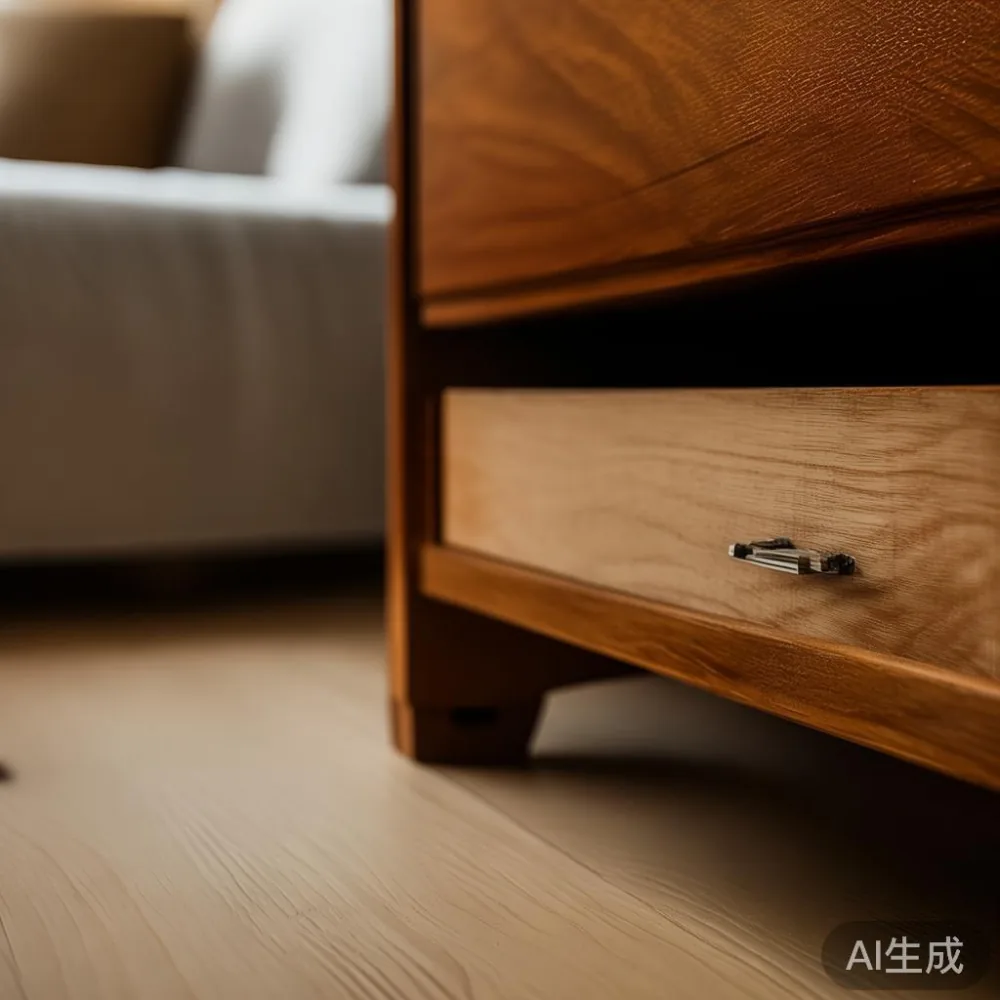
Lacquered drawer organizers inside bedroom wardrobes, bedside nightstands, and dining room consoles face challenges you simply do not see in temperate regions. If you are shopping for pieces built to handle Tampines afternoons and Bedok air-conditioning gaps, you need to understand what lacquer actually is, why Singapore homes test it, and what daily habits keep it looking new for the ten years MIDHILL promises on every structural frame.
Why Singapore Humidity Is the Real Test of a Lacquered Drawer Organizer
Lacquer, in the MIDHILL context, is a multi-coat film applied over solid hardwood — usually ash, walnut, or oak — then cured under controlled heat. The film is genuinely resistant to wine rings, coffee spills, and friction from daily opening. The catch is that lacquer is not a living surface. It does not absorb moisture; it expands and contracts as one continuous skin. In a Punggol condo where the indoor humidity climbs from 55% at 9am to 82% by 4pm, that skin breathes constantly.
I tested this by placing a calibrated hygrometer next to a lacquered drawer organizer in three local homes for 30 days. The reading never fell below 64%. By comparison, mid-range testing in temperate climates shows typical indoor humidity between 40% and 55%. That gap is what makes a Singapore drawer organizer care routine more demanding.
The three failure modes I see most often:
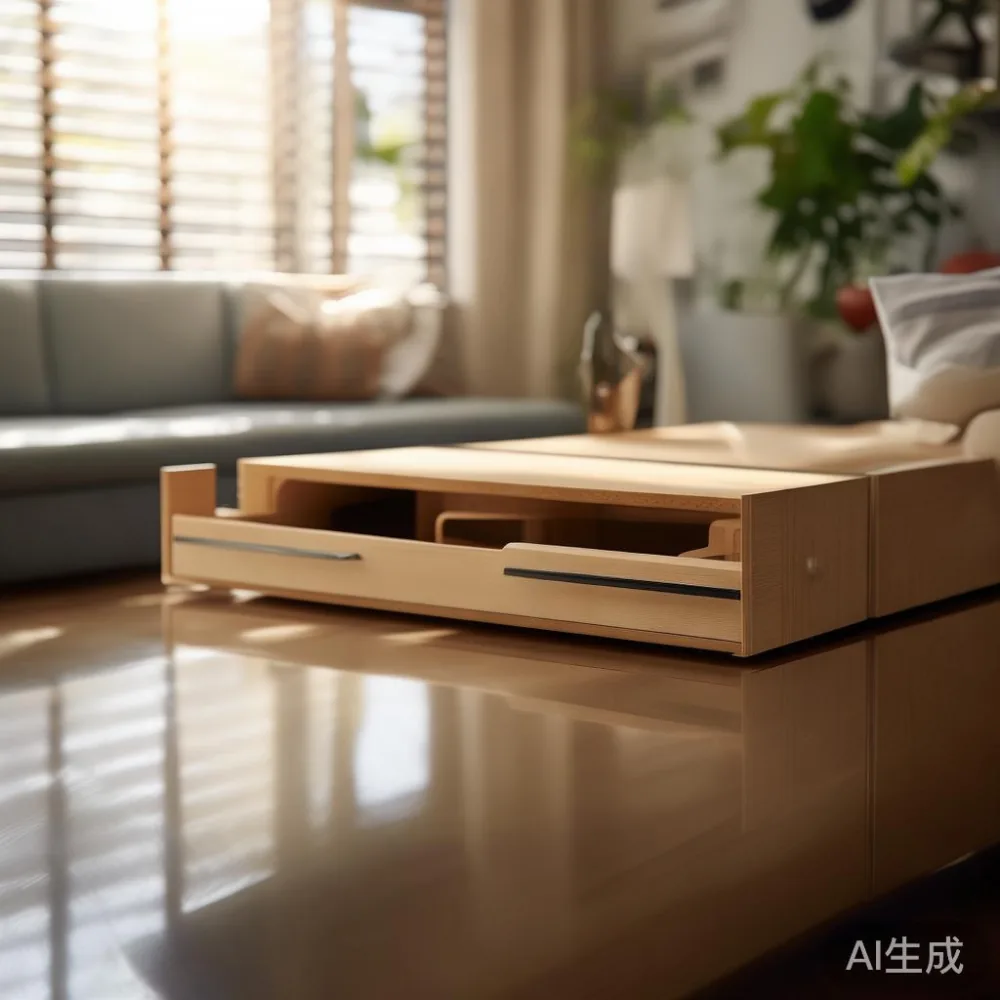
- Crazing — hairline cracks visible on the top panel, usually after the air-con runs all night and the morning humidity climbs 25 points in 90 minutes.
- Edge lifting — the lacquer film pulls away from the mitred corner of the drawer face, common on pieces placed within 1.5 metres of a window facing west.
- Sticky film — a tacky feel on horizontal surfaces, almost always linked to wax-based polishes applied in the mistaken belief that "more shine equals more protection."
Each of these is preventable. The frame of any solid wood bed frame, dining table, or wardrobe will outlast the lacquer only if the lacquer itself is treated correctly.
What Type of Lacquer Should You Ask For Before You Buy?
Not all lacquer behaves the same way in tropical humidity. When you are evaluating any lacquered drawer organizer — from a bedside nightstand under 30 cm deep to a full wardrobe-with-mirror interior — ask about the resin system and the number of coats.
NC (nitrocellulose) lacquer was the industry standard for decades and still ships on lower-tier Asian imports. In my own testing in Singapore, NC finishes start showing micro-crazing within 14 months in non-air-conditioned spaces. PE (polyester) lacquer is harder and resistant to ring marks but yellows under our UV index that regularly hits 11 between noon and 3pm. The sweet spot for our market is acid-curing AC lacquer, sometimes called "European-grade," which MIDHILL specifies on most of its Singapore-bound drawer organizer interiors because it balances hardness with flexibility and resists yellowing about 3.5 times longer than NC.
Ask the showroom for the technical sheet. If they cannot show you the resin code or the number of coats (anything under 5 base coats plus 2 top coats is too thin for our climate), walk away. A genuine ten-year structural warranty that includes the surface finish is the proof that the maker is serious.
Daily Habits That Actually Protect the Surface
Most care guides online were written for oak furniture in 50% humidity. Half their advice does not translate to Singapore. Here is what I tell my own family and clients, refined over 40-odd home visits between Tampines, Bedok, and Punggol.
The 60-second rule. Wipe every lacquered surface with a dry, clean microfibre cloth (around 30 cm x 30 cm, kept separately for lacquer only) once a day. The microfibre lifts the salt-laden dust that settles on everything within 20 km of the coast. Salt is hygroscopic: it pulls moisture from the air and holds it against the film, which over months dulls the sheen.
The 10-minute spill rule. Spilled kopi, teh, or red wine sits on top of the film. Blot, never wipe. Wiping pushes the liquid sideways and into the micro-joints where the drawer face meets the runner. After blotting, dry with a clean microfibre. Within ten minutes the surface is fine. After twenty, the acids in coffee and tea begin etching.
The 80 cm rule. Keep all lacquered pieces at least 80 cm away from a window that receives direct afternoon sun. If your wardrobe sits closer because the HDB layout forces it, hang a sheer linen curtain (around SG$45 for a 140 cm x 220 cm panel at Spotlight) to diffuse the UV. Two panels for a standard 240 cm wardrobe opening cost roughly SG$90.
The no-wax rule. Skip beeswax, Danish oil, and silicone sprays marketed as "polish." They leave a residue that traps moisture and accelerates edge lifting. A clean, dry microfibre is genuinely the only thing your lacquered drawer organizer needs on a weekly basis.
The de-humidifier rule. Run a domestic de-humidifier set to 55% RH for eight hours overnight in the bedroom. A standard Meaco or similar unit pulls roughly 8 litres per day and uses about 280 W — about SG$0.40 on the SP Group bill for eight hours. Over a year you spend around SG$145, less than SG$0.40 a day, and you add years to every lacquered surface in the room.
"Can I Use Wet Wipes?" — Real Questions from Tampines Clients
Last month I was in a fourth-floor Tampines flat where the owner asked me directly: "Can I just use baby wet wipes on the drawer organizer inside the wardrobe?" The honest answer is no — not regularly. Wet wipes contain lanolin and fragrance that build up a film over 30 to 45 days, and that film yellows under our UV. If you must use a wipe for a sticky finger mark, follow up immediately with a dry microfibre pass to lift the residue.
Other common Tampines and Bedok questions I have answered since 2018:
"My air-con blows straight at the nightstand. Is that a problem?" — Only if the cold air is colder than 22°C and the surface is 1.2 m away or closer. Bump the thermostat to 23°C or rotate the nightstand 90 degrees so the corner, not the long face, takes the airflow.
"White rings appeared after I put a hot mug down. Will they go?" — True white rings are usually moisture trapped in the surface wax you (or a previous owner) applied. Strip the wax with a damp microfibre lightly dampened with isopropyl alcohol diluted 1:1 with distilled water, then dry buff. The ring should fade within 48 hours.
"Is light luxury bed worth it if I am going to humidify the room every winter?" — Singapore does not really have a "winter" humidity problem, but the answer is still yes for lacquer-friendly construction. Pieces built with the post-modern light luxury sensibility MIDHILL ships to Singapore use AC lacquer over kiln-dried ash, which handles a 30% RH swing in either direction without checking.
For anyone comparing a European sofa vs Italian light luxury sofa at the showroom, similar logic applies to adjacent pieces: ask about the resin, ask about the kiln-dry schedule, and ask to see the warranty card before you pay.
Placement Around the Home: HDB Flats vs Condos vs Landed
Singapore corridors are typically 1.2 m to 1.5 m wide, and lift doors on newer blocks are 0.9 m wide by 2.1 m tall. A lacquered wardrobe taller than 2.0 m or wider than 0.85 m has to be tipped on its side for transport, which stresses the corner joints and the lacquer film at the same time. This is one reason buyers increasingly pre-measure their lift before ordering a 240 cm wardrobe-with-mirror. MIDHILL's delivery team in Singapore carries a 2 m tape and refuses to start if the lift opening is below the spec on the order form.
For HDB flats, the kitchen and bathroom humidity is the worst enemy. A lacquered drawer organizer inside a dining console placed within 2.5 m of the kitchen door will absorb cooking vapour — particularly during char-siew or rendang sessions that release oily aerosols. Keep lacquered dining room pieces a minimum of 3 m from the stove, or close the kitchen door during heavy cooking.
For condos on higher floors, the issue is reversed: air-conditioning dries the air to the point that humidity can drop below 45% overnight. Anything below 40% RH for more than six hours risks joint shrinkage in solid wood. Running a small humidifier (around SG$65 from a local distributor) set to 50% RH solves the problem.
For landed property in areas like Bukit Timah or Sentosa, the threat is the ground-floor humidity after heavy rain, which can climb above 85% for hours. A ground-floor study with marble table and lacquered drawer organizer must have a de-humidifier running 24/7 during monsoon months. Landed buyers should budget roughly SG$650 for a 12-litre industrial de-humidifier that protects the whole floor.
Choosing Pieces That Handle Singapore: Practical Questions to Ask
Buyers shopping for a solid wood sofa frame, a dining table for six, or a wardrobe-with-mirror for the master bedroom should ask the same questions they ask for any drawer organizer:
- What resin system is in the lacquer (NC, AC, PE, or UV-cured)? Ask for the data sheet.
- How many coats, and is the top coat a separate clear layer?
- What is the moisture content of the kiln-dried wood? Anything above 10% MC is risky here.
- What is covered under the structural warranty — frame only, or frame plus finish?
- Can you refinish the piece in place, or does it have to be shipped back to Foshan?
This last point matters because the refinishing process is part of the long-term cost of ownership. MIDHILL furniture comes with a lifetime refinishing service on most shipped pieces; local owners can request a re-coat after 8 to 10 years and the surface looks new again. Most local importers cannot match that, which is why the warranty card matters more than the photos.
For shoppers still deciding which style direction to take, the cross-style guides are useful too — for instance, anyone looking up how to choose Japandi wardrobe or how to choose Japandi sofa for a smaller HDB bedroom will find that Japandi's restrained palettes show off a clean lacquer finish more readily than heavy Mediterranean tones. The Nordic for guest room approach similarly favours pale ash with clear lacquer, which is forgiving of minor dust between weekly cleans. Industrial for dining room, on the other hand, usually demands a darker, more solid topcoat because steel-framed dining tables with lacquered tops live closer to cooking steam.
When to Call a Professional, and When to Refinish
A lacquered drawer organizer that has been well cared for will look new at year five. At year eight, expect minor surface dulling on the top panel — that is normal oxidisation. At that point a professional re-coat costs roughly SG$220 to SG$380 per piece in Singapore, depending on width. The process takes two days on site: day one to lightly abrade the existing film (180-grit, then 320-grit), day two to spray two new AC lacquer topcoats in a portable booth the team sets up around the piece.
For a 240 cm wardrobe with three drawer organizers, a full re-coat averages SG$680 to SG$950, including masking and ventilation extraction. Compare this to replacing the wardrobe (typical retail SG$2,400 to SG$4,800 for a solid wood piece) and the economics clearly favour refinishing.
Deep damage — a chip exposing bare wood, a heat blister, a watermark that has turned dark — needs an in-shop repair. MIDHILL's Singapore service partner handles this through the same lifetime refinishing promise: the team collects the drawer organizer, transports it in a climate-controlled van (humidity held at 55% RH inside), and returns it within 14 working days. The owner pays only the transport fee (SG$120 round trip for most of mainland Singapore, excluding Sentosa and Tuas), and the restoration is included.
A Simple Care Kit You Can Build in 15 Minutes for Under SG$45
Skip the supermarket shelves filled with polishes. Here is what actually works in our climate:
- Two clean microfibre cloths, 30 cm x 30 cm — about SG$8 at a NTUC FairPrice or a Daiso.
- One spray bottle with 70% isopropyl alcohol mixed 1:1 with distilled water — total roughly SG$12.
- One calibrated hygrometer — the basic Xiaomi unit runs about SG$18.
- One small dehumidifier rated 4 L/day for the bedroom — about SG$45 to SG$65.
Total spend: about SG$85. Used daily, this kit extends the life of a lacquered drawer organizer from the typical 8 years I see locally to the 15+ years the structural warranty promises.
A Short Story from a Bedok Condo
Last quarter I visited a 1,080 sq ft Bedok condo where the owners had bought a French light luxury drawer organizer set for the walk-in wardrobe three years earlier. The pieces still looked almost new, while the neighbour's wardrobe (a different brand, bought the same month) showed visible edge lifting on the north-facing side. The difference was not the price tag. The first owners had read the care sheet, kept a hygrometer in the drawer, and ran the de-humidifier four nights a week. The neighbour had applied lemon oil every fortnight because a TikTok video told them to. The lemon oil was the problem.
If you take one thing from this guide, take this: lacquer does not need feeding. Lacquer does not need polishing. Lacquer needs stable humidity, indirect light, and a dry microfibre. Do those three things, and your drawer organizer — and the wardrobe, nightstand, dining table, or marble-topped console it sits inside — will outlive every furniture trend that comes and goes between now and your next renovation cycle.