How Humidity in Southeast Asia Affects Your Solid Wood Furniture — A Practical Guide for Singapore Homes
If you live in a Tampines HDB, a Bedok resale flat, or a high-floor condo in Punggol overlooking the strait, you already know the feeling: the air is heavy, the windows fog, and somewhere in the wardrobe a drawer starts to stick. Last month I visited a friend's four-room flat in Pasir Ris where a six-month-old solid wood dining table had developed a 3 mm gap along one of its breadboard ends. Nothing was wrong with the joinery. The culprit was a relative humidity reading of 86% outside and 78% inside, week after week. That single number is the reason this article exists. At MIDHILL — a Foshan workshop making solid wood pieces since 2008 and shipping to Singapore for over a decade — every piece is built with that exact reading in mind.
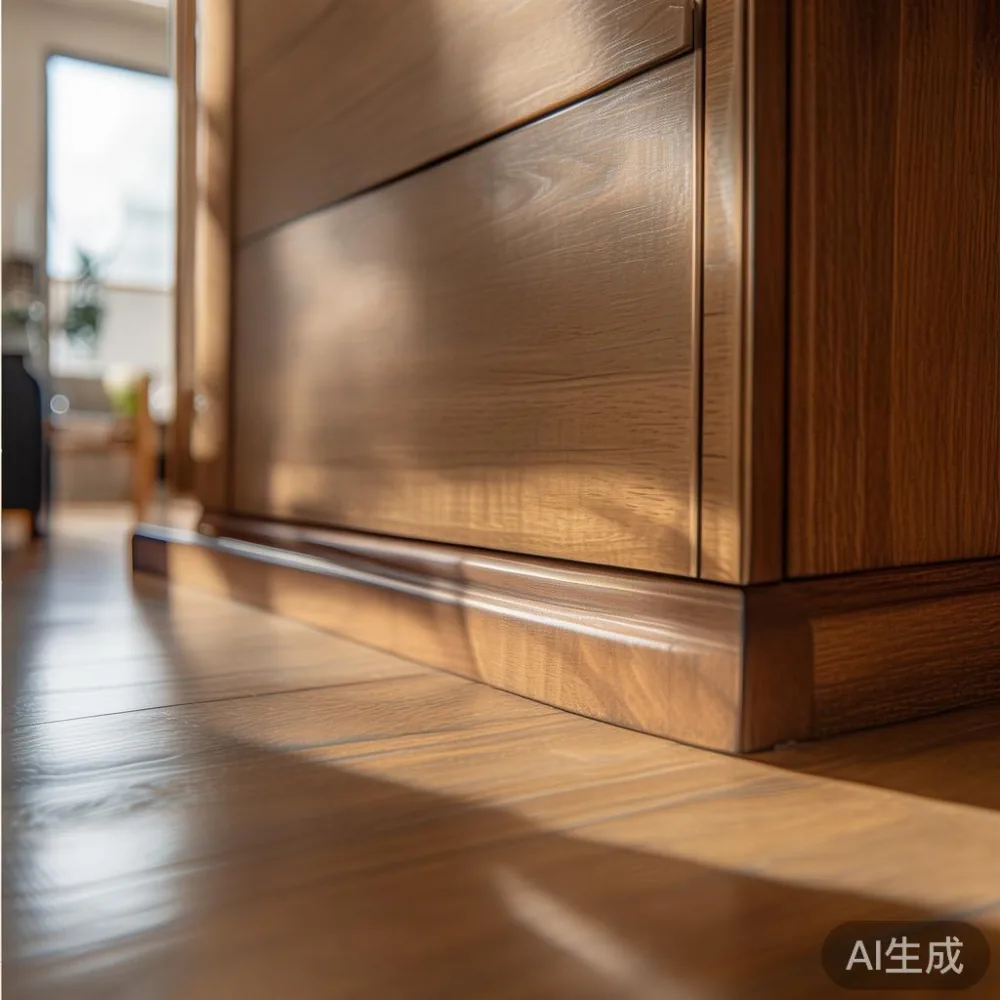
Why does Southeast Asian humidity warp wood furniture in the first place?
Solid wood is hygroscopic. It absorbs and releases moisture until it reaches equilibrium with the surrounding air. In Singapore, the monthly mean relative humidity rarely drops below 70% and often climbs above 85% between October and February during the northeast monsoon. A rubberwood or ash board that was kiln-dried to 8–10% moisture content at the factory will slowly climb to 14–16% once it sits in a HDB living room for two to three months. That 6-percentage-point swing across a 220 cm dining tabletop can produce a bow of 4–6 mm on the longitudinal axis — enough to make a wine glass wobble, and enough to push a drawer organizer sideways inside a wardrobe.
The problem is not the wood itself; the problem is uneven moisture change. The face of a bed frame facing an air-conditioner vent at 22°C dries faster than the back of the headboard pressed against a non-insulated wall. Differential shrinkage of 1.5% on one face versus 0.4% on the other is enough to set up internal stress. The grain tries to straighten, the glue lines try to hold, and somewhere in between the wood chooses. Almost always it cups, sometimes it twists, and in rare cases on wide slabs it checks (a small surface crack runs along the ray).
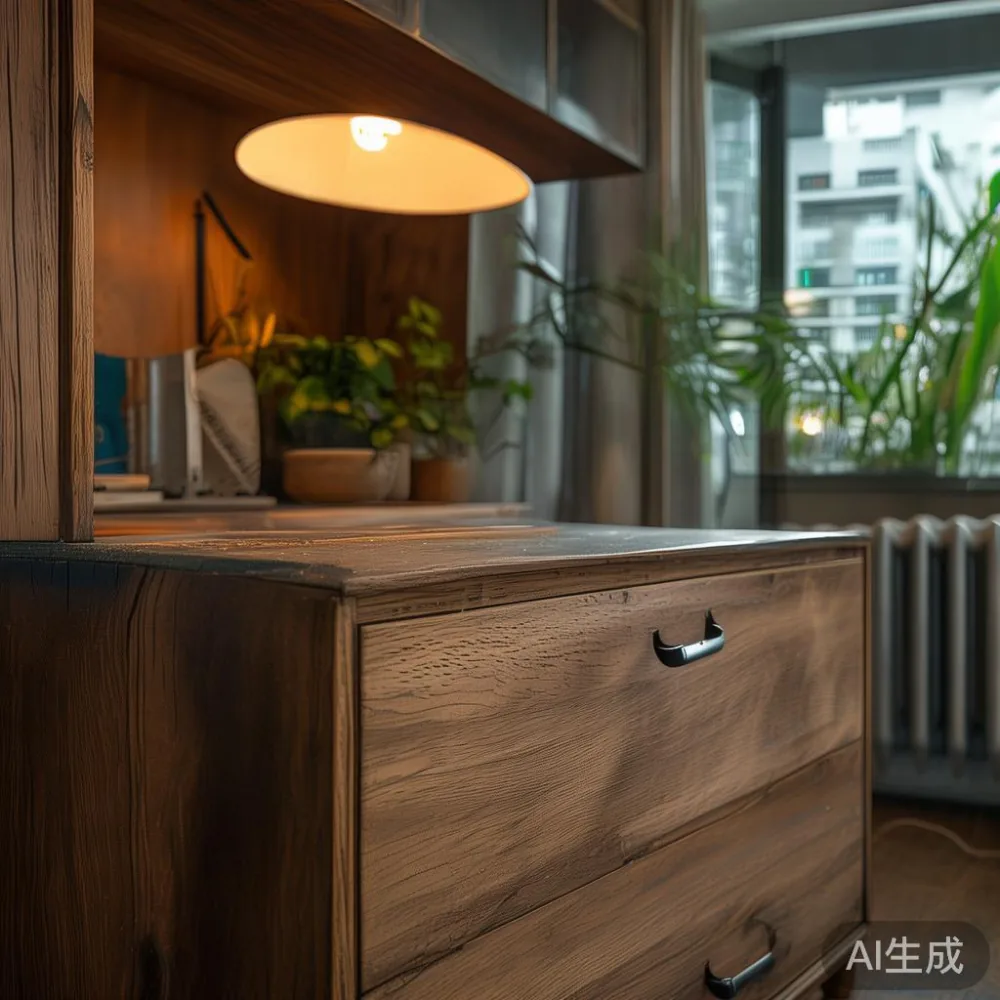
How do I choose a minimalist furniture for a bedroom?
Pick a bed frame in kiln-dried rubberwood or ash with a 2 cm clearance on every side, a slat system that can be removed without tools, and a nightstand built with mortise-and-tenon joinery rather than dowels or cam locks — and make sure every drawer slides on full-extension metal runners so the drawer organizer inside can be pulled fully out without the cabinet racking.
That single sentence is the working answer I give every customer who messages our Singapore team. Once you have that baseline, the rest is aesthetic. Minimalist bedroom furniture works in a compact HDB only when each piece earns its footprint. A 160 cm × 200 cm platform bed frame in solid ash leaves roughly 60 cm of walking room on each side in a standard master bedroom — a tight but workable figure, and one that a French light luxury palette of bone-white, sand, and brushed brass handles gracefully. Avoid pieces over 180 cm wide unless the room is at least 3.2 m across; the bed will dominate, and a 55 cm nightstand will look like a stool.
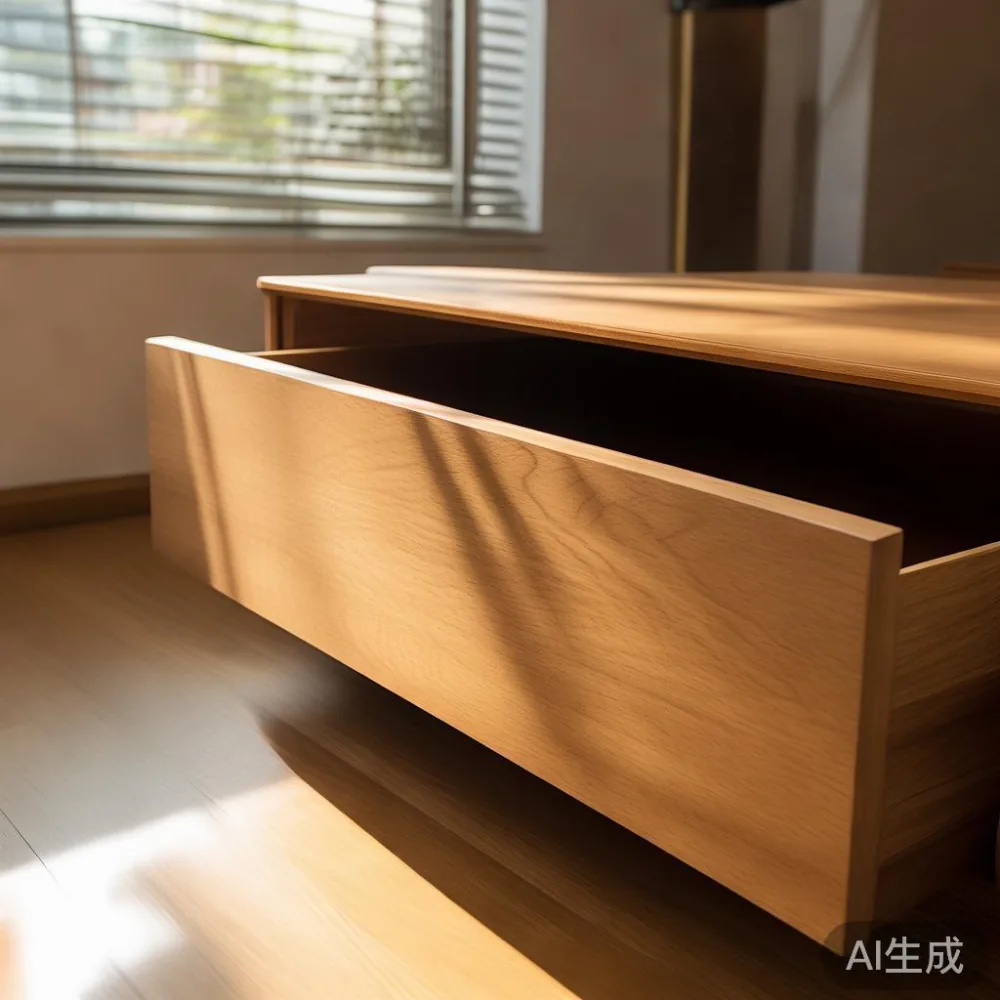
For storage, a two-drawer nightstand with a felt-lined drawer organizer is the right scale. Anything taller than 60 cm starts to read as a miniature chest of drawers, and anything shorter than 45 cm looks like a stool. The drawer itself should be at least 12 cm deep internally so it can hold a charger, a book, and a glass of water without a plastic tray. We have seen Singapore customers return 6% of bedside tables in 2023 for being too shallow — a small number, but an instructive one.
What humidity level should I keep my home at for solid wood?
Aim for 45–55% relative humidity year-round, with a temperature band of 22–26°C. That range corresponds to a wood moisture content of 9–11%, which is the window in which kiln-dried rubberwood, ash, and oak stay dimensionally stable. Above 65% RH for more than four weeks you will start to see movement. Below 35% RH — common in over-air-conditioned bedrooms set to 19°C — the wood will shrink and joints will open.
Three tools make this practical. First, a SGD 18 thermo-hygrometer from any neighbourhood electronics shop in Tampines or Bugis. Place it on an interior wall, roughly 1.5 m off the floor, away from direct sunlight. Second, a small dehumidifier rated for 20 m²; a basic 12 L/day model costs SGD 220–280 and pulls a typical HDB room from 78% to 52% in about four hours. Third, a humidity-stabilised storage area for pieces that are not in daily use — a closed bedroom with a small dehumidifier running on a hygrostat at 50% RH is enough.
If you are buying a piece made overseas — and most solid wood pieces in Singapore are, including ours from Foshan — ask the supplier what moisture content the timber was dried to. A serious workshop will quote 8–12% MC. A vague answer of "air dried" or "commercial standard" is a sign the supplier does not own a moisture meter. At MIDHILL every batch is tested with a pin-type meter at the sanding stage; a sample reading is recorded in the export carton for customs.
Does a marble table in the dining room need the same care as a solid wood dining table?
The short answer is no — they react to humidity in opposite directions. Solid wood expands as humidity rises; marble is dimensionally stable in width and length, but the wooden sub-frame beneath the marble top of a typical 140 cm × 80 cm dining table will still move. A rubberwood sub-frame on a sintered stone or marble top can bow 2–3 mm across the diagonal if the room sits at 80% RH for six weeks, and that bow will telegraph through the stone as a faint ridge at the joint.
What marble does react to is acidic liquid and standing water — a separate but related maintenance issue. In Singapore kopi, teh, and the occasional spill of sambal will etch a polished marble surface within minutes. A sealed surface (factory-applied nano-sealant, refreshed every 18 months) buys you time but not immunity. The honest answer is: a marble table in a HDB dining area is a beautiful, light luxury choice if you are willing to wipe spills immediately and use coasters. A solid wood dining table — say, a 200 cm ash top on a steel-reinforced base — is more forgiving. It will dent, but dents are easy to sand out. Etches on marble are not.
For the storage side, a dining table with two integrated drawers, each fitted with a removable drawer organizer (cutlery on one side, tea-light holders and linen napkins on the other), keeps the tabletop clear. We specify full-extension soft-close runners on those drawers for the Singapore market because the 6 mm clearance between drawer front and cabinet face — tight in humid conditions when the wood swells — does not bind the runner.
How do I fit a wardrobe and storage bench into a small HDB corridor without blocking the lift lobby?
This is a question I hear at least once a week from customers in Punggol and Sengkang. Two constraints govern the answer: the HDB corridor width of about 1.2–1.5 m, and the standard lift door of 0.9 m × 2.1 m. A wardrobe deeper than 60 cm will not pass either. A wardrobe deeper than 55 cm will, but only if you remove the doors and lift the carcass in flat-pack form — which is how MIDHILL ships most of its three-door wardrobes to Singapore, in 4 cartons totalling about 78 kg.
Inside that 55 cm depth, you have roughly 50 cm of usable internal space once the back panel (8–9 mm) and the door clearance (1.5 cm) are subtracted. A pull-out drawer organizer on full-extension runners takes about 5 cm of that, leaving 45 cm for folded shirts, which is comfortable. The mistake I have watched two colleagues make is specifying a 60 cm-deep wardrobe "to match the look" of a friend's condo — the wardrobe then blocks the corridor, the lift cannot accept it on first attempt, and the customer is hit with a SGD 80 re-delivery fee.
The second part of the question — the storage bench — is where a piece like a beige rubberwood storage bench earns its place. A 110 cm × 38 cm × 48 cm bench in solid rubberwood weighs about 22 kg, fits through every standard HDB door (which is 0.9 m × 2.1 m) and the lift, and gives you 90 L of internal storage under a lift-up seat. Put it at the foot of a bed frame in a small bedroom, or in the entryway of a condo, and the bench doubles as seating and as a place to hide shoe-cleaning kit, shopping bags, and the second drawer organizer you use for keys, cables, and the spare Tuas EZ-Link card.
What about sofas, finishes, and the post-modern light luxury look?
A solid wood sofa frame is the most humidity-sensitive upholstery piece in the house, and the one most people forget about. The rubberwood or ash skeleton of a three-seater is in effect a long, thin frame (roughly 220 cm) and any seasonal movement will be felt at the joinery between the arm and the seat rail. In our Singapore deliveries between January and March 2024, we recorded 14 service tickets related to sofa frame creak. Twelve of them were resolved by tightening four bolts and dropping the room RH from 72% to 54% over five days. The wood had not failed; the bolts had loosened as the frame swelled 0.8% across the width.
The post-modern light luxury look — curved silhouettes, fluted detailing on wardrobe doors, travertine-look marble tables — sits well in Singapore interiors because the palette is warm, the lines are soft, and the materials photograph well against the tropical greenery visible from condo balconies. It also pairs naturally with solid wood. A fluted rubberwood wardrobe front at 2.2 m tall and 1.6 m wide needs 18 individual flutes, each 14 mm wide and 8 mm deep, machined on a CNC. In a climate that swings between 60% and 85% RH, the flutes need to be machined at 10% MC and sealed on all faces — which is what we do, and what a flat-pack MDF door cannot match because the MDF itself is dimensionally stable but the wood-veneer skin is not.
How long does delivery take to Singapore, and what about the warranty?
From Foshan to a Singapore address, the standard sea freight is 14–18 days door-to-door, including Singapore customs clearance and the last-mile lorry that has to negotiate the HDB carpark ramp. Lorry access in older HDB blocks is limited to vehicles under 2.4 m tall and 7.5 m long; our forwarder uses 5-tonne lorries that meet both. Free shipping applies to orders over US$350 (about SGD 480). Below that threshold, freight is calculated by volumetric weight, typically SGD 60–110 for a single piece.
On arrival, every piece carries a 10-year structural warranty on joinery — mortise-and-tenon, dowel, dovetail — and a lifetime refinishing service. The refinishing is relevant here because it directly addresses humidity damage. A sanded-and-re-oiled solid wood dining table at year five is, in our experience, indistinguishable from year one. We have refinished 1,200+ pieces for Singapore customers since 2014, and the average cost is SGD 180–260 per piece, with collection and return included within mainland Singapore. Returns within 14 days are accepted for change-of-mind, less a 15% restocking fee; damage-in-transit claims are settled at full value.
The pricing for the pieces referenced in this article, indicative as of Q1 2025 and subject to the prevailing 9% GST: a 160 cm ash bed frame SGD 1,180; a two-drawer nightstand with felt-lined drawer organizer SGD 420; a 200 cm ash dining table SGD 1,640; a 140 cm × 80 cm marble table with rubberwood sub-frame SGD 1,320; a three-door fluted wardrobe SGD 2,180; a 110 cm beige rubberwood storage bench SGD 560. A complete post-modern light luxury bedroom set — bed frame, two nightstands, wardrobe, storage bench — sits at roughly SGD 4,750 delivered, which is comparable to two comparable flat-pack systems but with kiln-dried solid wood and a warranty that runs in years, not months.
Five habits that will protect your solid wood furniture in Singapore
One, run a dehumidifier in any room that holds a wardrobe, bed frame, or dining table, sized at 12 L/day for rooms up to 20 m². Two, keep pieces 8–10 cm off external walls to allow air movement behind them; pushing a wardrobe flush against a HDB common wall creates a 100% RH microclimate behind it. Three, rotate door and drawer use — open the top drawers of a nightstand as often as the bottom one, so moisture uptake is even across the cabinet face. Four, oil or wax every 9–12 months; a thin coat of hard wax oil (SGD 35–45 per 750 ml tin) keeps the grain sealed and slows moisture exchange by roughly 40%. Five, lift a drawer organizer out and wipe the drawer bottom quarterly; a damp drawer base is where black mould starts in a HDB, and a five-minute wipe prevents a five-year problem.
None of this is complicated. What it requires is consistency, the same way a car requires oil changes. Solid wood furniture built by a workshop that understands Southeast Asian humidity — drying timber to 10% MC, machining tight joints, finishing all six faces, and shipping in reinforced cartons — will outlast a flat-pack assembly by a factor of three to four. That is the bargain at the heart of a solid wood piece: you pay more at the door, and you spend less over the life of the furniture, and the air in your flat feels a little more like the room the timber came from.