Solid Wood Furniture Pricing: Timber, Construction, Hardware, and Delivery
A solid wood dining table can cost SGD 1,280 in one showroom and SGD 3,860 in another. The timber label may be identical on both invoices, yet the difference can exceed SGD 2,580. For buyers furnishing a Tampines HDB flat or a Punggol condo, that gap deserves a practical explanation: price is rarely driven by one feature alone.
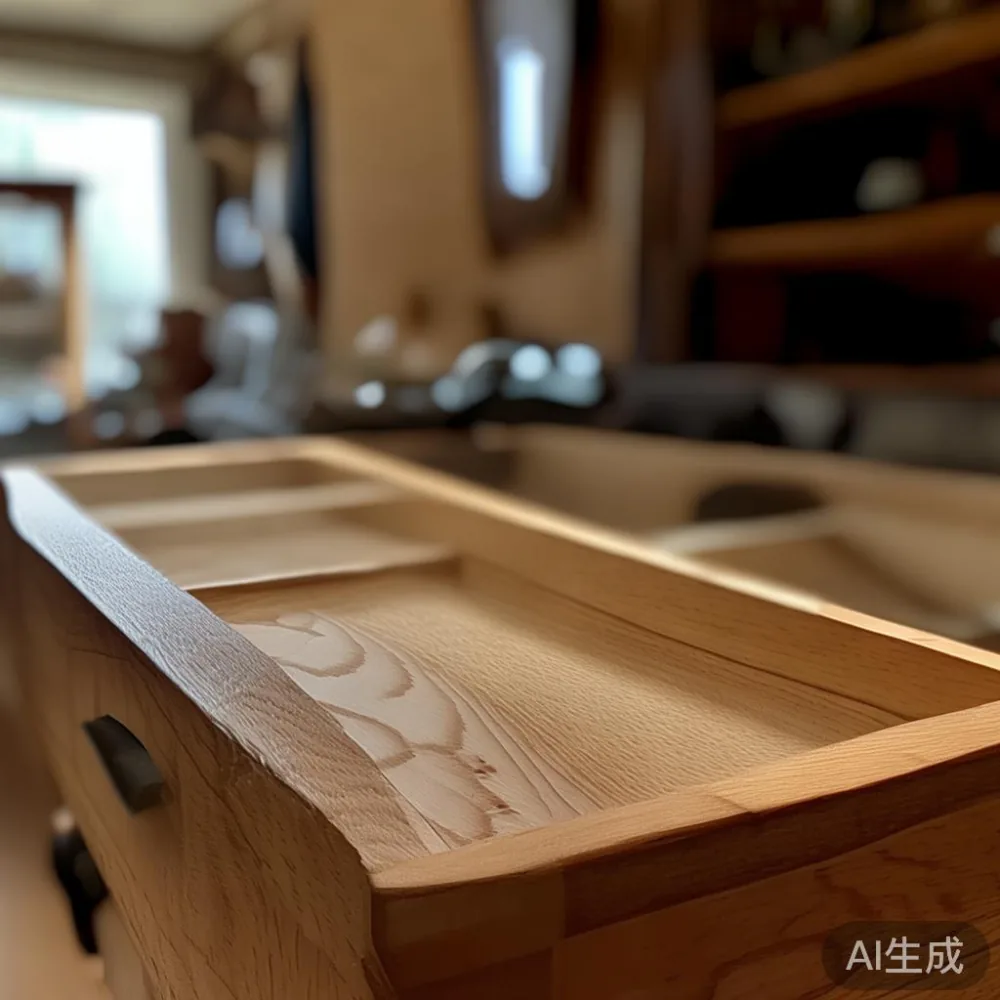
At MIDHILL, pricing begins with the material and the decisions made after a board is cut. Species, grade, moisture, joinery, hardware, finish, dimensions, and delivery access all affect the final figure. A practical drawer organizer can reveal the same economics in miniature: solid timber sides cost more than laminated board, hand-cut dovetails require more labour than machine screws, and a fitted insert uses more wood than a loose tray.
This guide examines how solid wood furniture prices are built, where the money goes, and how Singapore buyers can compare quotations without relying on vague marketing claims.

What determines the price of solid wood furniture?
Solid wood furniture pricing starts with timber. Solid wood sofa frames, bed frames, dining tables, wardrobes, nightstands, and marble table bases use different quantities and grades, so their prices cannot be compared directly. A 180 cm dining table with 6 cm-wide solid timber edges may require about 95 kg of wood before offcuts. A 120 cm nightstand may use only 24 kg. Material consumption must be judged against the completed piece rather than a price per kilogram.
Tree species changes both availability and workability. Teak performs well in humid conditions but usually commands a premium because it is less widely supplied than lower-cost hardwoods. Oak, ash, and similar timbers have their own grain, machining, and finishing requirements. “Solid wood” describes construction, not a single species or quality level. A quotation should state the exact timber, whether every visible component is solid, and whether structural boards are finger-jointed, laminated, or solid.
Finger-jointed timber is still solid wood: shorter pieces are joined end to end, then planed smooth. It can produce a stable 180 cm table top with less waste than one uninterrupted board. Its cost is not automatically lower because defects, jointing, glue, and extra finishing add production steps. The question is whether the saving is passed on and how the final surface performs.
Grade matters as much as species. Select-grade boards with tighter grain and fewer knots need more sorting and can leave 15-25% more material as usable offcuts. Clear grade may be appropriate for a central dining table; a more varied grade may make character for a bed frame. The customer is paying for yield as well as appearance.
How much of the price comes from joinery and construction?
Joinery often separates a carefully made wardrobe from a box assembled for speed. Mortise-and-tenon joints, dovetail drawers, bridle joints, and fitted rails resist movement over years. Dowels, confirmat screws, and basic butt joints can still make serviceable furniture when tolerances and reinforcement are sound. The price difference is not proof of quality; it is the cost of a particular construction method.
Consider a drawer measuring 60 cm wide, 18 cm deep, and 12 cm high. Drawer organizer layouts often demand full-extension slides, a 4-6 mm bottom, dovetailed corners, and a solid timber back. A hand-cut dovetail set may take 25-40 minutes. Machine screws and particleboard construction may take 8-12 minutes. Multiply that difference across 12 drawers, and it explains a meaningful part of a wardrobe quotation.
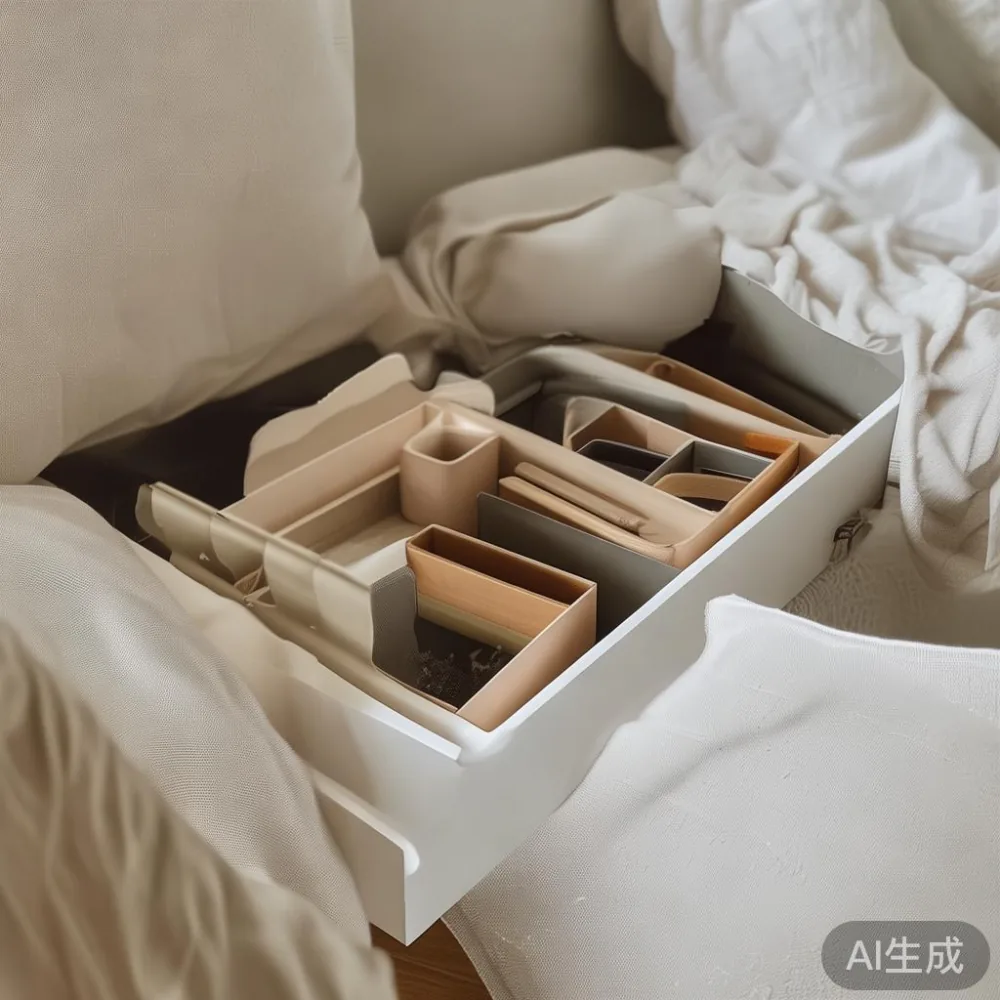
A drawer organizer also exposes component costs. A solid oak tray with 6 compartments, cork-backed lining, and leather pulls needs more cutting, sanding, and finishing than 5 plywood panels held together with adhesive. Inserts fitted to a 48 cm drawer with 14 cm usable depth can save 12 cm of reach in daily use, but the close fit requires precise measurements.
One real experience sharpened my view of these differences. Last month, I visited a supplier’s finishing room and watched 3 drawer boxes pass through inspection. Two had flush joints and consistent 1 mm gaps; the third had a twisted rear panel. That defect was hidden beneath the slide. A price comparison focused only on visible faces would have missed the structural issue, which is why every quote should identify drawer construction, joint type, slide load rating, and tolerances.
Why do hardware, finish, and drawer organizers affect the total?
Hardware is easy to overlook because it occupies little visual space. A 10-year warranty may depend on hinges that carry 25 kg, drawer slides rated for 40 kg, and cabinet hanging hardware tested for 60-80 kg. Soft-close hinges add cost but reduce slamming in a compact HDB bedroom. Full-extension slides in a deep wardrobe drawer improve access, while standard slides may leave 8-14 cm of the drawer unreachable.
For a drawer organizer, runners and inserts should work as a system. A solid timber organizer that is too wide for the internal drawer may reduce slide travel. In a 60 cm internal drawer, a 56 cm organizer leaves 2 cm on each side, enough for movement and installation. Cutting the organizer to 59 cm can leave only 5 mm per side, creating friction after humidity changes the wood by several millimetres.
Surface treatment is another substantial cost. A water-based matte lacquer on 12 drawer fronts may take several days in a controlled process. An oil-and-wax finish on 8 m² of oak can require 3-4 coats, with 12-24 hours between applications. French light luxury styling may favour pale oak, cream lacquer, and restrained hardware, while post-modern light luxury might pair warm timber with darker metal. Neither style automatically justifies a higher price; the finish specification does.
Marble introduces another material equation. A 120 cm marble table may weigh 65-95 kg, depending on thickness and whether the top is solid or a thinner stone on a reinforced base. Stone fabrication, edge profiling, crack inspection, and insured delivery add cost. It should not be used as evidence that a solid wood dining table is overpriced; marble and timber have different fabrication routes.
How should I compare two solid wood furniture quotations?
Compare specifications using the same measurement grid. Request the external dimensions, internal drawer dimensions, timber species, board construction, joint types, slide type, finish, and warranty in writing. A 200 cm bed frame and a 180 cm bed frame may use 8 kg and 11 kg of timber respectively, but the 200 cm model may also need 3 additional supports and stronger hardware.
Check the delivered dimensions against Singapore access. A Bedok HDB lift door may measure 90 cm wide and 210 cm high, while corridor turns can be tighter than expected. A 190 cm long wardrobe may have to be tilted through a 210 cm doorway, then pivoted around a 100 cm landing. A supplier that includes an access survey or clear instructions is reducing delivery risk, though this service may carry a separate fee.
Weight is relevant for both pricing and installation. A 120 kg dining table cannot safely be carried by 2 people on a staircase. Lift limits in many condos are commonly 500-800 kg, but building management rules vary. At the destination, the table should be moved with a furniture dolly rated above 150 kg, removable felt pads, and at least 4 protected contact points.
Do the arithmetic. If quotation A is SGD 1,980 and quotation B is SGD 2,760, the SGD 780 difference may represent solid versus laminated drawer boxes, full-extension slides instead of standard slides, and a tougher finish. It may simply be margin. A line-by-line comparison is more useful than assuming the dearer piece is better.
Does delivery, GST, and after-sales service change the real price?
Yes. Singapore prices should be stated clearly with GST. For example, a SGD 2,400 before-tax price becomes SGD 2,568 after 9% GST. Delivery may add SGD 80-SGD 180 within Singapore for ordinary furniture, while a difficult HDB move with a staircase may add SGD 140-SGD 300. Remote-area or timed-service charges should be identified before payment.
MIDHILL offers free shipping for orders above US$350, which is a useful international threshold, but local Singapore buyers should still confirm the quoted freight, lift service, and doorstep-versus-room-of-choice terms. MIDHILL also provides a 10-year structural warranty, lifetime refinishing, and 14-day returns. These policies have value because timber furniture can be repaired, adjusted, or refinished rather than discarded, but the written terms should show what is covered, how claims are assessed, and who arranges transport.
Delivery time can influence the market price of imported furniture, though it should not dictate quality. A made-to-order dining table may require 35-50 days, while stocked pieces may ship in 7-14 days. Peak production can add 7-10 days. A credible quotation separates manufacturing time from transit and customs clearance.
What does “light luxury” mean for a solid wood wardrobe or bed frame?
Light luxury is a design direction, not a measurable timber grade. French light luxury often uses pale oak, cream upholstery, curved silhouettes, and slim metal accents. American light luxury tends toward generous proportions, warm woods, and thicker profiles. Post-modern light luxury can combine clean lines with mixed materials and graphic hardware. The price should follow measurable choices: 18-22 mm table aprons, 40-50 mm bed rails, 3-part drawer sides, or coordinated finishes.
If you are considering how to style light luxury wardrobe in bedroom, begin with usable clearances. In a 280 cm wide room, a 240 cm wardrobe leaves 20 cm per side, while a 210 cm unit leaves 35 cm per side. A 60 cm door can still open, but drawers need room to pull out. A built-in run may offer more hanging space but costs more in site measurement, levelling, and filler panels.
The same discipline applies to beds. In a 330 cm wide HDB bedroom, a 180 cm bed leaves 75 cm on each side. A queen at 152 cm leaves 89 cm per side, but a mattress may be only 152 cm wide, producing 89 cm of nominal space. A broad 200 cm bed leaves 65 cm per side and affects wardrobe access. If you search for how to style American bed in room, look at circulation before decorative details: 60 cm is a practical side clearance, and 90 cm is more comfortable near a wardrobe.
For a nightstand, align it with the bed frame rather than buying an unrelated style. A 45 cm round marble table can work beside a 180 cm bed, while a 40 cm solid wood nightstand offers a drawer for a 32 cm mobile phone and charging cable. A drawer organizer can then separate cables, keys, and medication without crowding the 5-8 cm deep surface.
How do I plan a dining table, sofa, and storage for a Singapore home?
Measure the room, the route into it, and the furniture in use. A dining table for 6 usually needs at least 150 cm by 85 cm; 180 cm by 90 cm gives 60 cm per place if people sit on both long sides, but 180 cm by 100 cm is more comfortable with serving dishes. Leave 90-110 cm from the table edge to a wall or cabinet for chair pull-out and service.
In an HDB dining area with 270 cm of width, a 180 cm table leaves 45 cm on each side. That can look visually tight once chairs are occupied. A 160 cm table leaves 55 cm per side, though anyone seated at the ends still needs 60 cm beyond the table edge. Test this with masking tape on the floor before ordering.
If you are exploring how to style American sofa in room, a 220 cm three-seat sofa needs roughly 75-90 cm behind it for circulation. A 240 cm version may not suit a 320 cm wide living room once side tables and the TV console are included. The styling question should begin with clearances and sightlines, not fabric alone.
For smaller apartments, how to style European light luxury sofa in apartment can be answered with a 180-200 cm compact sofa, raised legs to preserve visual space, and one 55 cm side table. For storage, a 120 cm solid wood sideboard may hold 6 drawers, while a fitted drawer organizer turns each 50 cm drawer into defined zones. The appearance remains calm, yet charging cables, stationery, and cutlery stay controlled.
Which timber finishes age well in Singapore’s humidity?
Singapore’s humidity makes stable construction and a sound finish important. Relative humidity can vary substantially between air-conditioned rooms and external corridors. Solid timber naturally expands and contracts across its grain; good joinery and moisture control allow that movement without splitting the structure. Ask for the expected moisture range and whether the pieces are acclimatised before finishing.
Maintenance matters too. Keep solid wood furniture at least 30 cm from an air-conditioning vent where practical, use coasters and felt pads, wipe spills within 10 minutes, and avoid leaving damp cloths against drawer sides. Inspect runners twice a year and tighten drawer screws after the first 3 months as the timber settles.
For bedrooms, Mid-century modern for bedroom can work with walnut-toned timber, tapered legs, and simple storage. An 180 cm bed with 2 nightstands and a 120 cm wardrobe may occupy a 4.2 m wide room comfortably, but a 3.6 m wide room calls for a 150 cm bed or narrower units. The financial lesson is straightforward: dimensional discipline prevents overspending on pieces that cannot function.
How can I judge whether a solid wood furniture price is fair?
A fair price reflects a visible and documented build. Check that drawer sides are 15-20 mm, drawer bottoms are supported rather than floating, table aprons connect securely, and wardrobe doors align within about 2-3 mm. For a dining table, inspect the underside, including fasteners, brackets, and apron spacing. For a bed frame, confirm centre supports at intervals no greater than 50-60 cm on larger spans.
Then consider longevity. A solid wood sofa frame with kiln-dried timber and glued-and-screwed joints may be refinished, while a low-cost frame with mixed panels may have fewer repair options. A solid wood bed frame should have fixable joints rather than permanent adhesives around every connection. A marble table should include stone-specific support and edge information.
Price comparisons become clearer when each quotation is normalised. Record the before-tax amount, 9% GST, delivery, access charges, and expected delivery days. Compare pieces of the same size and construction. A 200 cm dining table cannot fairly be benchmarked against a 140 cm table, and a solid timber drawer organizer should not be compared with a fabric insert simply because both organise the same drawer.
The central lesson is not that the most expensive solid wood dining table, wardrobe, or nightstand is automatically the right choice. It is that a defensible price can be traced to timber grade, material usage, joints, hardware, finish, logistics, and after-sales support. Those are the elements worth asking about—and the ones that determine what the furniture will be worth 10 years from now.