Buying a Sofa You Cannot Sit On: What to Check Before the Delivery Van Arrives
Most Singapore shoppers make one assumption about a sofa — that the moment it arrives, they can flop onto the cushions with a glass of barley tea and call it done. The previous owner's home, the showroom floor, the warehouse mock-up — all of those are perfectly huggable. But your sofa, the one being manoeuvred into your Tampines or Punggol flat at 9 am on a Tuesday, is the one you cannot sit on. Not yet. Not until it has been measured against the lift, the corridor, the doorway, the corner, the warranty, and a drawer organizer plan that keeps the remote controls from disappearing between the seat cushions for the next ten years.
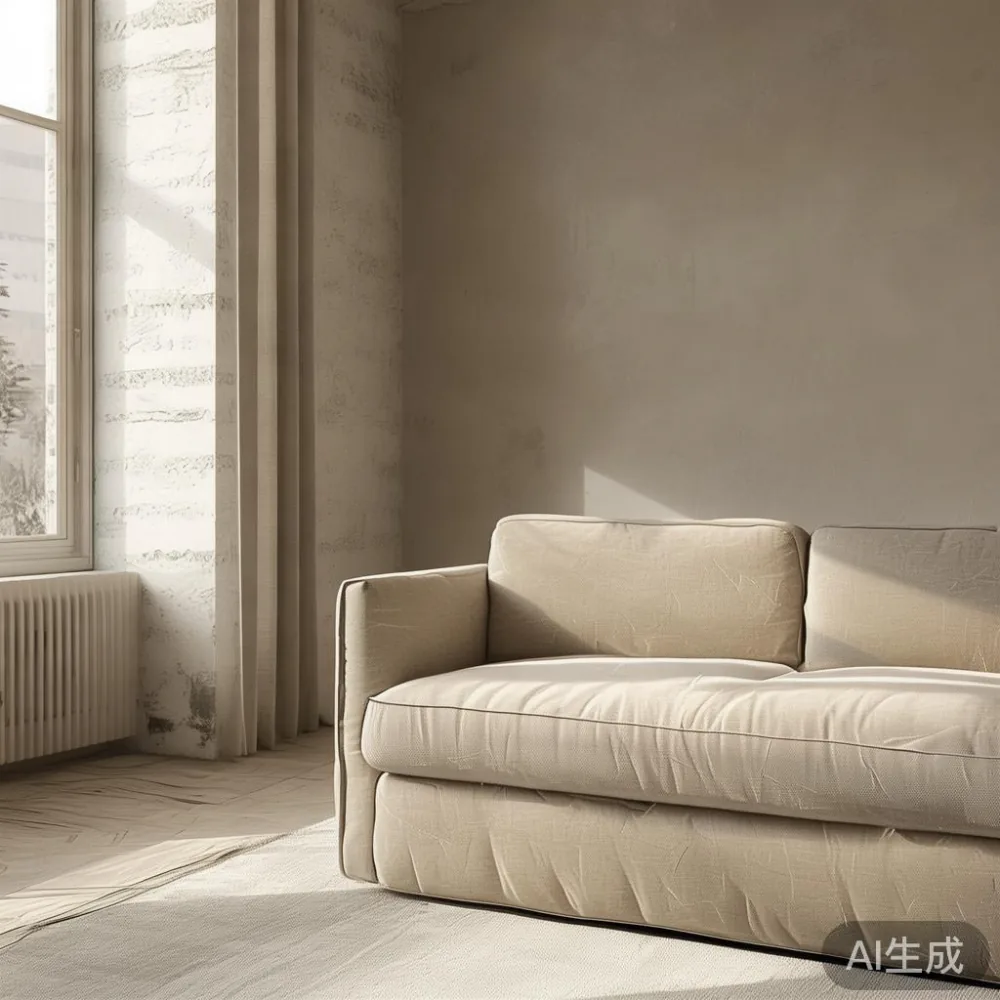
I learned this the hard way last month when I visited a friend in Bedok whose 2.9-metre four-seater simply refused to bend around a 1.1 m corridor turn. The delivery crew unscrewed the legs, removed the door handle, even considered popping out the lift ceiling panel, before the buyer waved the whole thing through. The sofa was technically usable. The buyer was technically furious. A solid wood sofa, no matter how beautifully finished, can turn into a S$2,400 lesson in spatial arithmetic if you skip the inspection steps below.
1. Will the sofa physically fit through your lift and corridor?
This sounds obvious until you measure. Standard HDB passenger lifts measure roughly 1.1 m wide × 1.4 m deep × 2.1 m tall, with a single door opening of about 0.9 m. Most condo service lifts are larger — 1.3 m × 1.8 m × 2.3 m is common in newer Punggol and Sengkang developments — but the turning radius at your corridor corner is what usually decides the battle.
Take three measurements before you click "checkout": the lift door height (subtract 5 cm for clearance), the corridor width at the tightest turn, and the main door of your unit. Jot them down on your phone. When the spec sheet says "width 240 cm, height 88 cm, depth 95 cm", subtract 3 cm from each dimension for safety, then compare. A solid wood sofa with a single-piece backrest taller than 1.95 m will not fit in an older HDB lift even if the load rating is fine. Many Foshan furniture factories, including the one running MIDHILL's production line since 2008, offer a two-piece backrest option that knocks 30-40 cm off the assembled footprint. Ask. Refuse excuses.
Also walk the path. Last quarter I timed a delivery crew from the lift lobby to a 13th-floor unit in a Punggol eco-development. They needed 11 minutes, three 90-degree turns, one mirror borrowed from the corridor, and a polite request to fold up the next-door neighbour's bicycle. Plan for at least 30 minutes of access time per delivery, and budget S$60-S$150 for any manual hoisting charges beyond the third floor without a service lift.

What should I measure inside the unit before the sofa is even ordered?
Inside-the-room numbers matter as much as corridor numbers. Sketch a top-down plan on any notebook app and mark the air-conditioning ledge, the TV console depth, the sliding door track, and the position of every power socket. A 3-seat solid wood sofa is typically 210-230 cm wide and 90-95 cm deep. In a 4.8 m × 3.2 m HDB living room (the type you'll find in most 4-room flats in Tampines), that leaves about 70-80 cm of walkway behind the sofa — workable if your aircon is wall-mounted, miserable if it's the ceiling cassette kind.
Add 10 cm on each side for breathing room. Plan 12-18 cm between the seat cushion top and the bottom of a typical window ledge so light still reaches the back of the room. If your space is below 12 sq m finished, the European for small living room approach — slimmer armrests (8-10 cm wide), a shallower seat depth (78 cm instead of 95 cm), and legs that lift the base 15 cm off the ground — is the only honest configuration. Heavy "American" frames with overstuffed arms eat 30% more visual floor space than the same-number-of-seats European silhouette.
Then check the floor. Parquet, vinyl, or tile? Whatever the answer, ask for felt glides on every leg, not just the front pair. A 65 kg solid wood frame will grind a visible arc into a timber veneer floor within two months of sliding. You can find replacement pads at any Tampines Hub hardware shop for under S$1 each, but the smart move is to insist on them at order time.
2. Which frame construction actually holds up after the boxes are gone?
A solid wood sofa from a serious Foshan furniture workshop uses kiln-dried hardwood — typically ash, oak, or beech — for the load-bearing members and plywood only for non-structural panels. Softer conifer frames (pine, fir) save roughly 12-18% on cost, but they telegraph squeaks after eight to fourteen months of daily use. In Singapore's 28-32 °C afternoons and 70-80% humidity, kiln-dried ash with a moisture content of 8-10% is the sweet spot: stable, dense, and quiet under load.
Ask for the spec sheet and look for three numbers: frame wood species, density (kg/m³), and load rating per seat (kg). Anything below 600 kg/m³ for a sofa frame is concession-grade. A serious Chinese light luxury or post-modern light luxury design will list the density freely — if the seller cannot produce it, walk away and find one who can.
Joints deserve equal attention. Mortise-and-tenon with hide glue, double dowelled, or corner-blocked with screws and polyurethane adhesive — any of these is acceptable. Staples-only construction is not acceptable for a piece you plan to keep for ten years. A small flashlight test at the showroom will tell you: open the dust cover on the underside and look. If you can see staples the size of rice grains holding the rail to the leg, the sofa was built to a price, not a standard.
How do I match a sofa to my dining table and wardrobe without a clashing look?
The trick is to decide on one timber tone and stick to it across the open-plan living/dining zone. A dining table in light oak pairs awkwardly with a dark walnut sofa frame, and a bedroom bed frame in the same walnut will look like an unrelated guest in the same flat. Most Singapore interiors settled into warm-neutral oak, light walnut, or smoked ash between 2022 and 2026, and the wood-tone discipline is now what makes a small HDB read as a designed space rather than a furniture showroom.
Japanese sofa vs Nordic sofa is a quieter debate than the wardrobes. Nordic frames tend to be wider in the arm, lower in the back, and very pale in tone; Japanese frames are narrower, firmer under the cushion, and slightly higher off the floor to keep visual weight low. In a 4-room flat with a 2.4 m sofa wall, the Japanese line reads cleaner. For an open-concept condo living room with a 3.6 m wall, the Nordic proportion holds its own.
Wardrobes follow the same rules. Many readers are searching the market right now for a best Japandi wardrobe for 2026, and the specs that matter are veneer thickness (0.6 mm minimum), rail metal gauge (1.2 mm cold-rolled steel), and the soft-close rating on hinges (50,000 cycles minimum). A Japandi wardrobe with a solid ash carcass and a sliding door weighing more than 28 kg each needs two quiet-closing dampers per door, not one.
3. Cushion core, fill weight, and the Singapore humidity test
Solid wood frames have to share the spotlight with the cushion core. Three options dominate: high-resilience (HR) foam at 32-38 kg/m³ density, pocket-coil springs wrapped in foam, and down-feather over a foam core. For Singapore's humidity, pocket-coil plus a 1.5 cm wrapped HR foam topper stays the coolest, dries the fastest after a wipe-down, and refuses to sag past 2 cm of compression in five years of daily sitting.
Down-feather tops feel glorious for thirty seconds, then slump into a tired envelope by month six. Pure HR foam is fine for guest-room sleepers but tends to bottom out on the main seat of a household that watches two hours of television every evening. The pocket-coil arrangement adds roughly S$280-S$450 to a 3-seat sofa but extends useful life from 6 to 12 years. At 9% GST on top, the math still favours the upgrade.
Ask the seller what the compression deflection specification is on the cushion core. A good answer is 25% indentation load deflection (ILD) between 32 and 38 for a medium-firm seat. Anything below 28 ILD will feel like sitting on a stack of newspapers.
4. Upholstery: leather, fabric, or the new "light luxury" hybrids?
Top-grain leather at 1.2-1.4 mm thickness costs roughly S$2,800-S$4,200 for a 3-seat solid wood sofa in the Foshan light luxury tier. Bonded leather (split leather glued to a polyurethane backing) sits at S$900-S$1,400 for the same shape and peels within 36 months in our climate. The middle road — corrected-grain leather at 1.0 mm — looks beautiful but marks permanently under fingernails. Insist on full top-grain, ask for the tannery name, and confirm the hide was vegetable-tanned (chrome-tanned leather runs hotter against bare skin in tropical weather).
Fabric is where the French light luxury and post-modern light luxury looks really shine: heavy Belgian linen at 380-420 g/m², bouclé at 560-720 g/m², or velvet at 320-380 g/m². Each behaves differently in a window-bright living room. Linen breathes but stains easily; bouclé traps dust along the loops; velvet shows every pressure mark. In a Tampines flat that gets four hours of direct west-facing afternoon sun, a treated velvet with a 50,000 rub count is the safer pick.
Whichever you choose, request a swatch and tape it to your window for 48 hours. If it yellows, fades, or stiffens, so will the sofa in eighteen months. And remember: any upholstered piece needs a drawer organizer mindset elsewhere in the room — a small fabric tray for remotes, a felt-lined drawer for cables, a slim catch-all on the nightstand for jewellery — because the couch alone cannot solve the storage problem.
5. Warranty, after-sales, and the questions that save you S$600
Many Foshan factories now offer a 10-year structural warranty on the hardwood frame — MIDHILL lists this clearly, and so do a handful of competitors. Upholstery and cushion warranties sit between 2 and 5 years depending on the manufacturer. Read the fine print: most exclude "commercial use," "pet damage," and "humidity-related mildew." Singapore sits at 70-80% humidity year-round. If the warranty does not specifically mention tropical climate use or above-65% humidity coverage, treat it as cosmetic reassurance only.
Ask about refinishing. A serious solid wood sofa maker offers lifetime or near-lifetime resurfacing: sanding back the clear coat, re-staining, and re-sealing. MidHILL does exactly this through its Foshan workshop, sending the piece back to the parent factory for about S$280-S$480 every 8-10 years. Some brands bury this in their terms and conditions; pull it out and confirm it on paper.
Delivery terms are the last layer. Most Singapore deliveries over S$350 ship free above the Causeway, but the threshold is not universal. 14-day returns are standard among reputable sellers, yet many sofas are made-to-order and fall outside the return window once a custom fabric is cut. Clarify: is the deposit refundable if the lift won't accept the sofa? Some sellers keep a 30% restocking fee on custom orders; the smart ones refund 100% if the failed fit is documented by a photo of the lift doorway.
What about styling around the sofa once it lands?
Once the solid wood sofa is in place, anchor the rest of the room to its tone. A marble table — sintered stone at 12 mm thickness is the modern choice over actual marble — picks up cool undertones and stops a warm oak sofa from looking too rustic. A nightstand in the same wood line, ideally with one soft-close drawer, ties the bedroom back to the living area. For purely visual discipline, choose a marble dining table in cream-grey and skip the matching dining chairs in favour of upholstered seats in your sofa fabric.
The light luxury for bedroom mood is currently trending toward low Japandi profiling, a 12 cm leg clearance under the bed frame, and travertine or sintered-stone accents. A European light luxury for hotel vocabulary — say, in a guest room you run from your condo — uses fluted bedside panels, brass-tipped drawer pulls, and denser mattresses in the 28-32 cm thickness range. Function follows the same logic as the sofa: kiln-dried ash, full-extension soft-close rails, and a drawer organizer in the top drawer for keys, passport, the small things.
Finally, set up a single drawer organizer tray near the sofa for the things that usually vanish: charger cable, HDMI remote, the AirPods case. Add one within arm's reach of every seating zone. That three-piece habit is what keeps a freshly delivered room looking like a magazine spread six months after moving in. Skimp on it, and the first impression fades inside a fortnight.
6. Quick checklist you can screenshot before paying
Before purchase: lift doorway width and height measured; corridor turning radius noted; main door frame width noted; floor type and finish protection asked about; timber species, density, ILD, and load rating documented; warranty period and humidity clause confirmed; refinishing cost confirmed; deposit/refund policy printed.
On arrival: frame wood species matches the spec sheet; joints are dowelled or mortised, not stapled alone; legs carry felt glides; cushion cover zips off for cleaning; backrest is two-piece if the lift is tight; drawer organizer included for the matching pieces (wardrobe, bed frame, nightstand).
Within 14 days: settle-in faults reported; any uneven leg shimmed; bolts re-torqued after the first week of use; care kit ordered (leather balm, fabric spray, wood wax); soft-close hinge lifetime cycles noted on the warranty card.
The end of that checklist is also the beginning of the next decision — usually the bed frame or the wardrobe — so keep the spec folder open on your phone and copy your measurements forward. A solid wood sofa, a solid wood bed frame, a solid wood dining table, and a carefully matched marble table together form the kind of room that ages well across moves, renovations, and the occasional cross-border shipping journey back to a family home. Treat the inspection as a habit, not a one-off chore, and the sofa you cannot sit on today becomes the one you cannot live without for the next decade.