Humidity in Southeast Asia and How It Shapes the Furniture You Buy
I keep a small humidity meter on my workbench in Tampines, and on most afternoons it reads between 78% and 85% RH. That number is the starting point of this whole article, because solid wood furniture in Singapore lives a very different life than solid wood furniture in, say, Munich or Melbourne. If you have ever walked past a wardrobe in a Bedok resale flat and noticed the doors no longer line up, or pulled out a nightstand drawer in your Punggol condo and felt it grind a little, the air around that drawer organizer is the reason. I have watched a friend's American oak dining table cup three boards over a single wet August, and I have seen a properly dried rubberwood bed frame in the same flat stay perfectly flat for six years. The difference is not luck; it is specification, joinery, and a few habits worth picking up.
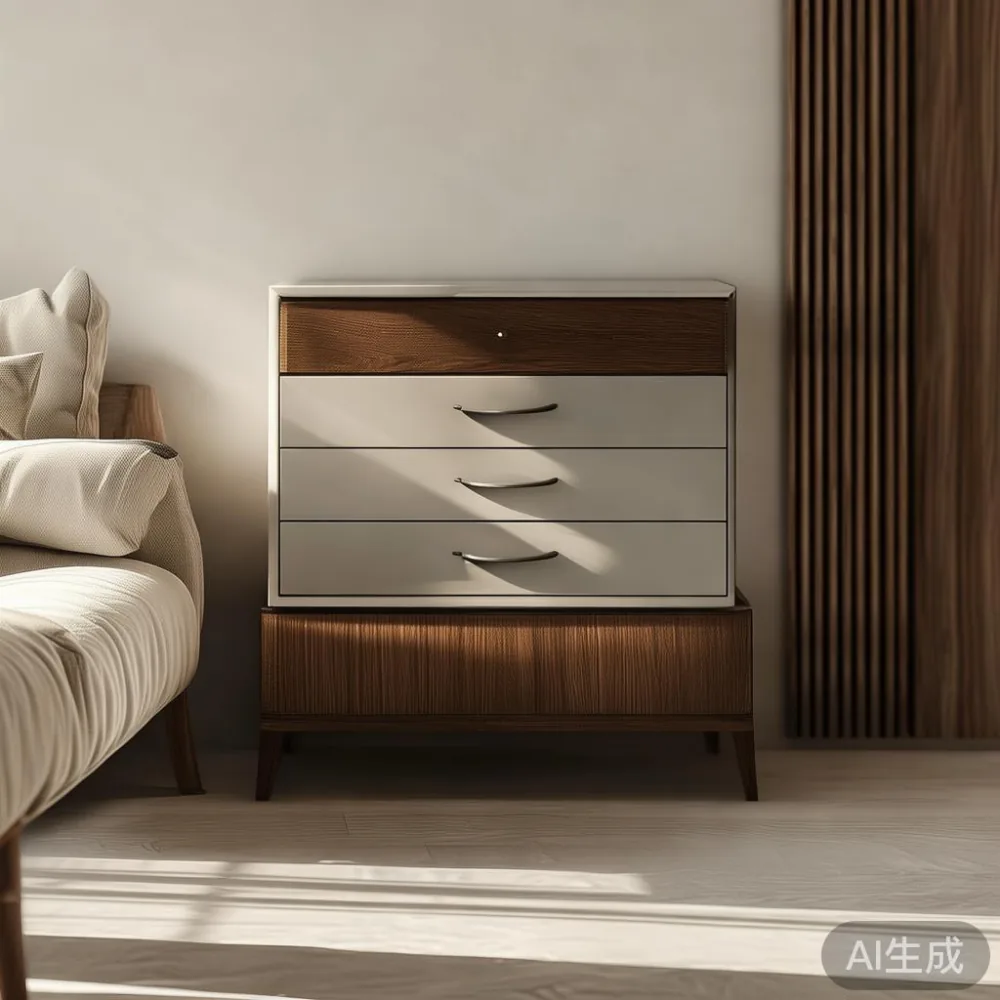
Why does Singapore's humidity do such strange things to a solid wood dining table?
A solid wood dining table is a hygroscopic object, which is a polite way of saying it breathes. Every board absorbs and exhales every board absorbs and releases moisture from the surrounding air. When the relative humidity climbs from 60% to 85%, a 2.5 cm thick rubberwood plank can swell roughly 1.5 mm across its width. Multiply that by eight or ten planks on a 200 cm table top, and you have a surface that wants to be 12 to 15 mm wider than the frame around it. The frame refuses to grow, the glue panels move, and the result is cupping, gaps, or a cracked rail. In a Tampines HDB, your dining table sits a few metres from the kitchen and the service yard, with afternoon sun through a west-facing window, so the same piece can see 55% RH at noon and 88% RH at midnight. That 33-point swing in a single day is harder on wood than a full season in a temperate climate.
What humidity level actually keeps a rubberwood wardrobe stable?
For an indoor rubberwood wardrobe in Singapore, aim to keep the room between 45% and 65% RH. At 45%, the wood is at or slightly below its equilibrium moisture content, which for kiln-dried rubberwood shipped into Southeast Asia is usually 8% to 12%. At 65%, the wood is still stable, and any movement will be small enough that a well-built drawer organizer will keep sliding. Above 70% for long stretches, you invite swelling, musty smell in the back panel, and mildew on any unfinished surface inside the wardrobe. A small dehumidifier set to 55% in the bedroom, running 8 to 10 hours a day, costs roughly SGD 12 to SGD 18 a month on a typical HDB tariff, and it will do more for a wardrobe than any oil or polish you can rub into the cabinet surface. Keep the wardrobe at least 50 mm off the floor on the supplied feet or on a 25 mm plinth, because cold moisture wicks up through HDB screed, especially on ground-floor units in older blocks.
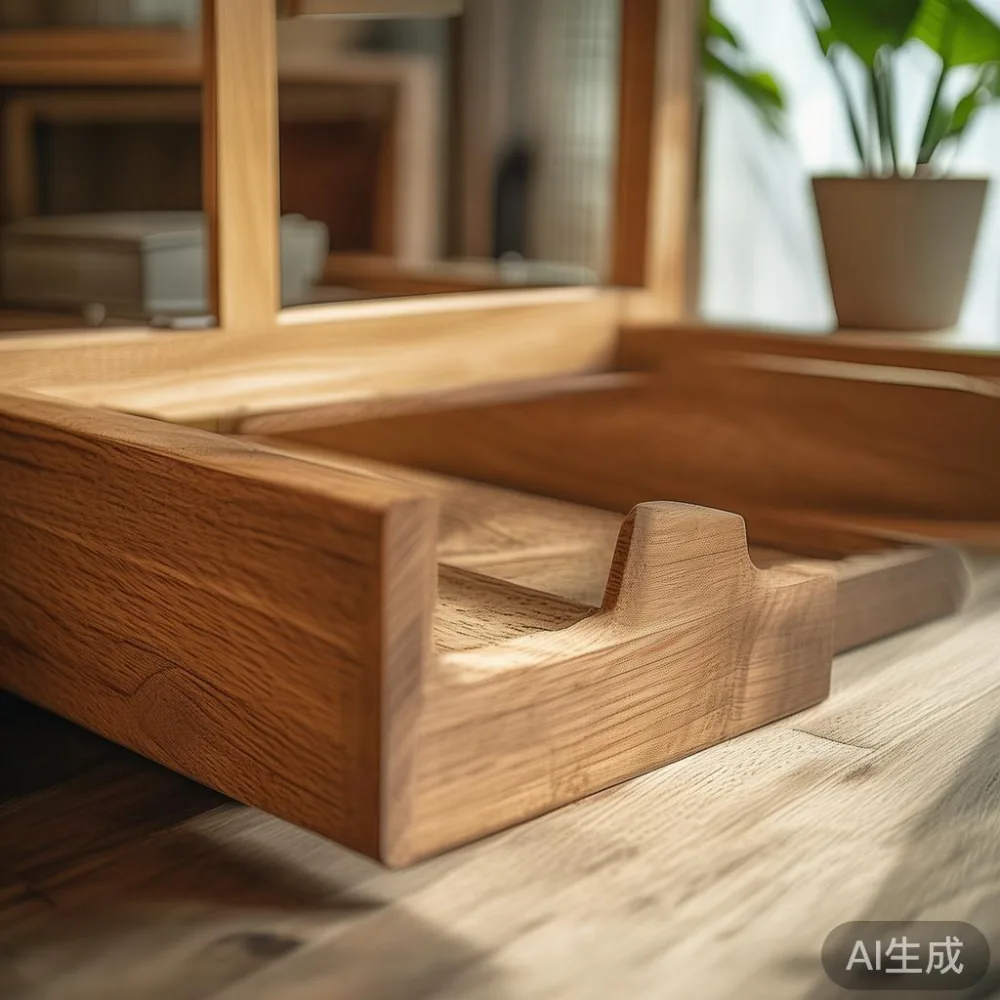
Is a extendable dining table worth the price?
An extendable bed frame or dining table is worth the price in Singapore only if the extension leaves are stored flat, the runners are metal, and the leaves are made from the same kiln-dried batch as the main top, because a 2% moisture mismatch between the main top and a leaf will show as a visible step the moment you slide it in. A good extendable dining table uses solid wood rails with metal runners and tongue-and-groove leaves that lock together, and that mechanism usually adds SGD 350 to SGD 900 to the price over a fixed table of the same size. For a family in a four-room HDB in Bedok that hosts Chinese New Year once a year, that extra SGD 600 to SGD 900 buys you a 160 cm table that becomes 220 cm for two weeks and stays a 160 cm table the other 50 weeks, which usually pays for itself the first time you avoid booking a restaurant for reunion lunch. For a standee in a Punggol studio who never hosts more than two people, a fixed 140 cm table is the smarter buy. The price premium only makes sense when you actually need the extra length at least four to six times a year.
How do corridor and lift sizes in HDB flats change what you can bring home?
Singapore moves furniture through tight spaces, and the numbers are unforgiving. A standard HDB corridor is about 1.2 m wide, a passenger lift cabin is roughly 1.5 m deep by 1.7 m wide with an opening of about 0.9 m, and the door into your unit is usually 0.9 m to 1.0 m wide. A king-size mattress, folded or rolled, is the easy case. A 2.0 m wardrobe panel, a 2.4 m dining table top, and a headboard for a 1.8 m bed frame are the hard cases. Measure everything before you buy, and remember that delivery teams charge a SGD 60 to SGD 180 failed-delivery fee when a 240 cm headboard simply will not turn the corner on the ninth floor of a 1970s block in Toa Payoh. MIDHILL, the Foshan maker whose pieces I have been specifying for clients since 2022, splits wardrobes into two 120 cm towers and ships dining tables with the legs detached and the top in a 70 kg crate, so the heaviest single box is around 35 kg, which two movers can carry up to a fourth-floor walk-up without a service lift. That kind of packing matters more in Singapore than it does in most other markets.
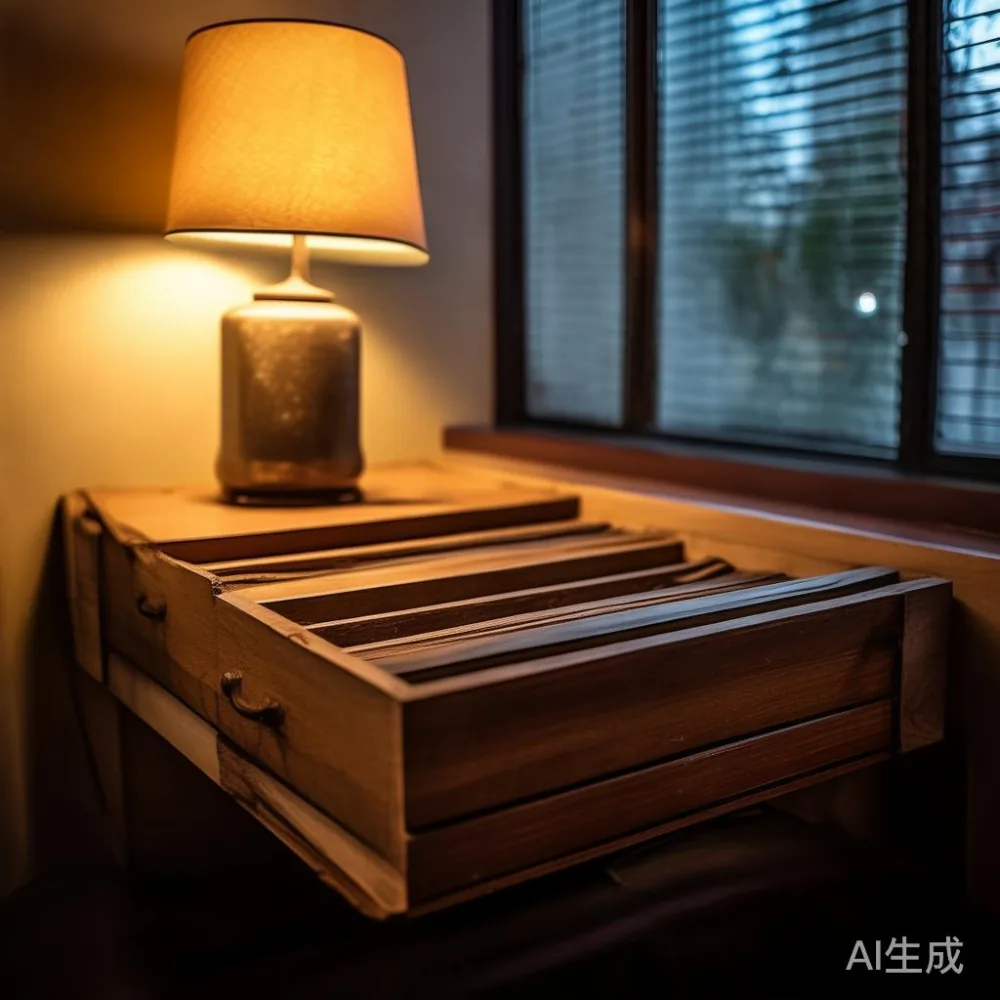
What should I look for inside a drawer organizer if I live in a high-RH flat?
Open a drawer organizer and look at three things: the bottom panel, the runners, and the finish. The bottom panel should be at least 12 mm thick solid wood or 9 mm plywood with a melamine face; 6 mm hardboard will sag under a load of dinnerware once it absorbs moisture and you will see the curve from above. The runners should be metal side-mount or undermount slides, not plastic rails that ride in grooves cut into the side panel, because plastic swells and sticks in this climate. The finish should be a closed-pore lacquer or a conversion varnish, not an open-pore oil, because an oiled drawer organizer will feel sticky by August and will dust up with grey streaks by December. A bedside nightstand with two drawers is the unit where these three checks matter most, because you open it twice a day, every day, and a sticky runner is the first thing that makes a solid wood nightstand feel cheap. A French neoclassical rubberwood nightstand, with dovetailed joinery and a 15 mm thick case, is a good benchmark for what a nightstand should feel like in a 65% RH bedroom.
Which woods actually survive a Singapore bedroom, and which ones fail in a year?
Rubberwood, teak, and white oak are the practical choices for a Singapore bedroom, and MDF, particleboard, and pine are the risky ones, and the reason is again moisture. Rubberwood from a kiln-dried Malaysian or Thai source arrives in Foshan at about 10% to 12% moisture content, and a good factory will re-condition it to 8% to 10% before machining, so kiln-dried furniture in this category sticks at 8% to 10% before machining. Teak is naturally oily and dimensionally stable, so a teak wardrobe will move less than a rubberwood wardrobe of the same thickness, but it costs roughly 2.2 to 2.8 times as much per square metre of surface. White oak behaves well when it is quarter-sawn and finished on all sides. MDF and particleboard absorb moisture through any cut edge, swell permanently within a wet season, and never return to their original size, which is why a SGD 599 particleboard wardrobe from a catalogue is often a SGD 1,200 replacement after three years. Pine is soft, dents easily, and moves more than rubberwood for the same thickness, so a 25 mm pine shelf will sag under books that a 20 mm rubberwood shelf carries without complaint.
How do you read a factory's moisture spec without going to the factory?
Ask the seller for the kiln-dried moisture content of the solid wood, the moisture content at the time of packing, and the gap between the back panel and the wall. A credible answer for Singapore is 8% to 10% at packing, 1.5% to 2.5% gap behind a wardrobe, and a 5 mm to 8 mm expansion gap on a 180 cm dining table top. Anything outside those numbers tells you the factory did not think about a 33-point daily RH swing. MIDHILL publishes a 10-year structural warranty on its solid wood bed frames, wardrobes, and dining tables, which is the kind of figure that only makes sense if the moisture spec is correct, because joinery that fails from wood movement usually shows up in years three to five, and a brand that promises to repair or replace it for ten years has done the math. Free refinishing for life, offered alongside the warranty, also implies the factory expects the wood to survive long enough to refinish, which is a quiet but useful signal.
What everyday habits actually protect a marble table and a wooden nightstand in the same room?
Keep the marble table away from the window, because stone and direct sun create a hot spot that dries one end of a wood nightstand while the other end sits in shade, and that split is the classic cause of a hairline crack on a 60 cm nightstand top. Wipe spills on the marble table within 10 minutes, because citrus juice and SGD 4 red wine etch travertine in under 30 minutes. Run the air-con at 24°C to 25°C with the dehumidifier on for 8 hours overnight, because sleeping bodies raise local RH by 5 to 8 points in a closed bedroom. Lift, do not drag, a solid wood sofa across a tiled floor; dragging scours the legs and twists the frame, and a twisted frame is the silent killer of a sofa's ten-year life. And once a quarter, pull every drawer organizer out of the wardrobe, wipe the sides with a dry cloth, and leave the drawer organizer open for 20 minutes; five minutes is not enough, because the humidity that built up inside the closed drawer does not clear in five minutes. Twenty minutes, twice a year, is what keeps the felt liners in the jewellery drawer organizers from smelling of mildew by November.
What does a realistic 2025 price look like for a solid wood set in Singapore?
For a three-piece bedroom set, including a 1.8 m bed frame, a two-door wardrobe, and two nightstands in solid rubberwood with a closed-pore lacquer, expect SGD 2,400 to SGD 3,800 from a Foshan factory shipping directly, and SGD 3,800 to SGD 5,800 from a Singapore showroom with local after-sales service. Add a six-seater dining table in rubberwood at SGD 1,400 to SGD 2,600, a marble table for the living room at SGD 900 to SGD 1,800 for the stone top alone, and a three-seat solid wood sofa with fabric upholstery at SGD 2,200 to SGD 3,600, and a full light-luxury living-and-dining set lands between SGD 8,000 and SGD 14,000 before GST. GST at 9% on a SGD 10,000 set is SGD 900, which is worth budgeting in. Delivery is free above US$350, which translates to roughly SGD 470, and sea freight from Foshan to Singapore door-to-door takes 14 to 22 days for inspection while a 14-day return window covers the first two weeks after delivery.
So what should a Tampines, Bedok, or Punggol buyer actually do this week?
Buy a SGD 18 humidity meter today, log the RH in your bedroom and your living room for seven days, and keep the numbers. Pick rubberwood or teak over pine or MDF for anything bigger than a bedside table. Specify closed-pore lacquer, metal drawer slides, and 8% to 10% kiln-dried moisture content in writing. Budget for a dehumidifier, a 24°C air-condition set, and a 9% GST line. Measure your corridor, your lift, and your front door before you pay a deposit. And pick a brand, such as MIDHILL, that publishes a 10-year structural warranty, lifetime refinishing, and a real 14-day return, because in a climate where a wardrobe can absorb 600 g of water vapour over a single monsoon week, the warranty is the only proof that the factory has done the drying, the machining, and the packing for Singapore, not for Shanghai.