Humidity, HDB Corridors, and Your Drawer Organizer: A Practical Guide for Singapore Homes
I keep a small notebook on a shelf in my Tampines flat, and three pages of it are dedicated to humidity readings. Last month I visited a client's resale 4-room HDB in Bedok to measure the moisture content of a four-year-old oak wardrobe, and the pin meter read 14.8% in the morning and dropped to 10.6% by the time the late afternoon thunderstorm passed. That 4.2-point swing in a single day is exactly what gives Singapore homeowners headaches when they invest in a solid wood dining table, a solid wood sofa frame, a solid wood bed frame, or even something as small as a drawer organizer. The wood is breathing, expanding, contracting, and the hardware is quietly loosening itself.
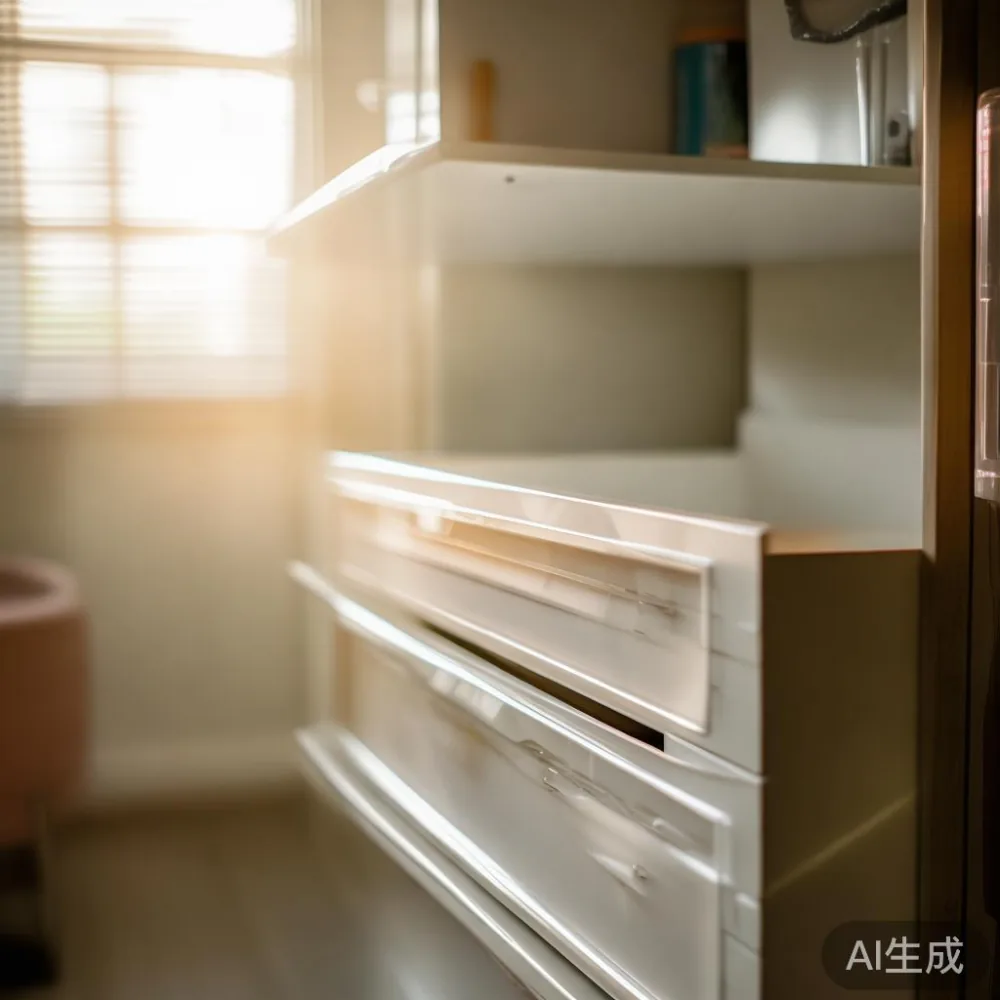
Why Singapore's Climate Is Harder on Wood Than You Think
Singapore sits roughly one degree north of the equator. The relative humidity in a non-air-conditioned HDB bedroom in Punggol can sit between 72% and 88% for most of the year, and only drops below 60% during a few dry weeks in February. Outdoor humidity recorded at Changi often exceeds 90% before dawn. None of this is dramatic on a single day, but over twelve months it means the wood in your wardrobe, your nightstand, and your drawer organizer is constantly absorbing and releasing moisture through every exposed face and every joint.
Solid wood moves along the grain more than across it. A 120 cm wide oak panel can change by 2 to 4 mm across the width when the moisture content shifts from 9% to 15%. A drawer organizer that fits perfectly in January can swell enough by July to stick, and a drawer organizer that slides freely in August can develop a 1 mm rattle in a dry February. If you own a French provincial dining table with turned legs and a thick apron, you may notice the central drawer sticking during the wetter months, especially if the table sits near a frequently opened balcony door.
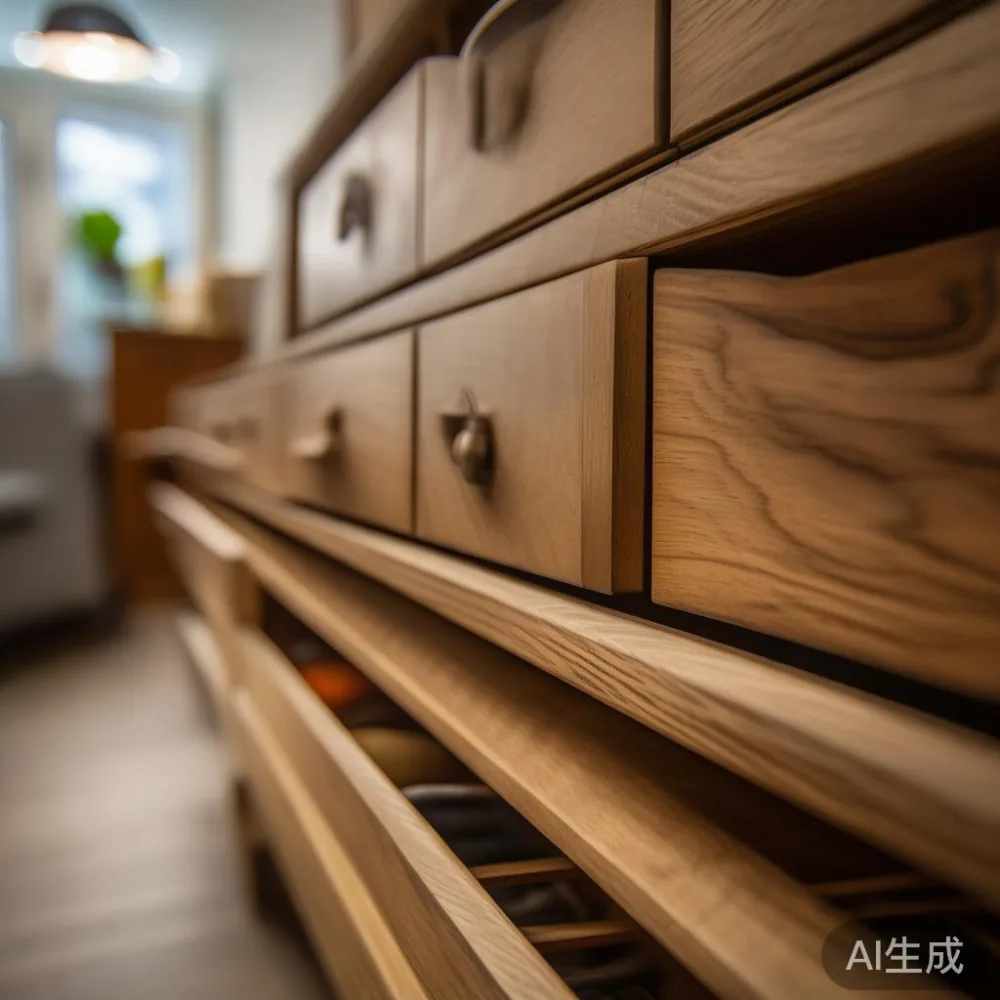
What Humidity Does to a Drawer Organizer Specifically
Most people think of humidity damage as warping or cracking on big surfaces, but a drawer organizer is actually the canary in the coal mine. Because the pieces are thin (often 6 to 12 mm), because the tolerances are tight, and because the drawer organizer lives inside a closed cavity where air exchange is limited, the microclimate inside a drawer can swing even more wildly than the room itself. I tested a removable drawer organizer from a wardrobe in a BTO flat in Sengkang last month, and the humidity inside the drawer was 6% higher than the bedroom air at 7 am because the closed cavity held the moisture from the night.
Symptoms I see most often in Singapore homes:
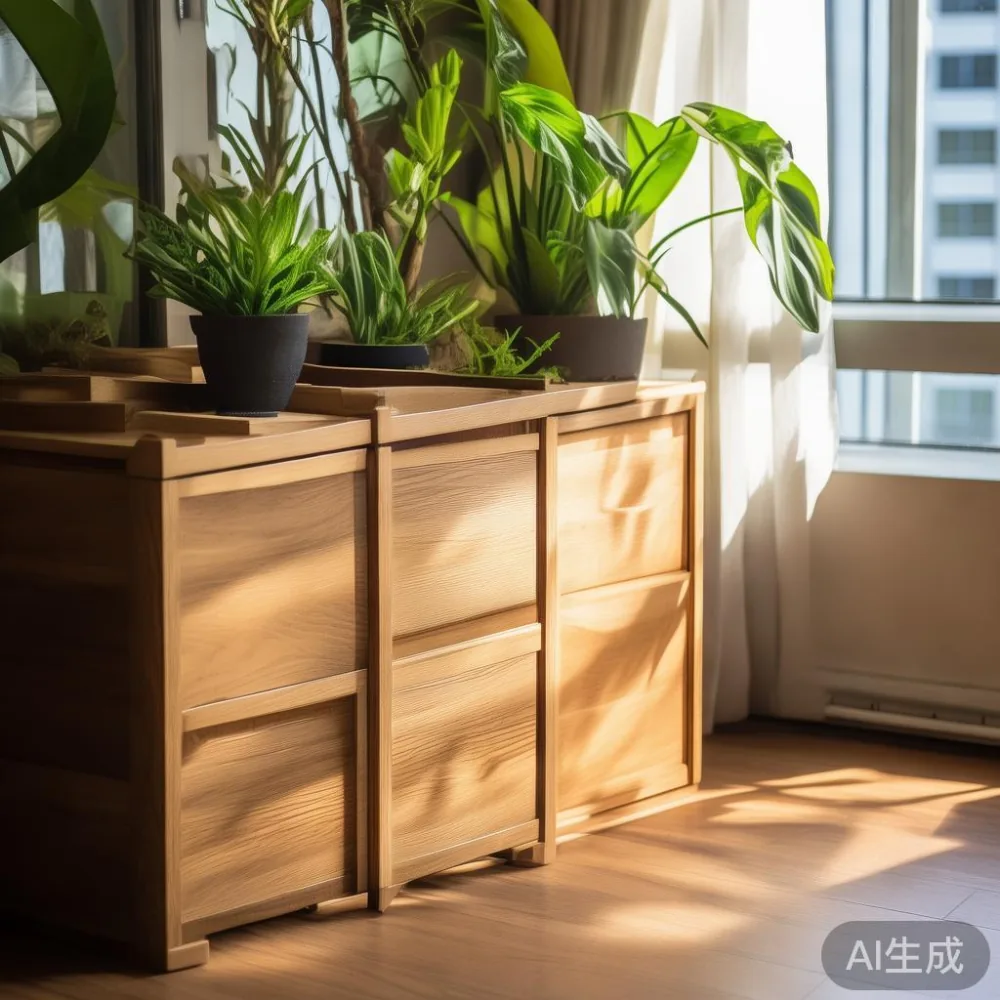
- The drawer organizer becomes hard to slide in July and August because the wood has expanded sideways.
- The base panel of the drawer organizer cups slightly upward at the edges when humidity drops, leaving rings, watches, or jewellery sitting on a curved surface.
- Velvet or felt liners inside the drawer organizer develop a faint musty smell if the wardrobe is on an exterior wall facing west.
- Beading or moulding on the drawer organizer front separates at the corners when the dry season runs for three or four weeks.
None of these issues mean the drawer organizer is poorly made. They mean the wood is doing exactly what wood does, and the piece was probably designed for a climate closer to 45% to 55% relative humidity rather than the 75% to 85% we live with.
Does my wardrobe need a dehumidifier if I live in a Punggol BTO on the 12th floor?
This is the question I get from at least one client every week, and the honest answer is yes for the wardrobe, ideally no for the rest of the flat. The reason is simple: a 1.8 m tall three-door wardrobe holds around 1.6 cubic metres of enclosed air. That enclosed air carries far more moisture than the same volume in your living room, and your hanging clothes trap it against the back panel. A mini dehumidifier or a rechargeable silica canister placed inside the wardrobe, replaced every four to six weeks, will keep the moisture content of the wood between 10% and 12%, which is the comfort zone for furniture like a MIDHILL European light luxury bed frame or a six-drawer wardrobe with internal drawer organizer compartments.
If you own a marble table in the dining area, keep it at least 40 cm away from the dehumidifier exhaust so the stone does not dry out unevenly around the resin. For a solid wood sofa in the living room, focus dehumidifying on the underside and back, because that is where air movement is weakest. For your nightstand, a small silica packet tucked into the back drawer where the drawer organizer usually sits is usually enough.
The Lift, The Corridor, and The Delivery Truck
One thing people in Tampines and Bedok forget is that the furniture also has to survive the trip up the lift and down the corridor before it ever reaches the humidity of your flat. Most HDB passenger lifts have an internal width of 1.1 m and a depth of 1.4 m, with a door opening of about 0.9 m. Most condo service lifts are larger, but the corridor turns at the lift lobby can be tight, and a 2.2 m long solid wood bed frame will not make the corner if the corridor is 1.5 m wide. A good supplier will measure with you before delivery day. A 1.8 m tall wardrobe often has to be tilted slightly to clear the lift ceiling, which is usually 2.4 m inside the car.
When you buy from a factory-direct supplier like MIDHILL, the dispatch team usually photographs the lift and corridor in advance and gives you a written plan. For a typical order above US$350 (roughly S$480 at current rates, plus 9% GST), delivery within Singapore is included, and most deliveries arrive within 7 to 12 working days from the Foshan workshop, packed in fumigated wooden crates with desiccant sachets inside every drawer organizer compartment. The crate itself protects the wood from a sudden humidity spike during the unloading window.
Light Luxury, French Provincial, and Why the Style Matters Here
Light luxury is a style category that became popular in mainland China around 2017 and has since spread through Southeast Asia. It splits into three families that you will see in most Singapore furniture catalogues: French light luxury (curved silhouettes, hand-rubbed lacquer, brass-toned hardware), American light luxury (cleaner lines, walnut and ash tones, oversized proportions), and post-modern light luxury (mixed materials, soft close to geometry, marble accents). When you see a 2026 French provincial furniture collection in a showroom, you are usually looking at French light luxury with a heavier provincial influence: cabriole legs, hand-carved aprons, and warm honey or wheat finishes.
For Singapore's climate, I lean toward American light luxury for big pieces because the cleaner lines give the wood more room to move without showing gaps at the joints. A piece marketed as under 2000 American furniture (in SGD, that is roughly pieces priced below S$2,000 including GST) usually means a smaller-scale bed frame or a two-door wardrobe in ash or rubberwood, both of which are more dimensionally stable than solid oak in high humidity. For a statement dining table, a French provincial dining table in cherry or beech with a hand-distressed finish hides small humidity cracks better than a high-gloss modern piece, because the distressed marks look like part of the design.
How Should I Acclimate New Furniture Before the First Use?
This is the single question that would save the most wear-and-tear calls if every customer asked it. When your crate arrives, do not open it inside the air-conditioned bedroom immediately. Instead, place the sealed crate in the room where the piece will live for 24 to 48 hours. The wood inside the crate is at one moisture content, the room air is at another, and the sealed crate lets them equalise slowly. If you tear the plastic off a 90 kg wardrobe in a 22°C air-conditioned room and the wood was packed at 28°C with 80% humidity, the surface will check and the drawer organizer panels may cup within hours.
A practical acclimation routine I share with every client:
- Move the crate into the final room and rest it on timber battens so air flows under it. Leave for 36 hours.
- Open the crate, remove the desiccant sachets, and unwrap each component. Leave the components standing upright with 15 cm of space between them for another 12 hours.
- Wipe every surface with a barely damp microfibre cloth, then dry with a second cloth. This removes packing dust and reveals any small marks.
- Assemble the piece, fit the drawer organizer into its cavity, and slide it in and out twenty times to seat the runners.
- Leave the room dehumidified for the first week, then return to normal use.
American Bed vs Nordic Bed: Which Survives Singapore Better?
People often ask me about an American bed vs Nordic bed comparison when they are choosing a frame. The honest answer is that both work, but they behave differently. American light luxury bed frames tend to use thicker posts (around 9 to 11 cm square) and heavier hardwoods like ash and walnut, with a headboard that is usually 110 to 130 cm tall. The thicker posts give the wood more thermal mass, which means the moisture content changes more slowly through the day. A Nordic bed frame, by contrast, tends to use thinner posts (around 5 to 7 cm square), lighter woods like birch and pine, and a lower headboard of 80 to 95 cm. The thinner wood reaches equilibrium with the room faster, which means it expands and contracts more visibly through the year.
In a Tampines HDB with strong afternoon sun on the bedroom window, I would choose an American-style frame for the master bedroom, because the thicker wood tolerates the daily humidity swing better. In a guest room that is air-conditioned for only a few hours a day, a Nordic frame is fine and will cost noticeably less. Either way, keep the frame 8 to 10 cm away from the wall so air circulates behind it, and avoid pushing the mattress flush against the wall because trapped moisture will mark both the mattress and the back rail.
Long-Term Care: A 10-Year View
A solid wood wardrobe or bed frame is not a five-year purchase. With reasonable care, a piece from a workshop that uses kiln-dried hardwood at 8% to 10% moisture content and mortise-and-tenon joinery will last 25 to 35 years in a Singapore home. The structural warranty covers the joints and the load-bearing rails; the cosmetic life depends on you. A wardrobe that is wiped down once a month with a beeswax-based conditioner and kept away from direct afternoon sun will look almost new at year ten. The same wardrobe left in a sun-closed 140 cm wide HDB corridor with no conditioning will grey, check, and warp at the panels by year five.
If you are shopping for a wardrobe specifically, look at pieces marketed as the best Rustic wardrobe for 2026, because the rustic finishing process (wire-brushing the soft grain, then applying a matte sealer) tends to hide the small surface checks that humidity inevitably creates. A rustic wardrobe with a felt-lined drawer organizer inside the top drawer is also a sensible choice for jewellery, because the felt absorbs the small humidity swings inside the drawer and protects the contents.
Two more practical tips I give every new owner. First, rotate the felt pads under your solid wood sofa every six months, because the side that faces the air-con unit wears faster. Second, keep a small hygrometer inside your wardrobe and check it once a week. If the reading goes above 70% for more than a week, run the dehumidifier for four hours. If it goes below 50% for more than a week, place a shallow dish of water inside the wardrobe for a day to bring it back up. The drawer organizer will thank you, and so will the dovetails on the drawer fronts.
Where to Browse and What to Ask Before You Order
When you are ready to compare options, start at m.midhill.co where the factory publishes its full Singapore-ready catalogue with dimensions in cm, weights in kg, and prices in SGD inclusive of the 9% GST. The site also lists the delivery window, the lift-and-corridor requirements, and the warranty terms in plain language. Before you confirm an order, ask the supplier four questions: what is the moisture content of the wood at packing, what is the joinery method on the load-bearing rails, what is the finish thickness on top and underside, and what is the replacement policy for the drawer organizer if it arrives warped. A workshop that answers all four clearly, in writing, is the workshop you want to trust with a 90 kg wardrobe and a 14-year mortgage.