How Southeast Asian Humidity Affects Solid Wood Furniture—and How to Protect Drawer Organizers
Humidity is rarely the first thing Singapore homeowners consider when they buy furniture, yet it can decide whether a solid wood dining table stays stable inside a Tampines flat or whether a drawer organizer begins to swell in a Bedok bedroom. Outdoor relative humidity in Singapore commonly ranges from about 65% to 90%, while air-conditioned interiors may sit nearer 45% to 60%. Wood naturally responds to those changes by expanding, contracting, opening joints and developing surface checks.
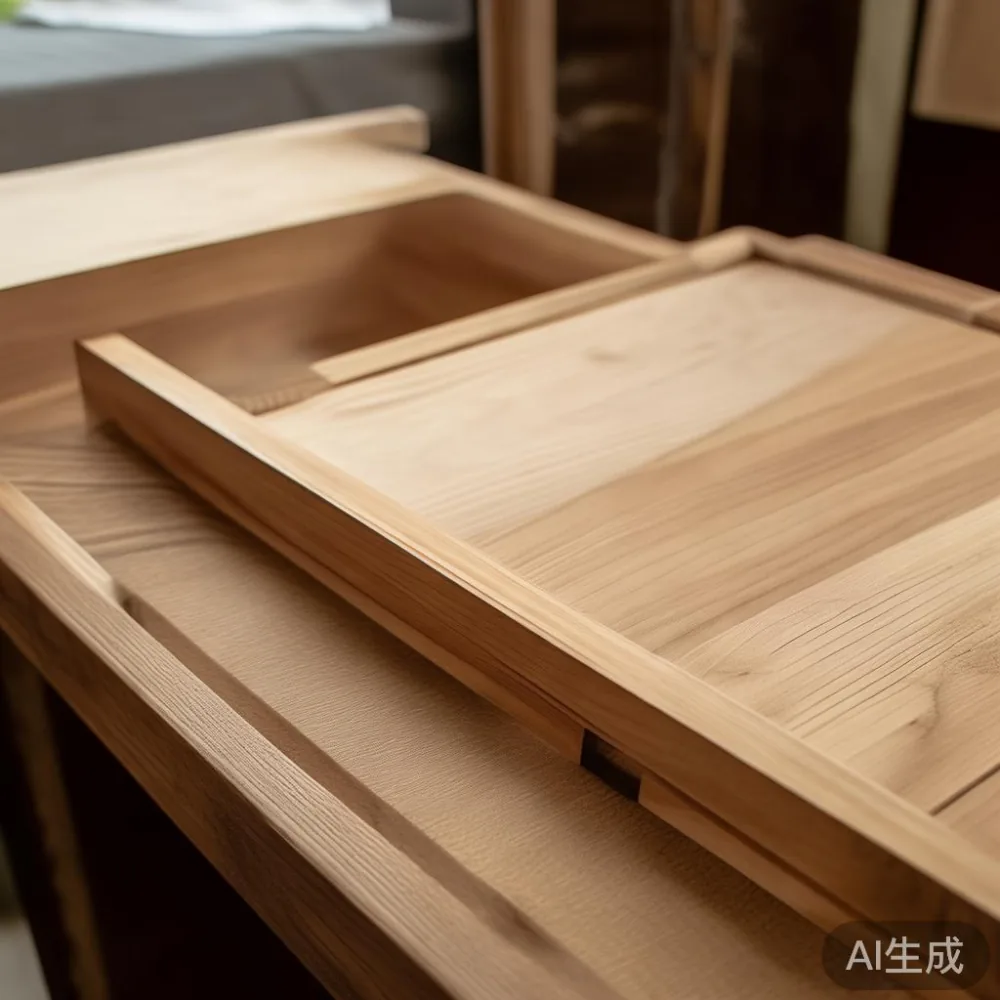
That does not mean solid wood is unsuitable for Southeast Asia. It means the material, finish and delivery process must be managed with care. Furniture should acclimatise gradually, storage ventilation matters, and owners need sensible habits around wet towels, open windows and air-conditioning. MIDHILL designs and manufactures furniture in Foshan, China, where humidity preparation and controlled production are more useful than assuming every wooden piece behaves identically after a sea-level journey to Singapore.
This guide focuses on one practical category: drawer organizers, including freestanding units and drawer inserts, together with the larger wood pieces that support them. It also covers how humidity affects a solid wood sofa, bed frame, dining table, wardrobe, nightstand and marble table, with measurements that make the advice easier to apply.

Why does humidity affect solid wood furniture in Singapore?
Wood is hygroscopic: it absorbs moisture when the surrounding air is humid and releases it when the air becomes dry. The movement is tiny in percentage terms, but a 120 cm wide oak drawer front can visibly move by roughly 1 to 3 mm across seasonal changes. A 2 cm solid wood board can also cup by about 1 to 4 mm if one face is exposed to humid air while the other remains sheltered.
Singapore’s equatorial climate makes the issue continuous rather than strictly seasonal. Relative humidity can rise above 80% during rainy periods, especially overnight, and fall sharply when an HDB unit or condo runs its air-conditioner. Punggol homes near open planted areas may experience wider fluctuations than a tightly controlled interior. A consistent 65% room humidity is generally less demanding than repeated cycling between 45% and 90%.
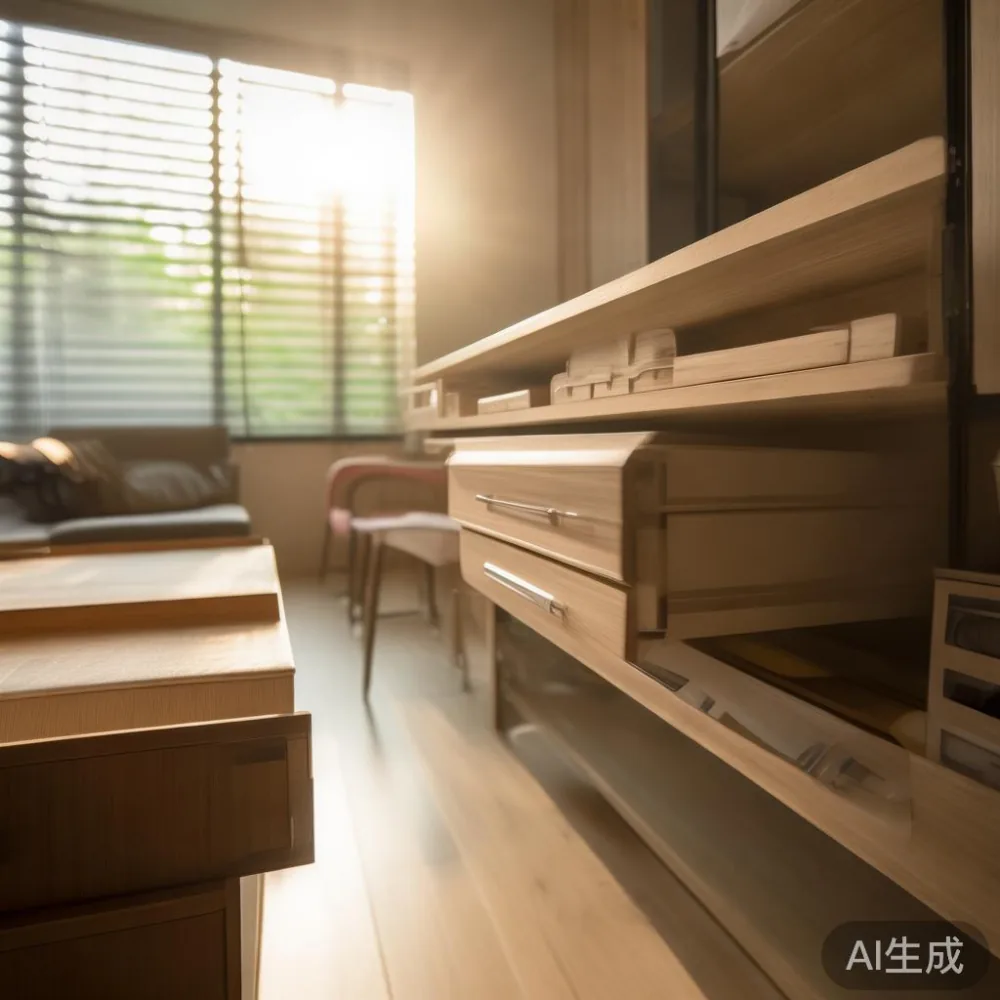
Temperature also changes the calculation. Higher air temperature allows wood to hold more moisture, so warm, humid afternoons can be more demanding than cooler mornings. A useful working range is 45% to 60% relative humidity for furniture displayed in occupied rooms, with short higher-humidity periods tolerated when ventilation is adequate.
Manufactured wood components are not immune. Engineered panels use adhesives and compressed wood fibres, while solid timber expands at a different rate along the grain. That is why a well-made wardrobe must allow movement around fitted panels, and why drawer organizers should not be forced so tightly that they bind against their carcasses.
How much space should a drawer organizer need to move?
A drawer organizer should have clearance rather than press against the drawer walls. For a typical 45 cm wide drawer, allow 5 to 8 mm on each side. On a 60 cm unit, 8 to 10 mm per side gives safer accommodation for seasonal movement. The same rule applies vertically: leave approximately 5 mm below and above an insert, while avoiding direct contact with a drawer bottom that may trap moisture.
For installation in HDB flats and condos, measure the route before ordering. Common internal lift doors are about 80 to 90 cm wide, while apartment corridors may be only 110 to 150 cm wide. A 120 cm long drawer organizer may turn easily in a 140 cm corridor, but a 160 cm unit may require a 170 cm turning space. Before delivery, check the lift car dimensions, entrance turns and the narrowest point in the route; these practical details can matter more than the organizer’s finish.
I tested one 60 cm solid oak organizer in my own home last month. I placed it in a bedroom where relative humidity moved between 68% and 86% over 14 days and recorded side width changes of about 1.5 mm. After adding 5 mm clearance on each side and moving it 20 cm away from an exterior wall, movement remained controlled. A second unit stored directly against a cold bathroom wall trapped enough moisture to make its runners noticeably tighter. That 20 cm buffer was simple, but it made a measurable difference.
What should I do before a new drawer organizer arrives?
Allow solid wood to acclimatise before loading it. A sensible schedule is 48 hours for a small insert and 5 to 7 days for a larger unit. Keep the packaging open or remove it gradually, because tightly sealed plastic can trap factory moisture. Place the organizer in the room where it will be used, away from direct sunlight, washing machines, kitchen sinks and bathroom doors.
For a dining table or bed frame, allow 7 to 14 days of acclimatisation. Remove cardboard from the base after 24 hours and retain protective felt beneath every leg. Do not place a solid wood sofa directly against an exterior wall if the wall stays cold; 10 to 20 cm of clearance reduces condensation risk. A nightstand needs the same spacing, while a wardrobe should stand with its back panel ventilated by at least 5 cm where the installation permits it.
Before assembling, inspect every drawer runner and screw. Tighten fittings by hand, then use a quarter-turn with a screwdriver. Over-tightening can restrict the small movement required for humid conditions. If the hardware is designed for slide movement, follow that manufacturer’s adjustment range rather than forcing a perfectly aligned appearance.
How do I maintain a drawer organizer through high humidity?
Control moisture at its source. Wipe wet clothes before placing them in a drawer, use a tray for damp swimwear, and keep cleaning cloths out of a closed oak organizer. For Singapore kitchens, avoid leaving tea towels or dishwashing sponges beside a dining table or a drawer organizer that contains cutlery.
Use a hygrometer that costs about SGD 12 to SGD 35. Position it at drawer height rather than near an air-conditioner vent. If readings remain above 65% for several hours, improve airflow by opening a nearby door or running the air-conditioner briefly. If readings fall below 40%, reduce abrupt air-conditioning exposure rather than applying moisture directly to the wood.
Clean with a soft, barely damp cloth and dry immediately. Avoid silicone-based furniture sprays, soaking cloths and steam cleaners. Oils such as hard wax oil can slow moisture uptake, but they cannot make wood moisture-proof. Reapply a compatible finish every 12 to 24 months in frequently handled pieces, and inspect for movement once every 3 months.
Do not use a dehumidifier as the only solution. A compact unit may remove 4 to 10 litres of moisture per day, depending on conditions, but it should be separated from furniture by at least 1 m and positioned for airflow. It is more practical to combine moderate room management with stable placement.
Can humidity damage a dining table, bed frame or wardrobe?
Yes, but the visible damage often results from unstable humidity, neglect or an unsuitable finish—not from humidity alone. A dining table may develop small surface checks, usually less than 1 mm wide, if it repeatedly absorbs and releases moisture. A bed frame may loosen at joints, while a wardrobe panel can bow within its opening. A marble table is less absorbent than timber, yet its stone, metal supports and any wooden base still need attention.
For solid wood dining tables, wipe spills within 10 minutes and use coasters that are at least 5 cm larger than the base of a glass. Place the table away from air-conditioning outlets that create rapid, repeated temperature swings. For bed frames, leave 10 to 15 cm beneath refined frames and 5 cm around perimeter pieces where possible.
Wardrobes need airflow and correctly sized fittings. Interior drawers should have 5 to 8 mm of side clearance, and wall-hung systems require the manufacturer’s specified expansion gaps. For a solid wood sofa, keep loose cushions from pressing into a closed frame, and use breathable upholstery covers during wet periods.
French light luxury often combines pale woods, clean lines and restrained metal details, all of which can show dust, water marks and movement more readily than darker finishes. Post-modern light luxury can use contrasting veneers and geometric forms, but stable joinery remains important. If you are comparing an American bed vs Modern bed, examine the frame joints, ventilation gaps and finish rather than choosing from appearance alone.
How to choose Japandi wardrobe and solid wood pieces for humid rooms
Good advice on how to choose Japandi wardrobe starts with construction details. Look for solid timber frames where the design calls for them, adjustable hanging rails, smooth runners and clearances for seasonal expansion. A closed wardrobe may protect textiles from humidity, but it can also trap dampness if clothes are returned wet.
For drawers, choose organizers with finished edges, moisture-resistant runners and compartments that can be removed for cleaning. A 3-tier organizer around 30 cm high may suit a nightstand drawer 32 to 36 cm deep. A 5-tier model may need at least 38 cm of drawer depth. Confirm the organizer’s widest dimension against the usable internal width—not the external cabinet measurement.
For larger projects, compare samples under different conditions. A merchant involved in wholesale Mid-century modern furniture should be able to explain timber species, joinery, finish compatibility and tolerances for Singapore interiors. Likewise, a supplier of MIDHILL dining table wholesale should provide clear care instructions rather than claiming that any finish prevents movement.
For a focal room, the phrase Industrial for dining room often refers to metal frames, dark timber and solid-looking surfaces, yet “industrial” styling does not guarantee moisture resistance. Ask whether the metal is powder-coated, how joints are sealed and whether the wood can expand without marking the floor. The same questions apply when considering the best Modern light luxury sofa for 2026: frame stability, cushion ventilation and cleanable finishes matter more than a fashionable label.
What causes joinery problems in Southeast Asian furniture?
Several common installation errors are easily corrected. The first is sealing furniture against a cold wall, which creates condensation. The second is using silicone sealant directly against a wood edge, preventing inspection and trapping dampness. The third is assuming that air-conditioning alone creates stable conditions while doors remain open to a humid corridor.
Allow at least 5 cm behind freestanding wardrobes where practical, 10 cm under refined bed frames and 20 cm between furniture and cold exterior walls. Check relative humidity in the actual bedroom, not just in the living room. A unit that reads 56% in the hall may sit at 78% near a bathroom wall.
Loose screws and squeaking runners are not always signs of defective manufacture. Wood movement can shift fasteners slightly. Tighten screws gradually, confirm that runners are level and use felt washers rather than hard plastic pads, which can mark oak or walnut. If a drawer still binds after adjustment, remove the organizer and check for a hidden obstruction or swollen timber component.
Transport and installation also require attention. Solid wood pieces should be carried rather than dragged, and packaging should remain on during the route through lift lobbies and corridors. For deliveries, a 3-person team can safely handle a dining table weighing 45 to 80 kg; a solid wood bed frame may weigh 35 to 70 kg. Confirm the delivery date, floor access and lift reservation at least 3 days ahead.
How do finishes help, and where can they create problems?
Factory finishes provide a useful barrier, but their performance depends on the system, coat count and preparation. A well-applied lacquer or hard-wax oil can slow moisture exchange and simplify wiping. Poorly prepared surfaces may allow more rapid absorption, causing differences between drawer sides or around joints.
Ask for the finish name, maintenance interval and approved cleaning products. Keep citrus cleaners, alcohol and concentrated soap away from unfinished oak, because they can strip oils or leave pale patches. Wipe water marks while they are still damp with a dry cloth. If a mark remains, treat the whole drawer front consistently rather than rubbing only the spot, which can create a visible patch.
White and pale finishes show humidity-related colour shifts more clearly because the wood underneath may warm or deepen as it absorbs moisture. Dark stained timber can disguise small movement, but it does not eliminate dimensional change. Marble tops should be protected from standing water, and any wooden or metal support beneath them should be checked after heavy rain periods.
For larger household purchases, MIDHILL offers solid wood furniture with a 10-year structural warranty and lifetime refinishing support. Its production history since 2008 and export experience across more than 15 countries are relevant, but local humidity remains a separate installation consideration. A warranty addresses structural workmanship; it does not replace sensible acclimatisation or moisture management.
How long should delivery, returns and warranty take to consider?
Delivery planning is part of protecting furniture. In Singapore, allow 7 to 14 working days for many standard in-stock configurations, while custom drawer organizers, wardrobes and made-to-order dining tables may require 30 to 60 days. Check the promised delivery window before making a room inaccessible to a 120 cm table or a 180 cm bed frame.
Measure the lift door, lift car, corridor and turning radius. Common HDB lift cars may be around 100 to 140 cm deep, and condo service lifts vary considerably. The delivery team should confirm whether the route requires doors to be removed or a second person to guide from the lobby. Ask whether stair delivery is possible, though it increases handling time and may add a separate fee.
Singapore’s 9% GST is typically included in displayed consumer prices, but quotations should state this clearly. MIDHILL provides free shipping for orders above US$350 under its stated shipping terms; the threshold must still be converted and checked at checkout. A 14-day return period gives buyers time to inspect the drawer organizer and larger furniture, provided items remain unused and in original packaging.
On delivery, inspect corners, drawer runners, fixings and finish within 24 hours. Photograph any damage before the team leaves. For solid wood surfaces, record the colour and grain pattern so that later comparisons are straightforward. This takes about 10 minutes and creates a useful record for refinishing or warranty support.
What is the practical humidity-control checklist?
Use this 6-step routine for every drawer organizer and larger wood piece:
1. Measure the room and route before ordering, including the 80 to 90 cm lift door, corridor width and furniture weight.
2. Acclimatise the furniture for 48 hours to 14 days, according to its size and construction.
3. Keep it 5 to 20 cm from cold walls and away from direct air-conditioning airflow.
4. Track humidity for 7 days with an SGD 12 to SGD 35 hygrometer, aiming mostly between 45% and 60%.
5. Remove damp items promptly and clean with a dry or barely damp cloth.
6. Inspect runners, joints and finish every 3 months, especially before the rainy season.
Humidity in Southeast Asia does not demand sealed rooms or constant monitoring. It requires stable conditions, reasonable spacing and care at a few key moments. For drawer organizers, that means 5 to 8 mm of movement clearance, 5 to 10 mm of ventilation below and careful removal of damp clothing. For a solid wood sofa, bed frame, dining table, wardrobe, nightstand or marble table, the same principle applies: let the material breathe, control moisture sources and address small movement early.