Caring for a Lacquered Surface in a Tropical Climate: A Singapore Drawer-Organizer Owner's Guide
Last month I visited a 4-room HDB flat in Tampines with my colleague, a furniture inspector who has spent more than 14 years opening crates of solid wood furniture on loading docks across Southeast Asia. We were there to examine a nine-piece lacquered bedroom set the owner had ordered nine months earlier. The bed frame, two nightstands, and a six-drawer wardrobe had all gone through a humid monsoon season, two weeks of continuous air-conditioning use, and a window that the owner left cracked open during a thunderstorm. The lacquer on the headboard had developed a faint orange-peel texture along the top edge, one drawer organizer inside the wardrobe had stuck shut, and the dining table in the adjoining living-dining area showed three faint rings where condensation glasses had been placed without coasters. None of those problems had anything to do with the maker. All of them had to do with how lacquer behaves when the ambient relative humidity sits between 78% and 92% for most of the year, the way it does in Punggol, Bedok, and the rest of Singapore.
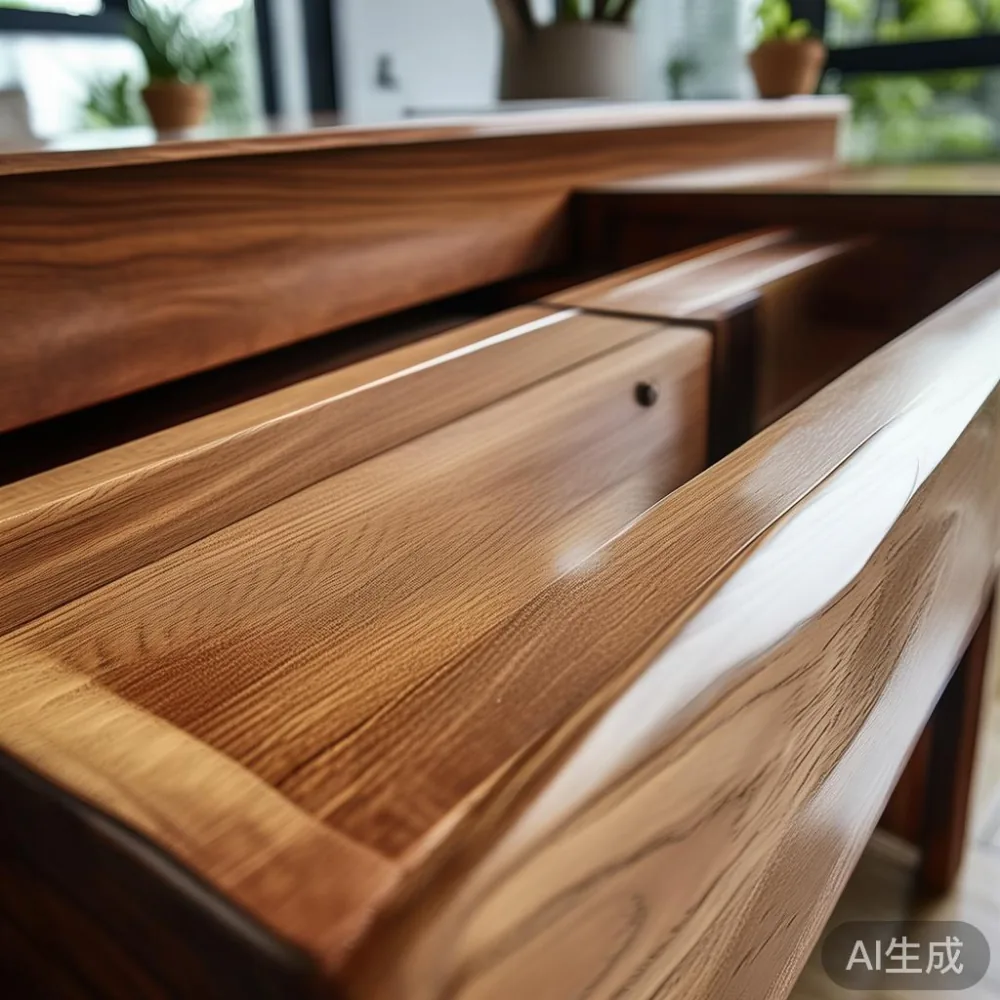
Lacquer is a finish, not a material. It is a thin film of polyurethane, acid-catalyzed resin, nitrocellulose, or conversion varnish laid over the wood surface, usually in three to seven coats that are sanded between applications. That film is what gives a piece of solid wood sofa seating, a tall wardrobe door, or a marble-top dining table its glass-smooth reflection. In a dry climate, the film is stable. In a tropical climate, the film is in constant conversation with moisture in the air, and most owners are never taught the rules of that conversation. This guide is for anyone who has spent SGD 3,800 to SGD 18,000 on a piece of lacquered furniture from a maker like MIDHILL and wants it to look the same in year eight as it did on delivery day.
Why does lacquer misbehave when the humidity hits 85%?
Wood moves. It expands roughly 0.2% to 0.4% across the grain for every 10% change in relative humidity, and a 1.8 m tall wardrobe with six internal compartments can gain or lose up to 4 mm in width between February and August. The lacquer film does not expand at the same rate as the wood underneath, so when humidity rises, the wood swells faster than the film can stretch. That mismatch is what creates the orange-peel texture I saw on the Tampines headboard, and it is also what causes a drawer organizer to swell inside its cavity and refuse to slide. When humidity drops, the wood shrinks, the film cracks along the stress lines, and you see the all-too-common pattern of craze lines running parallel to the grain. In Singapore, the bigger risk is the swelling direction, because outdoor relative humidity here rarely falls below 70% even on the driest afternoon. Your lacquer never gets a recovery window.
What is the correct indoor humidity range for a lacquered wardrobe or bed frame?
Shoot for 45% to 60% relative humidity, measured at chest height in the middle of the room, not on a wall. A basic hygrometer costs SGD 12 to SGD 28 at any Tampines Mall homeware counter, and it is the single most useful piece of hardware you can buy after the furniture itself. If the reading is above 65% for two consecutive days, run a dehumidifier set to 50% for four to six hours, then recheck. If it is below 40% during a dry air-conditioned period, place a 1.5 L ceramic water bottle on the nearest nightstand or marble table to bring the microclimate back into range. The room reading matters more than the building reading, because a corner unit in Punggol facing the afternoon sun will run 8% to 12% higher than the same flat on the other side of the corridor.
Is French provincial headboard furniture worth it?
Yes, when the provincial headboard is built from kiln-dried solid wood and finished with a multi-coat conversion varnish, French provincial is genuinely worth the premium you pay for it in Singapore, because the thicker finish film and the carved detailing tolerate daily humidity cycling far better than a thin paper laminate ever could. The light luxury of a French provincial piece sits in the soft curved cabriole legs, the hand-carved floral crests, and the warm honey or antique white tones that pair comfortably with both a Tampines HDB interior and a penthouse in River Valley. A solid wood bed frame in this style from a maker like MIDHILL typically costs between SGD 2,400 and SGD 4,800 for a king-size configuration, ships with a knock-down joinery system that fits inside a standard 1.4 m by 2.1 m lift, and is backed by a 10-year structural warranty plus lifetime refinishing access. The catch is that the lacquer on these pieces is usually a high-gloss or hand-rubbed satin, and that finish is more sensitive to condensation rings and to direct afternoon sun than a matte American light luxury finish would be. If you choose the French provincial route, commit to coasters on every marble table and nightstand, and keep the bed frame 40 cm away from any west-facing window.
How should I clean a lacquered surface without damaging the film?
Use a microfiber cloth of 220 GSM or higher, lightly dampened with water that has had two drops of pH-neutral dish soap worked into a 500 ml spray bottle. Wipe in the direction of the grain, never across it, and dry the surface within 90 seconds using a second dry microfiber. Never use a furniture polish that contains silicone, never use a wax that contains petroleum distillates, and never use an all-purpose cleaner that lists ammonia or bleach on the label. Those three categories of product will soften the lacquer film within two to four uses and leave a permanent haze that even a refinishing shop will struggle to remove. For sticky spots such as the tape residue left by a child's sticker or a freshly removed price tag, dab a cotton swab in a 70/30 mix of water and isopropyl alcohol, hold it on the residue for 15 seconds, then lift away with a clean cloth. Always test any cleaning method on the inside face of a wardrobe door or the back panel of a nightstand first. That hidden surface is finished the same way as the visible one, and it gives you a safe place to learn the chemistry before you touch the show face of your SGD 6,400 dining table.
What daily habits protect lacquer from condensation and ring marks?
The single biggest enemy of lacquer in a HDB or condo is not heat, it is the cold contact patch left by a glass of iced water, a cold can of Tiger Beer, or a ceramic vase filled with tap water. That cold spot condenses moisture out of the warm room air in a ring exactly the shape of the glass base, and the moisture sits on the lacquer long enough to leave a faint white bloom. The rule is simple: every glass, can, vase, and hot pot on a marble table, dining table, or nightstand needs a coaster, a trivet, or a linen placemat underneath it. Felt coasters of 8 mm thickness cost SGD 18 for a set of six at most homeware counters and absorb the chill before it reaches the film. The same rule applies to laptops, which can leave a 30 cm by 22 cm heat patch on a lacquered desk within an hour, and to plastic bags, which trap humidity against the surface and leave a print within four to eight hours.
How do I rescue a lacquered piece that has already gone cloudy or sticky?
For a slightly cloudy haze, rub the affected area with a clean microfiber and a pea-sized amount of paste wax that is specifically labelled as silicone-free and formulated for polyurethane finishes. Work in 20 cm circles, buff off within three minutes, and repeat once a week until the clarity returns. For a sticky patch caused by trapped moisture, place a single layer of clean cotton cloth over the spot, set an iron to its lowest steam-off setting, and hold it 5 cm above the cloth for eight to ten seconds; the gentle warmth draws the moisture out without softening the film. For a deeper failure such as the orange-peel I saw in Tampines, the piece needs professional sanding and recoating. A local refinisher in Singapore typically charges SGD 90 to SGD 160 per square metre for a full respray, with a turnaround of five to seven working days, and the piece usually needs to be moved out of the flat because the catalysts in conversion varnish are not friendly to neighbours. If the maker offers lifetime refinishing access, which MIDHILL does on every lacquered piece shipped from its Foshan workshop, the cost is usually limited to transport and a small handling fee that ranges from SGD 220 to SGD 480 depending on the dimensions of the wardrobe or dining table involved.
What about delivery, lifts, and the long corridor problem?
Lacquer damage does not only come from humidity. Half the dings on a Singapore-bound lacquered wardrobe happen on the day of delivery, in the lift, or around the tight 90-degree turn at the corridor door of a HDB block in Bedok or Punggol. A standard passenger lift in a Singapore HDB measures about 1.4 m by 2.1 m with a door opening of 0.9 m, which is fine for a flat-packed solid wood bed frame in four cartons but a squeeze for a fully assembled wardrobe. Insist on knock-down delivery for any piece taller than 1.8 m, and check that the carton dimensions are written into the order confirmation before you pay the 9% GST. When the crew arrives, walk them to the lift, watch the first carton through the door swing, and have a 2 mm thick moving blanket ready to lay over any lacquered face that has to rest against the corridor wall. If a carton arrives with a corner puncture larger than 1 cm or any crushed area on the face panel, photograph it before the crew opens the seal, because most makers, including MIDHILL, will replace the affected panel rather than the entire piece when the damage is documented on the spot.
Should I buy a matching drawer organizer, and what should I look for?
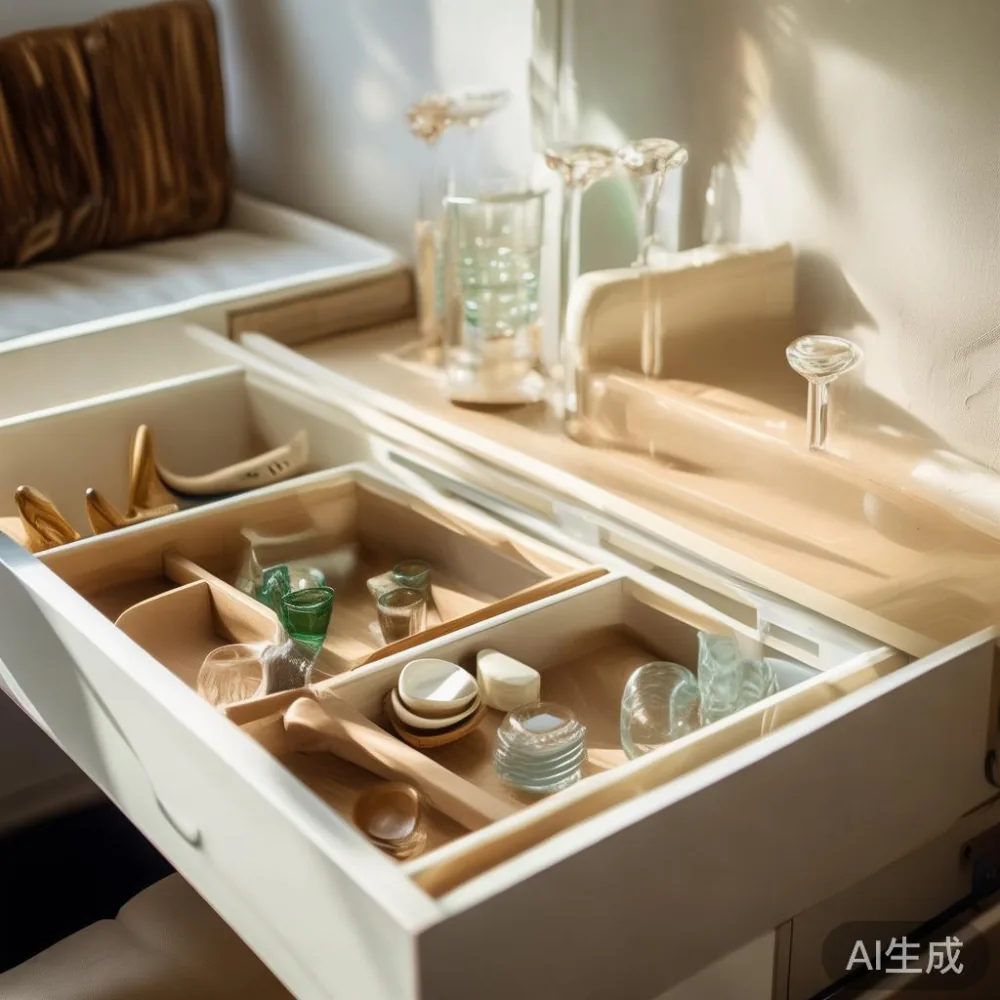
Yes, a felt-lined drawer organizer is one of the cheapest forms of insurance you can buy for any lacquered piece, because it keeps metal cutlery, keys, jewellery, and writing instruments from resting directly on the inside surface of a drawer. The organizer should fit the cavity with 2 mm to 3 mm of clearance on each side so it can be lifted out without scraping the finish, and it should be lined with a 3 mm wool-felt pad that has been glued, not stapled, into the bottom. A set of three to five modular organizers costs between SGD 45 and SGD 180 locally, and the modular style lets you rearrange compartments when you swap a summer wardrobe for a winter one. Avoid plastic organizers with sharp mould seams, and avoid any organizer that arrives with a strong petrochemical smell, because that smell means the felt has been bound with a solvent-based adhesive that will off-gas into a closed drawer organizer cavity for months. If you are ordering replacement missing parts for small entryway storage cabinets from your maker, ask at the same time whether the original organizer can be shipped with the new panels, because matching felt tones are easier to source from the factory than from a third-party supplier.
How do I plan the first 90 days with a new lacquered piece?
Treat the first 90 days as a settling-in window. For the first 14 days, keep the room dehumidified to a steady 50% and avoid placing any object on the lacquered surface for longer than 30 minutes at a time. From day 15 to day 45, introduce coasters, placemats, and runners, but keep them soft, cotton-based, and free of rubber backing. From day 46 to day 90, run a fingertip test along every edge and corner once a week. If any edge feels rough, if any surface feels tacky, or if a drawer organizer that slid smoothly on day one now needs a pull, photograph the area, note the room's humidity reading at the time, and send both to your maker. The combination of a dated photo and a humidity log is the single fastest path to a free refinishing service call, because it tells the workshop whether the failure is a film defect, a humidity event, or a transport issue. A piece that has survived 90 days of Singapore conditions without a single change in feel is almost certain to give you eight to twelve quiet years of use, which is the realistic working life of a well-kept lacquered wardrobe, bed frame, dining table, nightstand, or marble-top accent table in this climate.